


The short answer is this: the best outfit maker app in 2026 is the one that turns your existing wardrobe into repeatable outfit decisions, not just visual experiments. For most users, Beauty AI is the strongest overall choice because it combines outfit creation, wardrobe organization, outfit refinement, and AI feedback in one workflow. That means you do not stop at making outfits. You get help deciding which one is actually worth wearing.
This guide breaks down what an outfit maker app should do, where weaker apps usually fail, and which five apps are most worth comparing right now if your goal is to build outfits from your own clothes. If you want the direct product path first, start with the owner page for an AI outfit maker app with your own clothes, then use our digital wardrobe app page and our guide to the best outfit rating apps in 2026 for supporting context.
What Is an Outfit Maker App?
A strong outfit maker app should do more than let you place a shirt next to trousers on a screen. It should help you answer practical questions like:
- what can I wear from the clothes I already own?
- which outfit is best for this occasion?
- what combinations are worth saving and repeating?
- does this new item actually expand my wardrobe?
- how do I get dressed faster tomorrow, not just play with ideas tonight?
Why Most Outfit Maker Apps Disappoint
The biggest weaknesses usually come down to five things:
- too much setup: uploading a closet feels harder than the value you get back
- weak real-life usefulness: the app can create visuals, but not a wearable answer for tomorrow
- no decision support: you can build outfits, but the app never helps you compare or refine them
- generic inspiration: suggestions feel disconnected from your own wardrobe and lifestyle
- no memory: you cannot easily save formulas, repeat looks, or learn what actually works for you
That last point matters most. The best outfit maker app is not just an inspiration engine. It is a wardrobe decision tool.
What the Best Outfit Maker App Should Actually Do
| Feature | Why It Matters | What Weak Apps Do Instead |
|---|---|---|
| Works with your own clothes | Keeps outfit decisions practical and repeatable | Pushes stock imagery or shopping-first ideas |
| Saves outfit formulas | Reduces future decision fatigue | Makes you rebuild every look from scratch |
| Supports occasion planning | Helps with work, travel, events, and daily dressing | Treats every outfit as the same generic styling problem |
| Improves or rates outfits | Helps you refine a look instead of only assembling it | Stops after visual creation |
| Connects outfits to shopping decisions | Helps you buy more intentionally | Creates more browsing without better judgment |
| Stays useful after setup | Creates long-term value from the same wardrobe data | Feels exciting for two days and then gets ignored |
How to Choose the Right Outfit Maker App for Your Needs
If your main goal is creating outfit collages and experimenting visually, you want an app with a strong canvas and an easy drag-and-drop flow. If your main goal is using your own wardrobe more effectively, digital closet quality matters more. If your main goal is dressing faster and better every day, the winning app needs outfit creation plus feedback, planning, and some level of AI support.
That is why there is no single universal winner for every type of user. There is, however, a best overall answer for the most commercially valuable use case: people who want to build outfits from their own clothes and turn the app into a practical daily tool. That is where Beauty AI stands out most clearly.
- Best for daily outfit decisions: Beauty AI
- Best for free visual closet experimentation: Whering
- Best for fast digital wardrobe capture: Acloset
- Best for collage-style outfit building: Setly
- Best classic manual iPhone option: Stylebook
Popular outfit planning use cases
The strongest outfit maker workflow is not one generic canvas. It is a set of repeatable decisions for the situations that make people open the app: events, workdays, dates, travel, shopping gaps, color matching, and high-pressure moments. Use these guides when you want a narrower answer than a broad outfit maker comparison.
| Use case | Best next guide | Why it helps |
|---|---|---|
| Wedding or formal event | Wedding guest outfit generator | Matches dress code, venue, season, color risk, shoes, comfort, and backup looks. |
| Work week planning | Office outfit planner app | Turns a closet into a five-day rotation for meetings, desk days, commute, and repeat control. |
| Concert or festival | Concert outfit generator | Plans outfits by genre, venue, weather, bag policy, standing time, and practical shoes. |
| Date night | Date night outfit generator | Builds confident looks for coffee, dinner, drinks, walks, and special plans. |
| Job interview | Job interview outfit app | Checks industry fit, formality, camera readiness, comfort, and one backup outfit. |
| Travel packing | Visual packing list app | Connects every packed item to real day-by-day outfits so the suitcase stays smaller. |
| Shopping gaps | Wardrobe gap analysis app | Shows whether a missing item unlocks outfits or only adds another weak purchase. |
| Color matching | Clothing color matching app | Helps match shirts, pants, shoes, and accessories from the wardrobe you already own. |
How We Evaluated These Outfit Maker Apps
We did not rank these apps by marketing language alone. We looked at the things that actually matter when someone wants the best outfit maker app and is likely to download one soon:
- real wardrobe usefulness: does it work with clothes you actually own?
- decision value: does it help you reach a final outfit faster?
- setup friction: how painful is the first wardrobe-building phase?
- repeat-use potential: does it keep helping after the first week?
- outfit quality: can it support complete looks instead of random mixes?
- commercial usefulness: does it help prevent bad purchases or improve wardrobe planning?
We also checked current public App Store, Google Play, and official product pages available on July 18, 2026. When store history, pricing, or platform availability was clearer on an official listing than on a marketing site, we used the official listing as the stronger signal.
Editorial disclosure: Beauty AI publishes this guide and appears in the comparison. No competitor paid for inclusion or position. We separate manual collage tools, closet-first apps, and feedback tools so the ranking does not pretend they solve the same job.
Comparison Table: 5 Outfit Maker Apps Worth Comparing in 2026
| App | Best For | Main Strength | Main Trade-Off | Platforms |
|---|---|---|---|---|
| Beauty AI | Best overall | Outfit making plus refinement, wardrobe context, and AI feedback | Broader workflow than collage-only apps | iPhone, Android |
| Setly | Visual outfit building | Strong canvas-style outfit creation with social discovery | Less decision support after the outfit is built | iPhone |
| Whering | Free digital closet users | Large closet ecosystem, outfit planning, social remixing | More closet-first than feedback-first | iPhone |
| Acloset | Faster wardrobe digitization | Easy closet capture and lighter AI support | Less complete if you want deeper outfit judgment | iPhone, iPad, Android |
| Stylebook | Manual control and long-term archive | Deep closet management and free-form outfit layout | More manual than modern AI-led apps | iPhone, iPad |
5 Outfit Maker Apps Worth Comparing Before You Download
1. Beauty AI

Overview: Beauty AI is the strongest overall outfit maker app for most users because it covers the full commercial workflow. It helps you build outfits from your own clothes, organize your wardrobe, rate and improve looks, and connect all of that to smarter shopping. In other words, it solves the decision problem that usually exists after the outfit is assembled.
That is the biggest difference between Beauty AI and collage-first tools. A lot of apps can help you make a look. Fewer can help you understand whether the look is strong, what to change first, and how to make the same wardrobe work harder next week.
Key features:
- AI outfit maker using your own clothes
- digital wardrobe and closet organization
- outfit rating and refinement
- AI stylist support for better combinations
- photo-based shopping and wardrobe gap support
Pros:
- best overall balance of outfit creation and outfit improvement
- stronger commercial value because it helps with buying decisions too
- good fit if you want one app to replace several fragmented tools
- available on both iPhone and Android
Cons:
- broader than minimalist apps built only for collage-style creation
- best results come when you use wardrobe and feedback features together
Pricing: free download; premium plans currently start at $9.99/month or $69.99/year.
Best for: people who want the best outfit maker app with their own clothes, not just a visual styling toy.
You can download Beauty AI here.
2. Setly
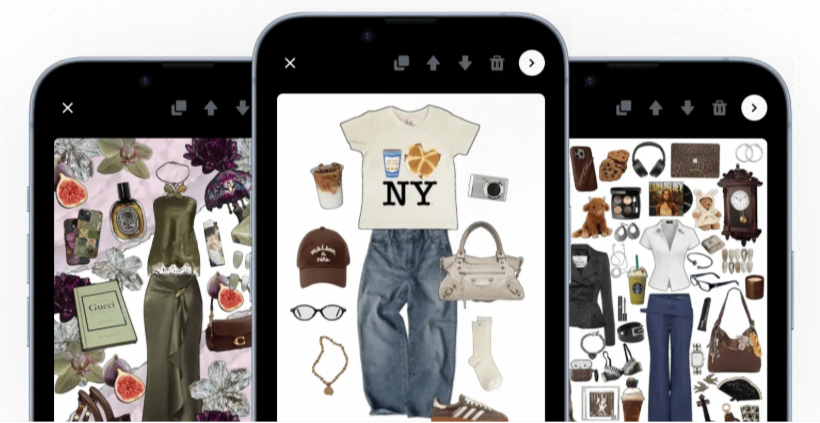
Overview: Setly is one of the most visually appealing options in this category if your main goal is to build outfits on a canvas, experiment with aesthetics, and create more editorial-looking combinations. Its core strength is not deep wardrobe analysis. It is outfit creation as a visual activity.
That makes Setly especially appealing for users who enjoy styling as a creative process. You can build looks, upload your own pieces, explore a larger catalog, and use a more social discovery loop than most traditional closet apps. The trade-off is that it does less to help with the question that comes after creation: which outfit is actually best, and why?
Key features:
- canvas-based outfit maker
- upload your own clothing items
- digital closet support
- style quizzes and social discovery
- challenge and leaderboard mechanics
Pros:
- excellent for visual outfit building
- better than many closet apps if you enjoy styling as a creative hobby
- useful for experimenting with looks before getting dressed
Cons:
- less practical than Beauty AI if your main goal is faster decisions
- lighter on outfit critique, refinement, and wardrobe judgment
Pricing: free download; optional purchases are handled in-app.
Best for: users who want a true outfit maker app in the visual-canvas sense.
You can view Setly on the App Store.
3. Whering
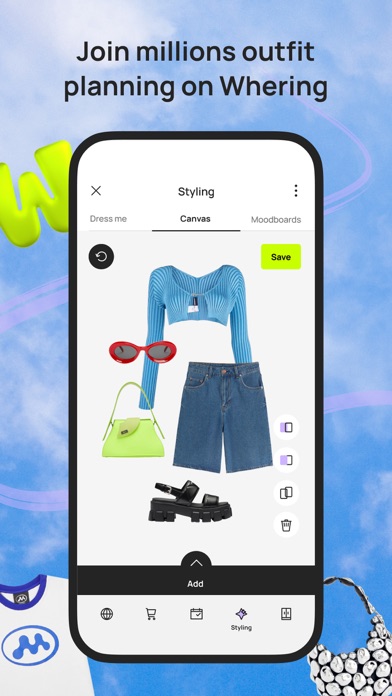
Overview: Whering is the biggest mainstream digital wardrobe option in this comparison and one of the strongest free choices if you want a closet-first app that can still help with outfit making. Its official App Store listing positions it as a digital closet, outfit planner, outfit maker, wishlist, style analytics tool, and social styling network all at once.
That breadth is both its advantage and its limitation. Whering is great if your problem starts with closet visibility, saved looks, and remixing outfits from what you own. It is less focused than Beauty AI if your priority is direct outfit feedback and faster AI-guided refinement.
Key features:
- digital closet with large item database support
- outfit planner and saved outfit remixing
- wishlist, moodboards, and social closet discovery
- cost-per-wear and wardrobe insight tools
- optional Outfit Maker purchase inside the app
Pros:
- one of the most established wardrobe ecosystems in the category
- strong free entry point for closet building and outfit planning
- good fit if you want social inspiration mixed with wardrobe use
Cons:
- less direct than Beauty AI for outfit improvement and final decision support
- more closet-heavy if your goal is fast verdicts on complete looks
Pricing: free core app; optional purchases include supporter plans and an Outfit Maker add-on.
Best for: users who want a larger free digital closet plus outfit maker workflow.
You can view Whering on the App Store.
4. Acloset
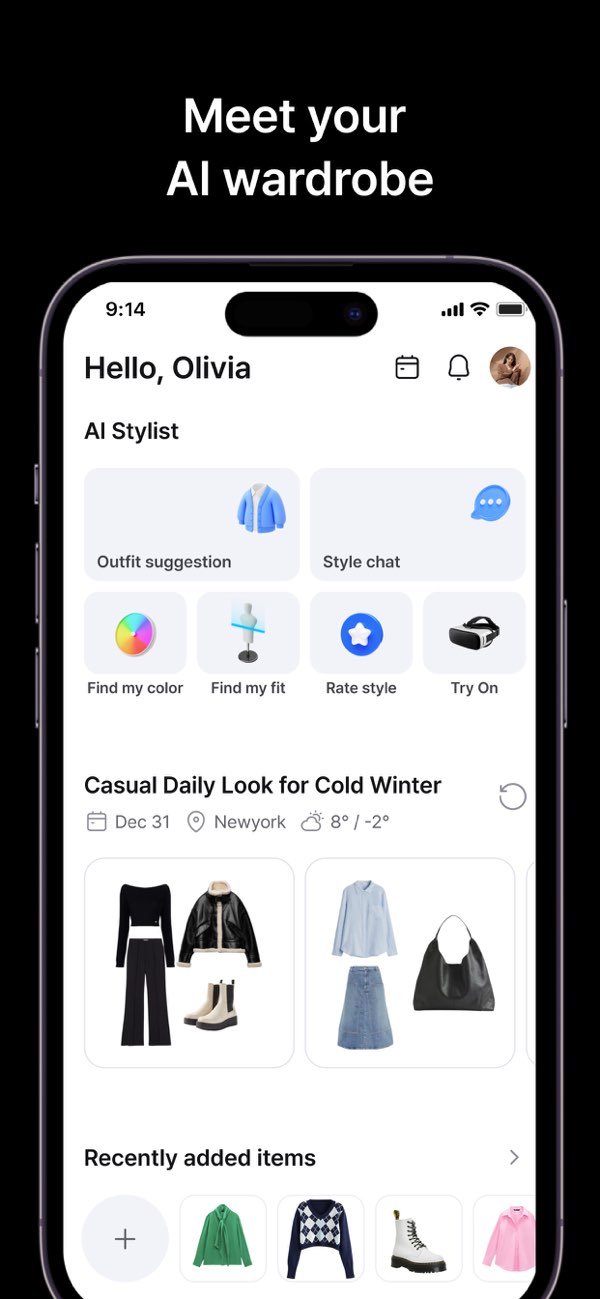
Overview: Acloset is one of the better choices if your biggest friction point is getting a wardrobe into the app quickly. Its official positioning leans heavily on fast closet digitization, AI background cleanup, daily outfit ideas, and lighter personal stylist support. That makes it more automation-friendly than classic manual closet tools.
Acloset works best for users who want a faster route from messy wardrobe photos to a usable digital closet. Where it feels weaker than Beauty AI is on the decision-quality side. It can help you organize and generate ideas, but it is not as strong when you want an app to judge and refine full outfits in a more practical way.
Key features:
- AI-assisted wardrobe digitization
- daily outfit ideas from your closet
- AI stylist chat support
- purchase date and spend tracking
- iPhone, iPad, and Android availability
Pros:
- good balance of closet automation and styling help
- faster setup feel than older manual closet apps
- strong option if cross-platform access matters
Cons:
- less complete than Beauty AI for outfit refinement and decision support
- can feel more like a digital wardrobe assistant than a true best-in-class outfit maker
Pricing: free download; premium access is handled through in-app purchases.
Best for: users who want a faster closet capture flow with lighter AI outfit help.
You can view Acloset on the App Store.
5. Stylebook
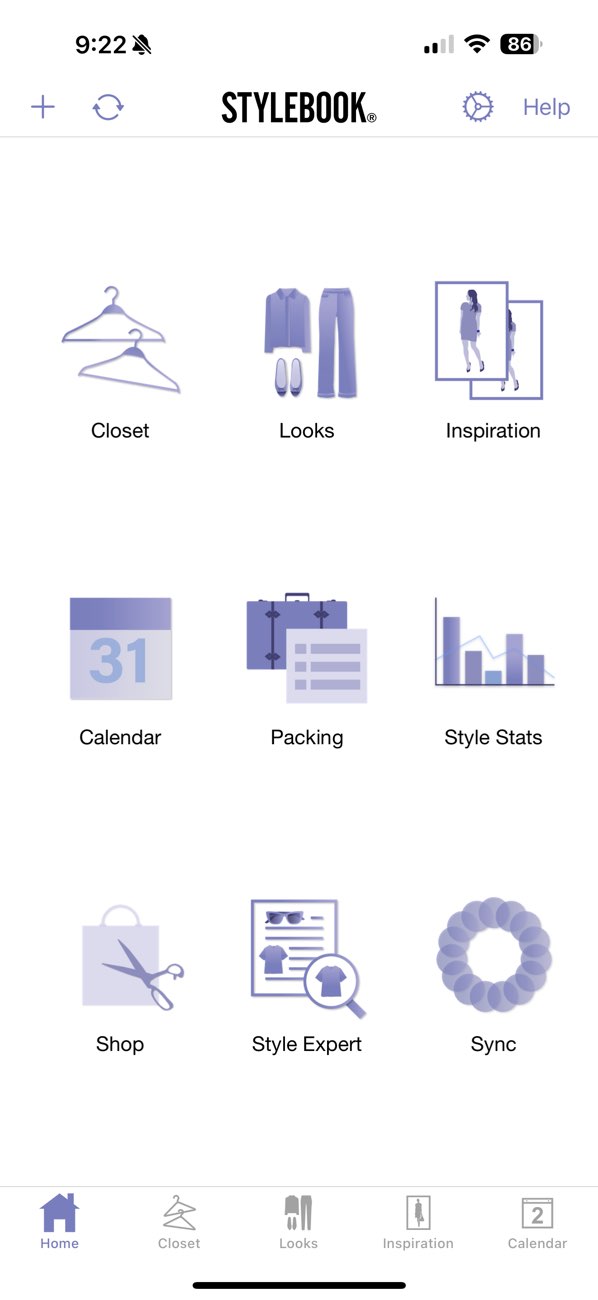
Overview: Stylebook is still one of the strongest classic wardrobe apps if you are an iPhone user who likes manual control, deep closet organization, and free-form outfit layout. It has been around for years, and that longevity shows in how many supporting features it packs in: closet inventory, outfit layout, packing lists, stats, and an outfit generator.
Stylebook remains useful because it is disciplined and proven. The trade-off is that it belongs to an older generation of wardrobe tools. If you want modern AI support, faster judgment, or more active help with outfit refinement, it feels more manual than newer alternatives.
Key features:
- closet inventory and manual outfit layout
- outfit generator and calendar planning
- packing lists and travel support
- closet stats and cost-per-wear support
- one-time purchase model
Pros:
- excellent for users who want manual control and a long-term archive
- one of the most established outfit and wardrobe apps on iPhone
- good value if you prefer a one-time payment
Cons:
- iPhone-only
- more manual and less AI-driven than Beauty AI, Acloset, or newer category entrants
Pricing: $4.99 one-time purchase on the App Store.
Best for: users who want a classic manual outfit maker app with strong wardrobe organization depth.
You can view Stylebook on the App Store.
How to Get Value From an Outfit Maker App Fast
The fastest way to make this category useful is not to upload your entire closet on day one. Start with the pieces that actually shape your week:
- your most-worn tops, trousers, jeans, jackets, shoes, and bags
- the outfits you repeat most often for work or daily life
- one or two event categories that usually create decision fatigue
Then use the app in three specific ways:
- save formulas: when a look works, keep it
- compare before shopping: ask whether a new item creates more outfits or more clutter
- rate and refine: if the app offers feedback, use it to improve one change at a time instead of rebuilding the whole look
If you want more support around that workflow, our guides to outfit planner apps and virtual closet apps break down the neighboring parts of the decision.
Bottom Line
The best outfit maker app in 2026 is not the one with the flashiest canvas. It is the one that helps you use your own clothes better, save stronger combinations, make faster decisions, and avoid buying your way out of a styling problem that your current wardrobe could already solve.
For most users, that makes Beauty AI the strongest overall choice. Setly is better for highly visual collage-style building. Whering is better if you want a bigger free closet ecosystem. Acloset is strong for faster wardrobe setup. Stylebook is still excellent if you want a classic manual iPhone workflow. But if you want the best balance of outfit creation, outfit improvement, and real wardrobe usefulness, Beauty AI is the one to start with.
If you want to test the workflow on your own wardrobe, download Beauty AI and start with the clothes you already wear most.


