

What if the reason you have nothing to wear isn't a lack of clothes, but a lack of visibility? Automated outfit generation solves this by using AI algorithms to analyze your digital wardrobe. It identifies color harmonies and silhouette balances you might normally overlook. By scanning your uploaded photos, the technology suggests new combinations from your existing inventory. This effectively unlocks the 80% of your closet that often goes unworn. This system eliminates morning decision fatigue by providing ready-to-wear looks instantly. Use it as a logic-based styling tool that prioritizes your existing investments over new purchases. This ensures every item in your collection serves a purpose while streamlining your daily routine.
Stop cycling through the same few outfits while the rest of your wardrobe gathers dust. It's a common frustration to look at a full closet and still feel uninspired every morning. This guide promises to show you how to revitalize your style and stop ignoring your best pieces. Explore the practical steps to digitize your collection and build a more efficient, coordinated routine that makes the most of what you already own.
Key Takeaways
- Understand how automated outfit generation uses algorithms to analyze your digital wardrobe and suggest fresh, data-supported clothing combinations.
- Learn the logic behind AI styling decisions, including how systems evaluate color balance and visual weight to create coordinated ensembles.
- Break the cycle of wearing only 20% of your closet by using digital tools as a second set of eyes for your existing investments.
- Improve your results by following simple photography standards, such as consistent lighting and clean backgrounds, for every item you upload.
- Streamline your morning routine with real-time feedback on fit and color harmony through a centralized digital interface.
Table of Contents
What is Automated Outfit Generation and How Does It Work?
Automated outfit generation is a technology that uses mathematical algorithms to pair your individual clothing items into complete, coordinated ensembles. This marks a significant shift from manual styling, which relies on memory and trial-and-error, to data-supported clothing combinations. By utilizing digital wardrobe management, these systems identify patterns in your style that you might normally overlook. Industry data from 2026 indicates that over 58% of fashion apps now incorporate generative AI tools to improve styling accuracy by as much as 40%. It creates a functional bridge between your physical closet and a digital strategy for daily wear. This process removes the friction of "staring into the void" of a full closet and replaces it with a curated list of possibilities.
Sustainability enthusiasts increasingly adopt this technology to maximize the utility of their existing garments. It encourages "shopping your closet" by revealing hidden pairings, which reduces the impulse to buy new items. However, this system is not for everyone. If you prefer a purely tactile, unplanned approach where you choose clothes based solely on the physical feel of fabric in the moment, an algorithmic tool might feel too structured. It is designed for the user who values efficiency and visual order in their morning routine.
The Difference Between Random Pairing and AI Styling
Random generators often produce unwearable looks because they lack a fundamental understanding of color theory or occasion appropriateness. In contrast, outfit generator apps use established rules of fashion to ensure coordination. These tools evaluate the relationship between textures, hues, and silhouettes. Your personal preferences also play a critical role; as you interact with the app, the system refines its suggestions to match your specific aesthetic. This ensures the output feels like your personal style rather than a generic mannequin.
Key Components of a Styling Algorithm
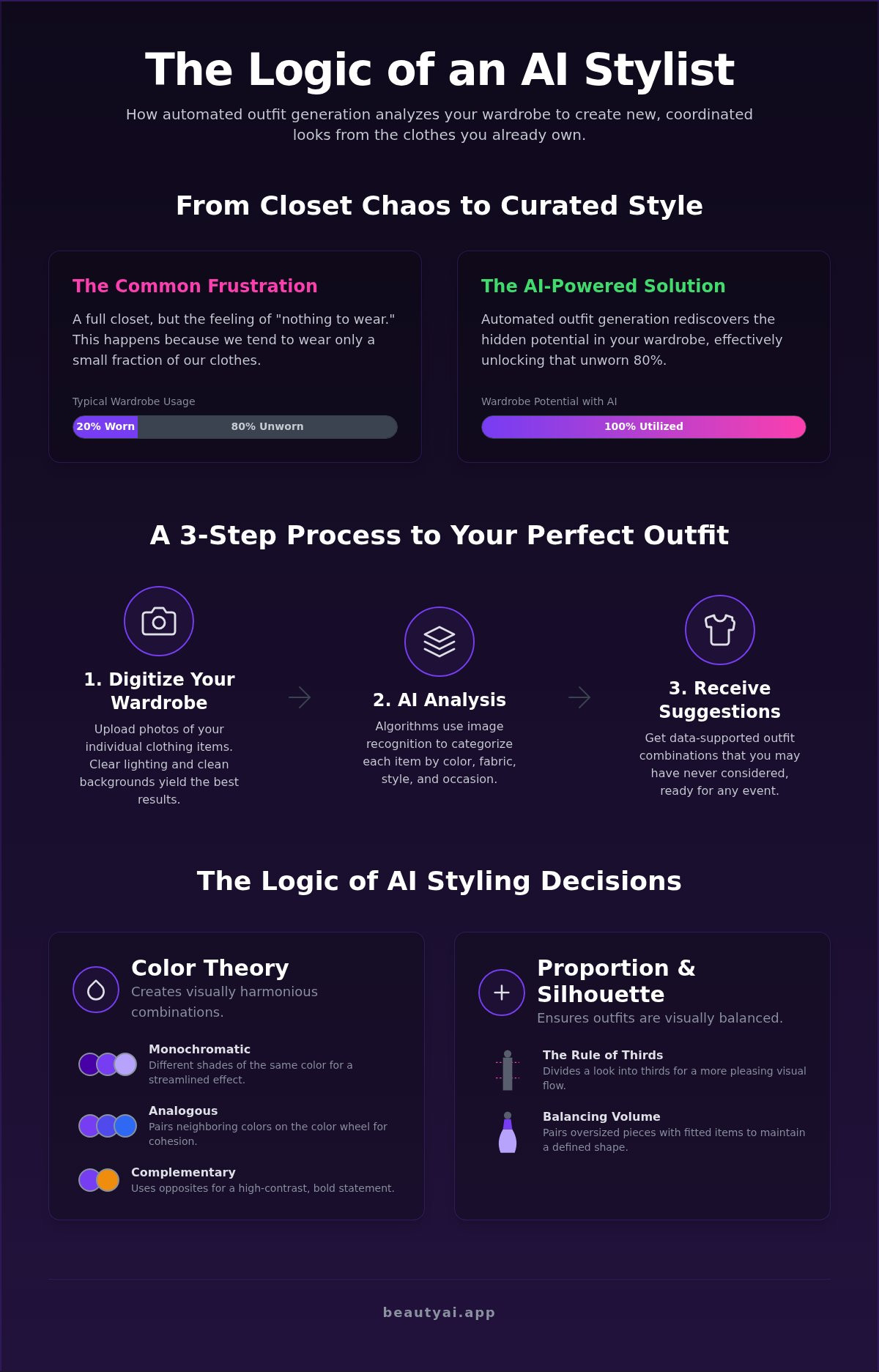
Styling algorithms rely on three primary pillars to function effectively. First, image recognition allows automated outfit generation tools to "see" and categorize your clothes, distinguishing a denim jacket from a blazer. Second, metadata tags provide context by labeling items with specific colors, fabrics, and occasion types. Finally, user feedback loops ensure the system improves over time. Every time you save or skip a suggestion, the algorithm learns your boundaries and stylistic leanings. This creates a personalized experience that evolves alongside your wardrobe as you add or remove items.
The Logic Behind AI Styling Decisions
AI styling isn't based on a whim. It's grounded in visual logic. Research from the AI system for fashion advice project demonstrates how algorithms can analyze an outfit and suggest specific improvements based on aesthetic principles. In automated outfit generation, these principles ensure that every suggested look is structurally sound and visually balanced. The system processes your wardrobe data to identify which items share a common design language, moving beyond simple color matching to evaluate the entire composition. It treats your closet as a dataset where every garment has a specific role to play.
Color Theory in Automated Styling
Algorithms categorize your clothes into monochromatic, analogous, or complementary schemes. A monochromatic look uses different shades of the same color for a streamlined effect, while complementary schemes pair opposites on the color wheel for high contrast. The app often suggests a "pop of color" by adding a vibrant accessory to a neutral base, which elevates a basic ensemble into something intentional. To ensure these colors work for the individual, the AI analyzes the undertones of your skin to recommend shades that enhance your natural complexion rather than washing it out. This systematic approach ensures that even bold color choices feel grounded and deliberate.
Proportion and Silhouette Matching
Maintaining a clean visual flow requires a balance of proportions. Automated outfit generation applies the "rule of thirds" to avoid cutting the body in half visually, often suggesting high-waisted bottoms with cropped tops or tucked-in shirts. It prioritizes silhouette by balancing oversized pieces with fitted items. For example, if you choose a voluminous skirt, the system will likely suggest a more structured or form-fitting top to prevent the look from appearing overwhelmed. This creates a rhythmic balance between different garment volumes.
Pattern mixing is handled through a similar logic of scale and color. The algorithm determines if stripes go with florals by looking for a shared base color and varying the size of the prints. Occasion-based filtering then refines these choices. It distinguishes between the sharp lines of office wear and the relaxed drapes of weekend casual, ensuring your outfit matches the context of your day. If you want to see these logic-driven combinations in action, you can get started with the app to view your personalized suggestions.
Breaking the Cycle of Wearing the Same Three Outfits
Most people fall into the trap of the 80/20 rule, wearing only 20% of their wardrobe 80% of the time. This habit stems from decision fatigue. When you're rushed in the morning, your brain defaults to the path of least resistance: the same three outfits you wore last week. Automated outfit generation acts as a second set of eyes, identifying combinations that have been sitting right in front of you. It removes the mental load of styling from scratch. Research from Heriot-Watt University suggests that this level of digital organization can reduce anxiety and improve mental clarity by streamlining your daily routine.
Beyond the psychological benefits, there's a clear financial incentive to use what you already own. Every item in your closet represents a sunk cost. By using technology to resurface forgotten pieces, you can lower the cost per wear of your entire collection. This data-driven approach justifies your previous investments and helps you realize the full value of your wardrobe without spending more money on new trends. It turns a static closet into a dynamic resource.
Overcoming Closet Blindness
We often stop seeing the potential in old items because of "closet blindness." You've worn a specific sweater with the same jeans for so long that you can't imagine it any other way. The app bypasses this bias by suggesting combinations you haven't considered in years. Use the "shuffle" feature to spark creativity on uninspired mornings. It forces you to look at your inventory through a logical, rather than emotional, lens. This fresh perspective ensures that your favorite pieces get the rotation they deserve.
Building Style Confidence Through Suggestions
Trying a new trend often feels risky because of the fear of an unbalanced look. AI feedback provides a safety net by explaining the logic behind a suggestion. It helps you learn exactly why a specific texture or color pairing works, which builds your styling skills over time. Use the virtual try-on feature to validate a look before you physically put it on. This builds confidence by proving that your existing clothes can adapt to modern aesthetics without the need for a professional stylist.
Steps to Get the Most Out of an Outfit Generator
AI styling depends heavily on the quality of your inputs. If the algorithm cannot clearly distinguish the texture of a wool coat from a cotton blazer, the suggestions will lack precision. High-quality photos lead to significantly better results because they provide the visual data necessary for accurate automated outfit generation. Establishing a digital wardrobe is the essential foundation for this process. It transforms your physical collection into a structured database that the AI can analyze with surgical accuracy. This organized approach ensures that the technology works for you rather than creating more digital clutter.
Effective Closet Digitization
Set up a consistent space for photographing your clothes to ensure uniform lighting and backgrounds. Shadows or cluttered environments can confuse image recognition tools. Use flat lay techniques or hang items against a neutral wall to define clear item boundaries. This helps the app accurately identify the silhouette and drape of each garment. Batch-uploading items by category, such as processing all tops before moving to trousers, keeps your digital inventory organized. This method allows you to verify that each item is tagged correctly before the algorithm begins its work. It also makes the initial setup feel less overwhelming by breaking a large task into manageable, logical segments.
Refining Your Digital Style Profile
Input your preferred style "vibe" to guide the AI's aesthetic direction. Whether you lean toward minimalist structures or bohemian layers, this setting acts as a filter for all generated looks. Tagging items for specific weather conditions or temperature ranges adds another layer of utility. This ensures the system doesn't suggest a heavy knit sweater on a humid afternoon. Regularly "liking" or saving generated outfits trains the system on your favorites. This feedback loop is vital for personalization. Over time, the algorithm learns your specific boundaries and begins to anticipate your choices with higher accuracy. It transitions from a general tool to a reliable partner for your daily style.
How Beauty AI Refines Your Daily Styling Process
The Beauty AI interface is designed to act as a functional partner for your personal aesthetic. It centralizes your collection into a single, navigable dashboard that removes the friction of daily choice. By utilizing automated outfit generation, the app provides real-time feedback on fit and color balance, ensuring your choices are grounded in visual logic. The virtual mirror feature allows you to preview these combinations instantly, which eliminates the need for multiple physical outfit changes and the resulting mess in your room. This systematic approach transforms your morning routine into a streamlined, high-tech experience that prioritizes efficiency and visual order.
Simplifying complex routines is the core of the service. The app excels at event planning and travel preparation by allowing you to build automated collections based on specific themes or destinations. This prevents overpacking and ensures you have a coordinated look for every situation. It moves your style from abstract inspiration to concrete planning, providing a reliable structure for your wardrobe investments. By viewing your clothes as a set of logical components, you can maximize the utility of every item you own.
Interactive Style Feedback
The app identifies style gaps in your generated looks by highlighting where a silhouette might feel incomplete or where a color palette lacks balance. It offers objective, data-driven advice that helps you understand why certain combinations work better than others. If a look feels too minimal, the system suggests specific accessories from your digital closet to elevate the ensemble. This objective feedback removes the emotional bias often found in personal styling, allowing you to view your clothes through the lens of a professional AI stylist app. It teaches you to master style as a skill through organization rather than a series of random impulses.
Planning Your Week with Intent
Planning your wardrobe in advance is an effective way to combat decision fatigue. You can generate and save outfits to a dedicated calendar for the upcoming week, ensuring you're prepared for every professional or social commitment. The app automatically syncs with local weather forecasts to filter out garments that don't match the current conditions. This ensures your automated outfit generation results are always practical, preventing you from choosing a light silk shirt on a day with a high chance of rain. By organizing your week with intent, you reclaim time and mental energy for more important tasks.
Ready to see what's hidden in your closet? Download the Beauty AI app to get started.
Master Your Wardrobe with Algorithmic Precision
Transitions from a chaotic morning to a structured routine begin with a clear view of your inventory. Digitizing your closet turns physical clutter into a logical asset, allowing you to maximize the utility of every garment. By leveraging automated outfit generation, you remove the friction of daily choice and replace it with data-supported styling. This process ensures that your existing investments are used to their full potential rather than gathering dust.
You can access AI-driven style feedback and virtual try-on for your own clothes through a single interface. The app is available on iOS and Android to ensure your digital wardrobe is always within reach. It's time to stop guessing and start wearing everything you own with confidence.
Frequently Asked Questions
Is automated outfit generation better than a human stylist?
It's a different approach that prioritizes logic and 24/7 accessibility. While a human stylist relies on personal intuition, an algorithm evaluates color harmony and silhouette balance using objective mathematical principles. This technology acts as a functional partner for your daily routine, allowing you to "shop your closet" without the high cost or scheduling constraints of professional services. It ensures your styling decisions are consistent and based on the actual inventory you own.
How long does it take to set up an automated outfit generator?
The initial setup time depends on the size of your wardrobe, but you can begin seeing results in minutes. Most users find that batch-uploading items by category, such as processing all tops first, keeps the task manageable. Once you upload your primary pieces, the system begins generating combinations immediately. Dedicating a single afternoon to digitization creates a permanent asset that saves you hours of decision-making time every month.
Can the AI style my clothes for specific dress codes like 'Business Casual'?
Yes, the system uses metadata tags to distinguish between different dress codes and occasions. When you categorize your items as "Business Casual" or "Weekend Casual," the algorithm filters suggestions to match the appropriate context. This ensures that your generated looks are professional enough for the office while remaining comfortable. By tagging your clothes accurately, you help the AI understand the specific requirements for your professional and social environments.
Do I need to take professional photos of my clothes for the app to work?
You don't need professional photography, but clear photos lead to significantly better styling results. High-quality images with consistent lighting and neutral backgrounds allow the image recognition tools to identify textures and silhouettes accurately. Using a flat lay technique or hanging items against a plain wall provides enough visual data for the algorithm to function. Clean photos ensure the system can distinguish between different garment types and provide more precise suggestions.
What happens if the AI suggests an outfit I don't like?
If an algorithm suggests a look that doesn't fit your aesthetic, you can simply skip it or provide feedback. Every interaction trains the system on your personal preferences. By "liking" or "saving" the ensembles you enjoy, you refine your digital style profile over time. This feedback loop ensures that the technology moves closer to your personal "vibe," eventually anticipating your choices with higher accuracy as it learns your stylistic boundaries.
Can automated outfit generation help me build a capsule wardrobe?
Yes, automated outfit generation is an effective tool for building and maintaining a capsule wardrobe. The system identifies which items provide the most versatility by showing you how many different combinations a single piece can create. It highlights "style gaps" where a specific addition could unlock dozens of new looks. This data-driven approach encourages intentionality, helping you focus on high-quality investments that work together seamlessly rather than impulsive, standalone purchases.
Does the app consider the weather when generating outfits?
The app automatically syncs with local weather forecasts to ensure every suggestion is practical for the day. It filters your digital closet based on temperature and conditions, preventing the system from suggesting heavy wool coats on warm days. This feature removes the risk of choosing an outfit that looks good but feels uncomfortable. By integrating real-time environmental data, the technology ensures your daily styling process is both visually balanced and functional.
Is my wardrobe data and photo collection private?
Data privacy is a priority for digital wardrobe services. Reputable apps comply with regulations like GDPR to ensure your personal photos and wardrobe data remain secure. Your collection is used strictly to provide personalized styling suggestions and improve the accuracy of the algorithm. You maintain control over your digital inventory, and your information is not shared with third parties for physical clothing sales or unauthorized marketing purposes.


