

You have twenty minutes to leave the house, yet your bed is buried under a mountain of discarded sweaters and jeans that didn't quite hit the mark. It's a frustrating morning ritual that leaves your room messy and your schedule tight. Most people struggle to visualize how separate pieces coordinate until they're physically wearing them, which often leads to styling fatigue and a closet full of unworn clothes. You don't necessarily need more items; you need a more efficient way to manage the ones you already own.
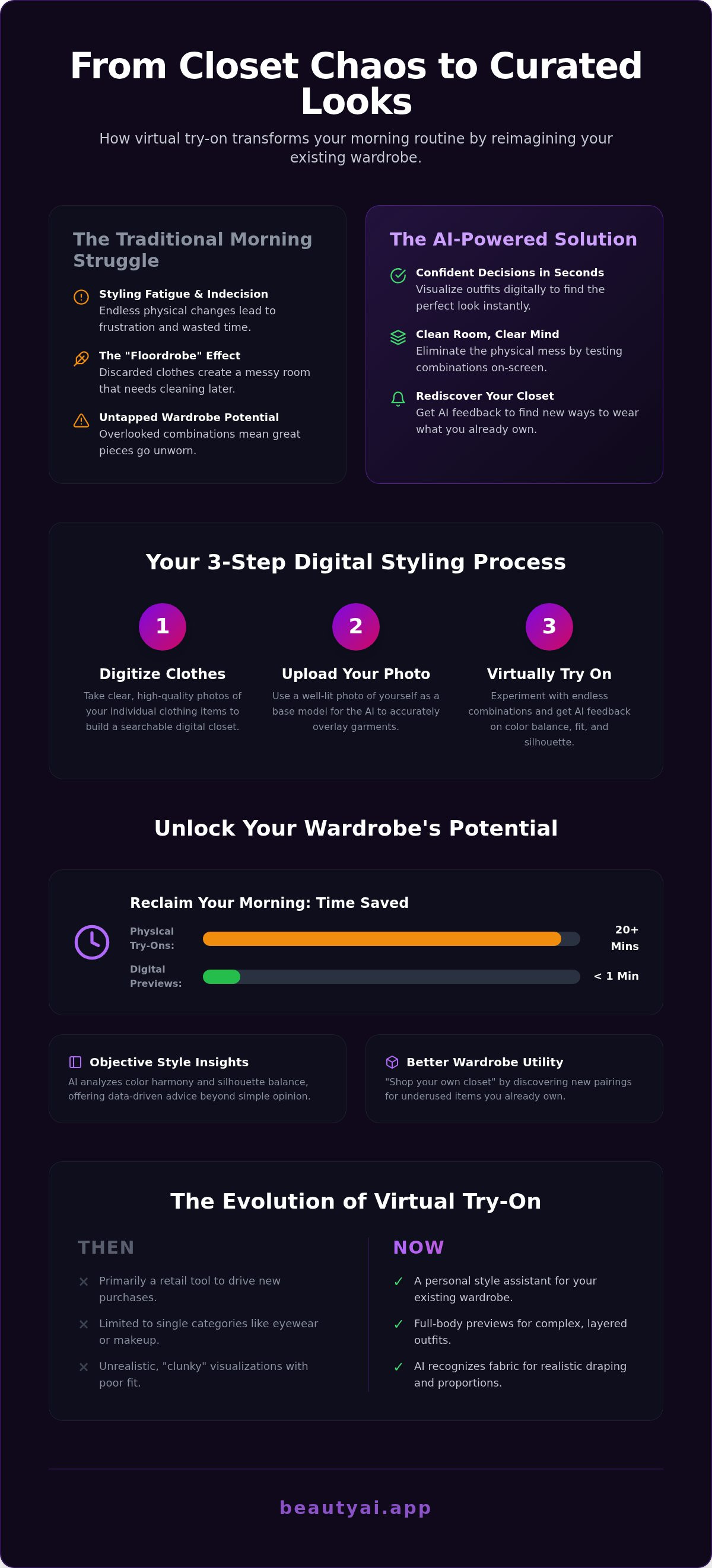
By using a virtual try on with AI feedback, you can visualize entire outfits from your personal collection without ever having to change your clothes. This technology acts as a digital partner, allowing you to test new combinations and receive objective insights on color balance and fit. It removes the friction of daily decision-making by turning your wardrobe into a searchable, trial-ready database. This article explains how to set up your digital closet, use AI tools to refine your look, and create a streamlined routine that saves time every morning.
Key Takeaways
- Understand how virtual try-on has evolved from a retail shopping feature into a functional tool for managing and maximizing your existing wardrobe.
- Eliminate the mess of "outfit piles" and reduce morning decision fatigue by testing clothing combinations digitally before you get dressed.
- Learn the systematic steps to digitize your clothes using high-quality photos to create a realistic and searchable digital closet.
- Discover how to use virtual try on with AI feedback to receive objective insights on color coordination and silhouette balance for every look.
- Start your digital transition by cataloging your ten most-worn items to build immediate styling momentum and efficiency.
Table of Contents
Defining Virtual Try-On in the Context of Personal Style
Virtual try-on is a digital preview that allows you to see how clothing looks on your body using a personal photo. While the concept of a virtual dressing room originated in retail to help shoppers buy new items, its application has shifted significantly. By 2026, this technology has moved from the storefront into your bedroom. It's now a functional utility for managing the clothes you already own. You no longer need to physically put on five different outfits to see which one works for a specific occasion.
This transition relies on a digital wardrobe app to bridge the gap between your physical closet and your digital life. Using a virtual try on with AI feedback, you can experiment with combinations that you might've previously overlooked. A virtual try on with AI feedback provides a structured way to evaluate your style choices without the physical effort of dressing. The process is straightforward. You take a photo of yourself and a photo of your clothes, and the software merges them. This provides a realistic visualization that helps you make styling decisions based on logic rather than guesswork.
The Shift from Shopping Feature to Personal Style Assistant
Early iterations of this technology were limited to specific categories like eyewear or cosmetics. You could see a pair of frames on your face, but full-body clothing visualization remained clunky and unrealistic. Modern tools have moved past these limitations. They now focus on the entire silhouette, allowing you to plan complex outfits from head to toe. Users are adopting these tools primarily to save time. Instead of spending thirty minutes in front of a mirror, you can swipe through ten different looks in seconds. This efficiency transforms styling from a chore into a streamlined workflow.
Why 2026 Technology is Different
The accuracy of current tools stems from advancements in computer vision. The AI now recognizes specific fabric properties, such as the weight of denim versus the fluid drape of silk. It uses these details to overlay digital images onto your photo with realistic draping that respects your body's unique proportions. Lighting and photo quality remain the most critical factors for success. A clear, well-lit photo ensures the AI can accurately map the garment to your frame. This creates a preview that's reliable enough to replace the physical act of changing clothes during your morning routine.
The Practical Benefits of Testing Outfits Digitally
Planning outfits digitally transforms your bedroom from a cluttered staging area into a clean, functional space. Most people spend significant time each morning physically cycling through clothing options. This process often results in a "floordrobe" of discarded items that must be folded and put away later. By digitizing this experience, you eliminate the physical mess entirely. You can evaluate the visual harmony of a look on your screen before you ever touch a hanger. This approach also allows you to test bold combinations or experimental layers without any social risk. You can see how a daring pattern or unconventional silhouette looks on your frame in private, giving you the confidence to wear it in public.
Digital previews also serve as a diagnostic tool for your wardrobe. When you see your clothes laid out in a digital interface, it's easier to identify genuine gaps in your collection. You might realize you have an abundance of statement tops but lack the neutral trousers needed to anchor them. This insight prevents you from making impulse purchases that don't coordinate with what you already own. It shifts your focus from buying more to using what you have more effectively.
Saving Time and Reducing Daily Decision Fatigue
Efficiency is the primary driver of digital styling. Consider the speed of a virtual try on with AI feedback. Physically changing five times can easily consume twenty minutes of your morning. In contrast, reviewing five digital previews takes less than a minute. This speed allows you to experiment with combinations you might otherwise ignore due to time constraints. Using a virtual closet app lets you batch your planning for the entire week during a single session. This preparation removes the stress of early morning decisions and ensures you start your day with a pre-validated look.
Better Wardrobe Utility and Sustainable Habits
Digital testing encourages you to "shop your own closet" by revealing new ways to wear existing pieces. We often buy new items because we feel our current options are exhausted; however, a virtual try on with AI feedback can suggest pairings you hadn't considered. This clarity prevents repetitive purchases and fosters more sustainable habits. Instead of buying another basic layer, you can see exactly which specific item will unlock the most value from your current inventory. If you're ready to stop the morning struggle, you can start organizing your closet today to see how your clothes actually look together.
Steps to Digitize and Preview Your Existing Wardrobe
Transitioning to a digital system requires a methodical approach to cataloging. You cannot expect accurate results from blurry or poorly lit images. Start by selecting your most-worn items to build immediate utility. Once your items are digitized, you can utilize virtual try on with AI feedback to see how these pieces interact without the physical effort of changing. This process turns your smartphone into a styling tool that manages your aesthetic with precision.
Upload each item to your chosen platform to begin the cataloging phase. A digital inventory allows you to sort by category, color, or season. This organization is the first step toward removing the friction of daily decision-making. Once your library is established, use the layering features to test complex outfits. You can see how a specific blazer interacts with different knitwear textures or how various trouser lengths affect your overall silhouette. This data-driven approach to styling ensures that every combination is intentional rather than accidental.
Capturing High-Quality Clothing Photos
Clear photography is the foundation of a functional digital closet. Use a flat lay approach for the best results. Place your garment on a neutral, flat surface near a window to capture natural light. Avoid using a flash. Flash photography creates harsh glares that distort fabric color and texture. Smooth out any wrinkles to ensure the AI recognizes the true silhouette of the piece. After taking the photo, use the background removal feature to isolate the item. This creates a clean digital asset that overlays smoothly onto your personal profile. For a comprehensive walkthrough on this process, consult our guide on how to build a digital wardrobe.
Creating a Consistent Digital Style Profile
Your base photo determines the accuracy of every digital preview. Wear form-fitting clothing and stand in a neutral pose against a plain wall. Keep the camera at eye level to avoid perspective distortion. This photo acts as the canvas for your virtual try on with AI feedback, so ensure the lighting is consistent with your clothing photos. Once uploaded, adjust the app settings to refine the fabric's drape and fit. Modern tools allow you to specify if an item is oversized, tailored, or stretch-heavy. In 2026, industry standards for high-fidelity visualization require a minimum resolution of 1080p for the base photo to maintain texture clarity during the AI overlay process. This level of detail ensures that the digital representation of your clothes feels authentic and reliable for daily planning.
Evaluating Different Types of Virtual Dressing Rooms
Choosing the right digital tool depends on whether you are shopping for something new or managing what you already own. Retailer-owned tools are designed to facilitate sales. They typically only allow you to try on items from their specific catalog. In contrast, independent platforms focus on your entire wardrobe ecosystem. By utilizing a virtual try on with AI feedback, you can bridge the gap between different brands and your personal closet. This cross-brand compatibility is essential for creating cohesive looks that don't rely on a single source.
Augmented reality (AR) mirrors and AI photo-based overlays offer different benefits. AR mirrors provide a real-time, motion-based experience often found in physical stores or through live camera filters. While engaging, they often sacrifice detail for speed. AI photo-based overlays use a static, high-resolution image to process virtual try on with AI feedback more accurately. This method allows the software to calculate how fabric drapes over your specific proportions, providing a more reliable visual for planning complex outfits at home.
Identify the utility of a tool by checking for these core features:
- Closet Uploads: The ability to digitize and store your existing items.
- Cross-Brand Layering: Mixing pieces from various retailers with your own clothes.
- Output Quality: High-resolution previews that maintain fabric texture.
- Mobile Efficiency: An interface that works quickly during a morning routine.
These tools are not for everyone. If you require bespoke tailoring or exact millimeter-perfect measurements for a wedding suit or gown, digital previews cannot replace a physical fitting. They are styling guides, not tailoring services. Use them to judge visual harmony, color coordination, and general silhouette rather than technical construction.
Retailer Previews vs. Independent Styling Apps
Retailer platforms function as digital catalogs. They help you visualize a single purchase but fail when you want to see how that new blazer looks with the vintage trousers you already own. An AI stylist app removes these boundaries. It acts as a neutral territory where your entire collection exists together. Mobile apps generally offer better utility than desktop tools for this purpose. They allow you to snap photos and plan looks directly from your dressing area, making the transition from digital planning to physical dressing seamless.
The Reality Check: Managing Expectations
Digital tools excel at visual organization, but they cannot simulate the sensory experience of clothing. A virtual try on with AI feedback will show you if two colors clash, but it won't tell you if a wool blend feels itchy or if a waistband has enough stretch for a long commute. Fabric weight and movement are still best judged in person. Approach digital styling as a way to filter your options and build a visual roadmap. Once the AI validates the coordination of the look, you can step into the physical clothes with the confidence that the aesthetic is already proven.
Applying AI Feedback to Your Style Routine
Adopting a virtual try on with AI feedback is more than a technical upgrade; it's a fundamental shift toward a more disciplined and organized lifestyle. When you treat your style as a skill to be managed, you remove the stress of random impulses. Start small. You don't need to digitize your entire closet in one afternoon. Focus on your ten most-worn items first. These are likely the foundation of your daily looks. Once these are in your digital library, you'll immediately see the benefit of having a searchable, visual database of your personal aesthetic. This system allows you to see exactly what you own without digging through drawers or hangers.
The long-term value of a digital wardrobe is the clarity it provides. You can filter your collection by fabric, color, or formality in seconds. This accessibility prevents you from overlooking high-quality pieces hidden at the back of your physical closet. It turns your morning process into a streamlined workflow where you select from a curated digital menu rather than a pile of clothes. Over time, this systematic approach builds a wardrobe that is both functional and intentional.
Streamlining Your Morning with Digital Previews
Planning for travel becomes a methodical process rather than a stressful scramble. You can preview every combination for a trip on your phone while you're still on your commute. This ensures you only pack what you've already validated digitally, reducing luggage weight and decision fatigue. Use the AI feedback to audit your color balance. The system acts as an objective mentor, identifying if a look is too monochromatic or if a specific accessory disrupts the visual order. To gain even more insight into your habits, use the cost per wear calculator alongside your try-on sessions. This helps you track which pieces provide the most value and which ones aren't earning their space in your closet.
Conclusion: Taking the First Step
Move away from impulse dressing and embrace intentional planning. Style is most effective when it's built on logic and preparation rather than luck. By using digital tools, you transform a complex daily routine into a series of simple, successful decisions. You gain confidence by knowing your outfit works before you ever put it on. This transition to a digital partner for your style removes the friction of getting dressed and gives you back valuable time every morning.
Streamline Your Style Through Digital Organization
Transitioning to a digital wardrobe allows you to reclaim your morning and eliminate the mess of discarded outfit piles. By shifting from physical trial-and-error to systematic planning, you turn style into a skill that is both predictable and efficient. Using a virtual try on with AI feedback ensures that every combination is visually validated before you even open your closet door. This process prioritizes your existing collection, helping you shop your own closet and identify genuine gaps rather than making redundant purchases.
Digital tools provide the structure needed to maintain a cohesive aesthetic without the daily friction of decision fatigue. Whether you're planning a travel itinerary or a standard work week, a searchable, visual library of your clothes is an essential productivity utility. Available on both iOS and Android, this technology acts as a functional partner for your personal aesthetic. It moves you away from the stress of a messy bedroom and toward a refined, intentional wardrobe. Start with your most-worn items to build immediate momentum and experience the clarity of an organized style routine. You don't have to guess what looks good when the results are right on your screen.
Embrace a future where getting dressed is the easiest part of your day. You have the tools to build a wardrobe that feels both modern and manageable.
Frequently Asked Questions
How accurate is virtual try-on technology for showing fit?
Virtual try-on technology provides a realistic visualization of silhouette and drape, but it isn't a substitute for a physical fitting. It's designed to help you judge how colors and layers coordinate on your frame. While 2026 standards for high-fidelity imaging ensure better texture clarity, you should still rely on your own measurements for technical tailoring. It's a tool for style planning rather than a guarantee of exact physical dimensions.
Can I use virtual try-on with the clothes I already own in my closet?
Yes, the primary function of Beauty AI is to help you manage and preview the clothes you already own. You simply take clear photos of your garments and upload them to the app. This allows you to utilize virtual try on with AI feedback to experiment with new combinations without the physical effort of changing. It turns your existing wardrobe into a searchable, trial-ready digital library for daily use.
Do I need a special camera or mirror to use virtual try-on apps?
You don't need any specialized hardware like AR mirrors or 3D scanners to use these tools. A standard smartphone with a functional camera is sufficient for both iOS and Android users. The software handles the complex task of mapping garments to your photo digitally. As long as you have a well-lit space to capture your clothing and a clear base photo of yourself, the app performs all the necessary processing.
Are virtual try-on apps free for personal use?
Most digital wardrobe apps offer a free basic version that includes core features like item cataloging and basic outfit planning. Beauty AI provides a free tier for individual users, though premium subscriptions are available for those who need unlimited storage or advanced analytical tools. These recurring fees support more detailed color analysis and personalized generation. Always check the current store listing for the most up-to-date information on advanced tiers.
How does virtual try-on help with sustainable fashion habits?
Digital styling promotes sustainable fashion by encouraging you to shop your own closet more effectively. When you can visualize new ways to wear existing pieces, you reduce the urge to make impulse purchases or buy repetitive basics. This leads to a more curated collection and less textile waste. By planning your looks ahead of time, you ensure every item in your wardrobe earns its space and serves a specific purpose.
Is my privacy protected when I upload photos to a try-on app?
Privacy is a priority for reputable styling platforms, as they require personal photos to function. Beauty AI utilizes standard industry encryption standards to secure your data and images within the app environment. It's a private tool designed for your personal organization rather than a social media platform. You should always review the specific privacy policy of any app to understand how your photos are stored and protected on their servers.
Can AI feedback help me find better color combinations?
AI feedback is specifically designed to analyze the visual harmony of your choices, including color coordination. The technology evaluates the balance between different shades and identifies if a look is too monochromatic or visually cluttered. Using virtual try on with AI feedback helps you discover flattering combinations you might've previously overlooked. It acts as an objective mentor, providing logic-based suggestions to refine your aesthetic and improve your overall confidence in your choices.
What should I do if the digital fit looks different from reality?
If the digital preview differs from reality, prioritize the physical comfort and movement of the actual garment. Digital tools are excellent for visual coordination and planning silhouettes, but they cannot simulate the tactile feel of fabric or the restriction of a waistband. Use the app to filter your styling ideas and build a roadmap. If a combination looks great on screen but feels uncomfortable in person, trust your physical experience over the digital image.


