


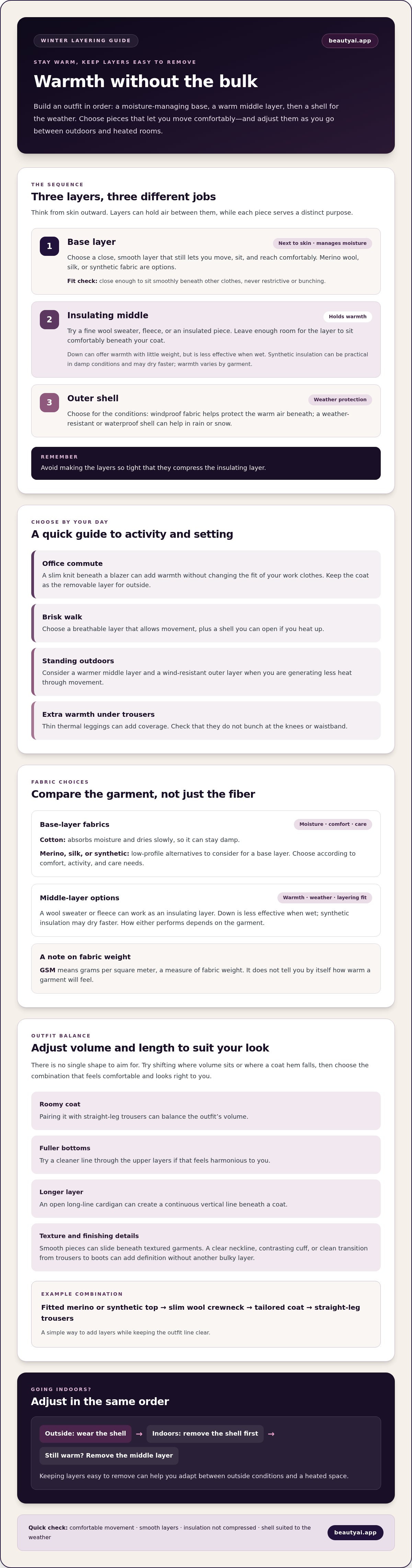
What if staying warm meant choosing thinner layers, not adding a heavier sweater? If winter outfits feel restrictive or leave you overheating indoors, the issue may be the order and weight of your clothes. These winter layering tips start with a moisture-wicking base, add a fine-gauge insulating layer, then finish with a weather-resistant coat when conditions call for it. For example, try a fitted merino or synthetic top under a slim wool crewneck and a tailored coat, with straight-leg trousers to balance the silhouette.
Keep each layer easy to remove. A light base and mid layer can handle a heated office, while your coat provides extra protection outside. Cotton can hold moisture next to the skin, so choose a synthetic or merino base for colder, active days. In this guide, you’ll learn how to select fabrics, adjust layers for indoor and outdoor temperatures, and balance proportions without relying on oversized winter gear.
Key Takeaways
- Use winter layering tips to choose a base, insulating middle layer, and weather-protective outer layer in the right order.
- Compare fine-gauge natural fibers and sleek synthetic blends to find warmth that suits your day and setting.
- Balance coat and boot proportions with the rest of your outfit, adjusting volume rather than relying on rigid body rules.
- Organize winter staples in a digital wardrobe to explore layered combinations and preview how they look together.
Table of Contents
Mastering the Three-Layer System for Maximum Insulation
Build warmth in sequence: a base layer manages moisture, an insulating middle layer holds warmth, and an outer shell blocks wind or precipitation. This works better than relying on one very thick garment because warmth depends partly on air held between layers. Keep those layers comfortable, not tight enough to compress the insulating layer. For indoor-outdoor days, choose a base that won’t stay damp, then remove the shell or middle layer as you enter a heated space. These winter layering tips help you adjust without carrying unnecessary bulk.
The Base Layer: Your Personal Thermostat
Wear the base layer next to your skin. Cotton absorbs moisture and dries slowly, so sweat can leave the fabric damp and make you feel chilled outside or uncomfortable once you warm up indoors. Merino wool and silk offer low-profile alternatives; synthetic fabrics are another option for moisture management. Choose by comfort, activity, and care needs rather than assuming one fabric suits everyone.
- Snug: It sits close enough to manage moisture.
- Not restrictive: You can move, sit, and reach comfortably.
- Smooth under layers: It doesn’t bunch beneath a shirt or sweater.
The Insulating and Outer Shell Layers
The middle layer traps air to help retain body heat. A down piece can offer warmth with little weight, but it’s less effective when wet. Synthetic insulation is often a practical choice in damp conditions and may dry faster, though warmth varies by garment. A wool sweater or fleece can also work; pick a layer that fits beneath your coat without compressing it.
Finish with a shell suited to the weather. Windproof fabric helps protect the warm air held by the layers beneath, while a weather-resistant or waterproof shell can help in rain or snow. Indoors, unzip or remove the shell first, then take off the middle layer if you’re still warm. This simple adjustment helps limit sweat without sacrificing comfort outside.
Selecting Technical and Natural Fabrics for Low-Volume Warmth
Choose winter fabrics by considering how active you’ll be, how long you’ll spend outside, and how neatly the pieces layer. For an office commute, a slim knit beneath a blazer can add warmth without changing the fit of your work clothes. For a slow outdoor walk, plan for less body heat by adding insulation and a coat that blocks the wind. These winter layering tips help you compare garments by use, not just by their fiber label.
Natural Fibers vs. Advanced Synthetics
Wool is breathable and can help manage moisture, while some tightly woven polyester blends resist wind. The performance of either depends on the garment’s construction. GSM means grams per square meter, a measure of fabric weight, but it doesn’t tell you by itself how warm a garment will feel.
Brisk walk: Choose a breathable layer that allows movement, and add a shell you can open if you heat up.
Standing outdoors: Consider a warmer mid-layer and wind-resistant outer layer, since you’re generating less heat through movement.
Under trousers: Try thin thermal leggings for extra coverage; check that they don’t bunch at the knees or waistband.
Texture Mixing for Visual Depth
Use fabric nesting to keep layers comfortable: place smooth, close-fitting pieces beneath textured garments so they slide rather than catch. A silk blouse under a fine wool cardigan, finished with a leather belt, gives a monochrome outfit contrast without adding another bulky layer. If sleeves or hems cling, switch to a smoother inner piece or adjust the fit of the outer one.
Catalog items by material in a digital wardrobe to spot pieces that could work together. A quick review can also help you identify which combinations suit walking, commuting, or time spent indoors.
Strategic Styling: Maintaining Proportions While Bundled
Use coat length and outfit breaks to create a balanced look, rather than defaulting to oversized pieces from head to toe. The rule of thirds for outfit proportions can help you assess where a coat hem divides your outfit, but treat it as a flexible visual guide. For example, compare a hip-length jacket with a longer layer underneath, then try a coat that ends nearer the knee. Small changes in length can shift the overall impression without changing how warm the outfit is.
Defining the Silhouette
Balance volume across the outfit: a roomy coat can pair with straight-leg trousers, while fuller bottoms may feel more harmonious with a cleaner line through the upper layers. A long-line cardigan worn open can create a continuous vertical line beneath a coat. If you add a belt over heavier outerwear, fasten it comfortably so it defines the outfit without squeezing the layers or restricting movement.
Use visible details to break up a continuous block of winter fabric. A contrasting cuff, a clear neckline, or a clean transition between trousers and boots can make the outfit feel considered. These are optional styling choices, not rules. Prioritize coverage when the weather calls for it.
Scaling Scarves and Accessories
An oversized scarf can add texture and become a focal point against a simple coat. If it obscures the neckline or dominates the rest of the outfit, try fewer wraps or a narrower scarf. Scale is a styling preference, not a body-size rule.
For another perspective, AI style feedback can help assess visible color, proportion, and balance in an outfit photo. Treat suggestions as optional styling input. Feedback can’t determine physical fit, fabric feel, or whether the layers will keep you comfortable outdoors.
Digital Layering: Planning Your Winter Wardrobe Efficiently
Use a digital wardrobe to map combinations before getting dressed. Add the winter pieces you reach for most, then build outfits around real combinations, such as a base top, blazer, coat, and trousers. A virtual closet app can help you organize those items and preview layered looks. Check the weather yourself when planning for the week, then adjust the outfit for the day. A digital preview can help you consider the look, but it can’t confirm warmth, comfort, or physical fit.
Visualizing Combinations Digitally
For a useful digital wardrobe, photograph each garment separately in even light, with the full item visible against a simple background. Keep the framing consistent and include details that affect styling, such as a coat’s length or a sweater’s neckline. Sort items into categories like coats, blazers, knitwear, and base layers so combinations are easier to review.
Try visualizing a coat over a blazer before assembling both layers in person. This can help you compare the overall shape and color balance. Treat virtual try-on as an approximate visualization, not evidence that the coat fits over the blazer or that either piece will feel comfortable when worn together.
Identifying Wardrobe Gaps
Review the combinations you’ve planned and note what’s missing. You may find you have coats and sweaters but few thin tops that sit comfortably beneath them, or no versatile mid-layer that works with several outfits. Record the gap before deciding whether you need another item; sometimes rearranging pieces you already own solves the problem.
Set aside a weekly planning session to pair a few outfits with the forecast you’ve checked. Keep the plan flexible, especially when temperatures or conditions change. The goal is to make useful combinations easier to find, not to lock yourself into a fixed schedule.
Build a Winter Layering Routine That Works for You
Warmth without bulk comes from choosing layers with distinct jobs, then adjusting the combination for your day. Start with a base that manages moisture, add insulation that fits comfortably, and use an outer layer to guard against the weather. Keep the silhouette balanced with thoughtful proportions, rather than making every piece oversized.
These winter layering tips are easier to apply when you can see your options together. Organize your winter staples in a digital wardrobe, preview outfit combinations, and use AI feedback to review visible balance and proportion. Virtual try-on images are approximate, so check garments in person for actual fit, warmth, and comfort.
Start planning your winter layers with Beauty AI using the clothes you already own. A little planning can make cold-weather dressing feel more considered and flexible. You can adjust the system to suit your routine and personal style.
Frequently Asked Questions
How many layers are too many for winter?
There’s no fixed number; layers become too many when they restrict movement, compress one another, or make you overheat. Start with the three functional layers in these winter layering tips, then add only what the weather and your activity call for. For a short outdoor trip, a base top, sweater, and coat may be enough. If you’re warm indoors, remove a layer rather than staying bundled.
Can I use a summer dress for winter layering?
Yes, a summer dress can work in winter if you add warmth without making it hard to move. Try opaque tights or leggings, a fitted long-sleeved top beneath a sleeveless dress, and a cardigan or coat over it. For example, layer a thin black turtleneck under a floral dress and add boots. Check that the extra pieces sit smoothly at the waist and under the arms.
What is the best fabric for a base layer if I have sensitive skin?
Choose the fabric that feels comfortable against your skin, since there isn’t one best option for everyone. Smooth silk or a soft synthetic may feel gentler than wool for some people, while fine merino works well for others. Check seams, labels, and fabric texture, and try the layer under your usual clothes before wearing it all day. Follow the care label to keep the fabric comfortable.
How do I stop my layers from bunching up under my arms?
Choose sleeves that lie flat and leave enough room for movement. A close-fitting base layer beneath a shirt or sweater usually bunches less than several loose sleeves stacked together. Before heading out, reach forward and lift your arms; if fabric gathers, smooth the layers from the shoulder down or swap one piece for a thinner option. Check that your coat sleeves aren’t pulling the inner layers upward.
Is it better to have one heavy coat or multiple thin layers?
It depends on your day. Multiple layers are easier to adjust between cold outdoors and heated indoor spaces, while one heavy coat may be simpler for a brief trip outside. For a commute, try a comfortable base, a light insulating layer, and a weather-appropriate coat. Choose based on conditions and activity, and make sure the coat fits over your layers without squeezing them or limiting movement.


