

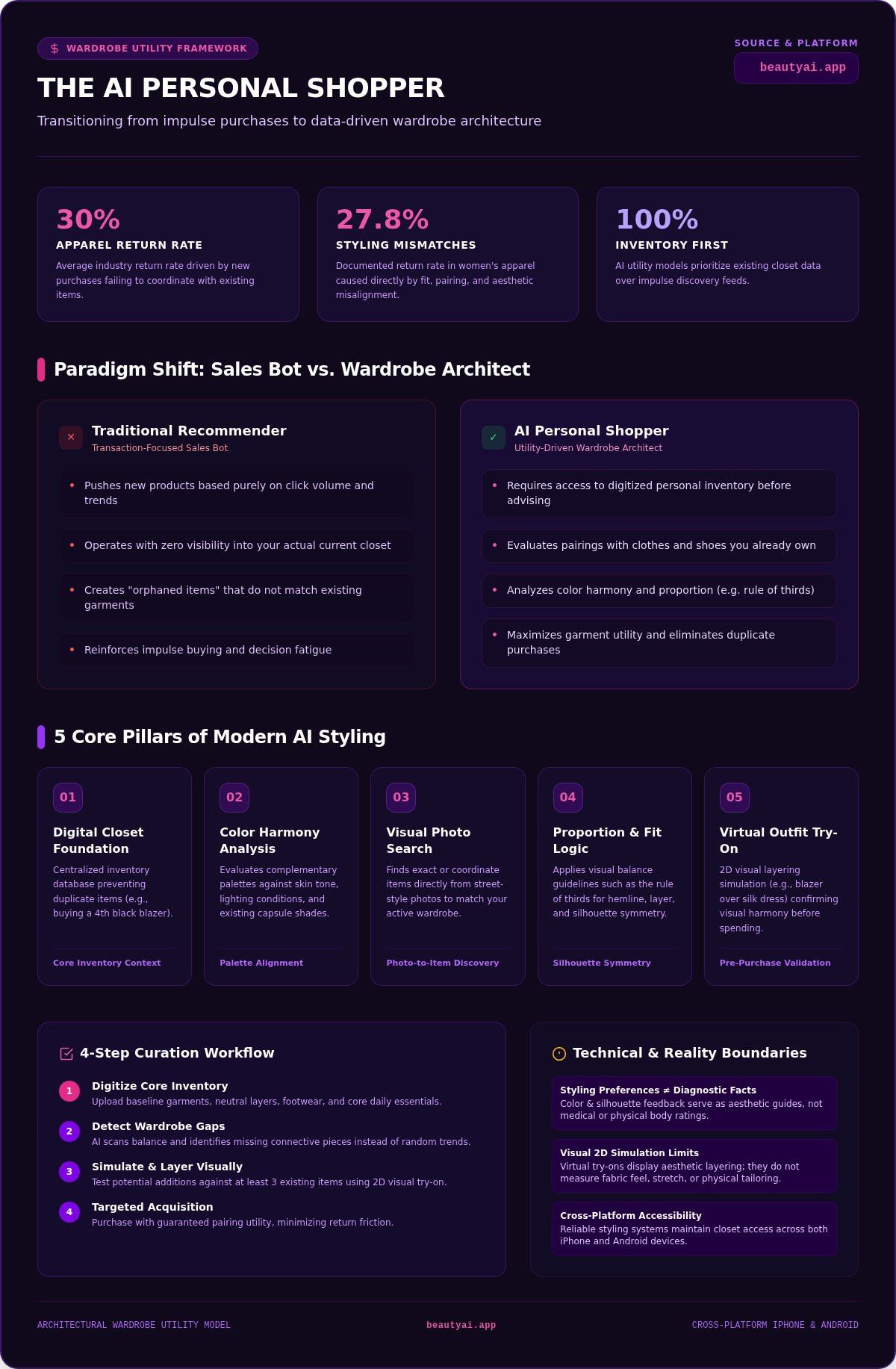
Recent retail data shows that apparel return rates often hit 30% because new purchases simply don't match the clothes people already own. Most shopping experiences focus on the transaction rather than the transition into your closet. An AI personal shopper changes this dynamic by acting as a digital partner for your style; it analyzes your current inventory to ensure every new addition serves a specific purpose. You likely feel the weight of decision fatigue every morning or regret spending money on items that sit unworn. This article demonstrates how to move from impulsive buying to intentional curation.
You'll learn how modern AI tools move beyond basic sales bots to help you organize a functional capsule wardrobe and simplify your daily routine. We will examine how to use visual search and AI feedback to find pieces that coordinate with your existing garments. By the end, you'll know how to shop with data-driven logic to ensure every garment you buy offers high utility and fits your lifestyle. This approach replaces the friction of random shopping with a methodical system for building a better wardrobe.
Key Takeaways
- Shift from passive browsing to intentional curation by using an AI personal shopper that prioritizes your existing inventory over random trends.
- Utilize visual tools like color analysis and virtual try-on to validate how new pieces will integrate with your current wardrobe before you spend.
- Select a digital styling partner that offers cross-platform availability on iPhone and Android to ensure your closet data remains accessible anywhere.
- Build a more efficient morning routine by digitizing core garments and using automated outfit planning to maximize the utility of every item you own.
Table of Contents
Defining the AI Personal Shopper: A Shift Toward Wardrobe Utility
A modern AI personal shopper functions as a digital assistant that merges style logic with precise inventory management. It acts as a digital architect rather than a simple sales bot. While traditional recommender systems prioritize pushing new products based on clicks, a wardrobe architect prioritizes the utility of your existing clothes. In 2026, consumers are moving away from impulse-driven search toward systematic planning to solve the problem of "orphaned items" that don't match anything else. This change is a response to high return rates in women's apparel, which reached 27.8% recently due to styling mismatches.
- Requires access to your current closet data.
- Suggests pairings with items you already own.
- Provides feedback on visual color harmony and proportion.
The Evolution of Digital Styling Assistants
Digital styling has evolved from static search filters to proactive AI feedback. Early tools focused on the question "what should I buy?" by showing you generic trends. Modern assistants shift the focus to "how do I style this?" by analyzing visual balance. This transition allows you to treat style as a skill to be mastered through organization. Instead of scrolling through endless feeds, you receive specific advice on how a new silk blouse might work with your favorite charcoal trousers or leather loafers.
Why Personalization Requires a Digital Closet
Effective personalization is impossible if the AI doesn't know your current inventory. A wardrobe management app serves as the essential foundation for this ecosystem. It bridges the gap between digital planning and physical habits. Without a digitized closet, an AI cannot identify where your wardrobe is lacking. It might suggest another black blazer when you already own three. By uploading your core items, you provide the context needed for the AI to find high-utility pieces that truly belong in your rotation. This reduces decision fatigue and eliminates wasted spending on unflattering trends.
5 Essential Features of a High-Performance AI Stylist
High-performance tools distinguish a functional AI personal shopper from a standard retail search engine. According to a McKinsey analysis on generative AI in fashion, these digital assistants transform discovery by matching products to unique personal wardrobe profiles rather than generic demographics. Key features include color analysis to identify palettes that complement your specific lighting and skin tone, and the ability to find clothes from a photo to replicate specific items you see in street-style imagery. These capabilities ensure that every new purchase integrates seamlessly into your existing rotation and serves a clear purpose.
AI Style Feedback and Proportion Logic
Objective data helps you master visual balance without the guesswork. Use style feedback tools to analyze the symmetry and proportion of your outfit, such as applying the rule of thirds to determine where a jacket hemline should hit relative to your trousers. This logic ensures your silhouette looks intentional and balanced for specific occasions. Remember that these suggestions are preference-based guides rather than diagnostic facts or medical assessments. Use them to refine your personal aesthetic and build confidence in your styling choices. You can start optimizing your daily looks by testing these systematic feedback loops on your mobile device.
Virtual Try-On: Visualizing the Future of Your Closet
Validate your choices before clicking the buy button. Virtual try-on features allow you to see an approximate visualization of how a new charcoal blazer might layer over your favorite silk midi dress. This visual confirmation helps you identify potential styling conflicts before you spend money. It's a critical tool for building a cohesive capsule wardrobe. Note that these generated images are 2D simulations. They don't guarantee physical fit, fabric weight, or real-world comfort. Use them as a sophisticated visual guide to see if the aesthetic harmony works with what you already own.
Evaluation Framework: Choosing Your Digital Styling Partner
Selecting an AI personal shopper requires a rubric that prioritizes your existing inventory over sales volume. Evaluate whether the platform offers a "closet-first" approach. This functionality allows you to digitize your navy blazer or leather Chelsea boots before the AI suggests a new purchase. Ensure the service supports cross-platform syncing between iPhone and Android devices to keep your wardrobe data accessible. You need a tool that functions as a digital architect rather than a simple sales funnel designed to move stock.
Comparing AI Shopper Categories
Distinguish between retailer-owned bots and independent wardrobe planners like Beauty AI. Retailer bots often focus on inventory turnover, while independent planners prioritize the long-term utility of your garments. You should also consider the speed of pure AI feedback loops versus human-in-the-loop services. Pure AI provides instant, objective feedback on visual balance and color harmony. This removes the scheduling friction associated with human stylists. Check if the AI stylist app provides actionable advice on proportion rather than just generic product links.
The Role of Capsule Wardrobe Planning
A capsule wardrobe app helps you identify structural gaps that prevent your closet from functioning as a cohesive system. Wardrobe gap analysis is the process of identifying missing essential items. For instance, you might realize you own several high-quality midi skirts but lack the specific footwear to make them work for a rainy commute. By identifying these gaps, you ensure every new purchase has high utility. Look for professional discipline in how the app handles your data and privacy. Get started with a digital audit to see which essential pieces your wardrobe is currently missing.
Implementing Your AI Shopper: From Digital Closet to Smarter Purchases
Begin by photographing your core wardrobe items, focusing on your most-worn pieces like versatile denim, neutral knits, and essential outerwear. Establish this inventory as the foundation for your AI personal shopper to reference during the styling process. Next, utilize an outfit maker to generate fresh combinations from your existing garments. This process often reveals new ways to wear older items, increasing your cost-per-wear immediately. Perform a gap analysis to identify specific missing pieces required for your lifestyle. For example, you might own several midi skirts but lack the structured blazer needed to make them office-appropriate. Finally, use visual search to locate the specific garments that fulfill these identified needs.
Transitioning from Impulse to Intent
Adopt a mindset of intentional curation by requiring your AI personal shopper to validate every potential purchase against your current collection. This shift ensures you never buy an item that doesn't have at least three existing pairings in your closet. Strategic wardrobe logistical planning reduces morning friction by ensuring every item has a pre-determined purpose and a matching set of accessories. You stop shopping for a fantasy version of yourself and start investing in the reality of your daily needs. This logic-first approach transforms style into a streamlined productivity utility.
Next Steps: Simplifying Your Daily Routine
Move from abstract inspiration to concrete planning by formalizing your style system today. Transitioning to a digital-first workflow allows you to audit your aesthetic choices with professional precision. Check current store listings for app permissions, privacy settings, and feature availability on your specific operating system to ensure a seamless experience. Reliability is key when integrating technology into your physical habits; it's the foundation of a successful digital closet. Take control of your personal aesthetic through systematic organization rather than random impulse. Download Beauty AI to start building your digital wardrobe today.
Master Your Style Through Intentional Curation
Master your personal style through organization and data-driven logic. Shift from impulse-driven browsing to a closet-first strategy to ensure every new purchase has a specific purpose. An AI personal shopper acts as your digital architect. It bridges the gap between the clothes you own and the items you need to complete a cohesive capsule wardrobe. You've already seen how to digitize your inventory, perform a gap analysis, and validate styling choices before spending money.
This systematic approach removes the friction of daily decision-making and eliminates the waste of poorly fitting trends. Plan outfits using clothes you already own while receiving objective feedback on color and proportion. This modern utility is available for both iOS and Android, allowing you to manage your aesthetic from anywhere. It's time to take control of your personal aesthetic through systematic planning. Ready to simplify your style? Download Beauty AI and start your digital wardrobe today. Take the first step toward a more efficient morning routine and a wardrobe that truly works for you.
Frequently Asked Questions
Can an AI personal shopper really understand my personal style?
Yes, an AI personal shopper understands your style by analyzing the visual data from your uploaded clothing photos and outfit combinations. It evaluates your preferences based on color harmony, proportion, and frequency of wear. Instead of relying on random fashion impulses, the system uses logic to identify patterns in your wardrobe. This allows it to suggest new pieces that match your established aesthetic rather than generic retail trends.
Is virtual try-on accurate for sizing and fit?
No, virtual try-on tools do not guarantee physical fit or fabric feel. They provide approximate 2D visual simulations to help you evaluate color compatibility, silhouette balance, and overall styling harmony. Independent retail studies show this visual confirmation reduces return rates by 20% to 40% by preventing aesthetic mismatches. Always check current store listings and specific manufacturer size charts to verify actual physical measurements before purchasing.
Do I need to upload my entire closet to use an AI stylist?
No, you can start by digitizing your core wardrobe essentials. Photographing your 10 to 15 most-worn items, such as your favorite denim, neutral blazers, and versatile boots, provides enough data for the system to be effective. This initial foundation allows the tool to generate new combinations and perform basic gap analysis. You can gradually upload remaining items as your daily routine permits.
How does AI color analysis work from a photo?
AI color analysis evaluates the contrast and undertones in your uploaded photos to suggest complementary palettes. The system looks at visual relationships between shades to recommend clothing colors that harmonize with your profile. This feedback represents a preference-based styling guide rather than a definitive diagnostic fact. Results can change based on your camera processing, clothing choices, and ambient lighting conditions.
Can an AI shopper help me build a capsule wardrobe?
Yes, a modern AI personal shopper is an excellent tool for building a capsule wardrobe. It uses systematic gap analysis to identify missing essential items that would connect your existing clothes. For example, it might find that adding one neutral trench coat will unlock five new outfit combinations from your current inventory. This process ensures you only buy high-utility items that maximize your wardrobe's efficiency.


