

Virtual try on for retail uses augmented reality and AI to let you see how clothes look on your body or a digital avatar before you buy. These tools help you overcome inconsistent sizing across brands by providing a visual reference for fit and drape. By using your smartphone camera or uploading a photo, you can preview items in your own space, which reduces the need for time-consuming returns. This technology allows you to shop with more confidence, ensuring that the pieces you choose actually work with your existing wardrobe and body shape on the first try.
One out of every four fashion items bought online ends up back in the mail because it didn't fit or look right. You've likely felt the frustration of unboxing a new shirt only to find the medium fits like a small, or the color looks nothing like the screen. It's time to stop guessing and start using data to refine your style. This guide explains how to use virtual try-on tools to find your perfect fit and build a more functional wardrobe. We'll break down the different technologies available at your favorite stores and show you how to integrate these digital previews into your daily shopping routine.
Key Takeaways
- Distinguish between 2D image overlays and 3D body mapping to better understand how different fabrics will realistically fall on your unique shape.
- Optimize your digital scan results by wearing form-fitting clothes and using consistent lighting to provide the AI with high-quality visual data.
- Integrate virtual try on for retail into your shopping workflow to visualize new purchases alongside your current wardrobe, reducing the likelihood of expensive returns.
- Evaluate the benefits of mobile apps versus in-store hardware to choose the most secure and convenient fitting method for your lifestyle.
- Use AI-driven feedback to move beyond guesswork and build a more intentional, functional collection of clothes that you'll actually wear.
Table of Contents
What Is Virtual Try On for Retail?
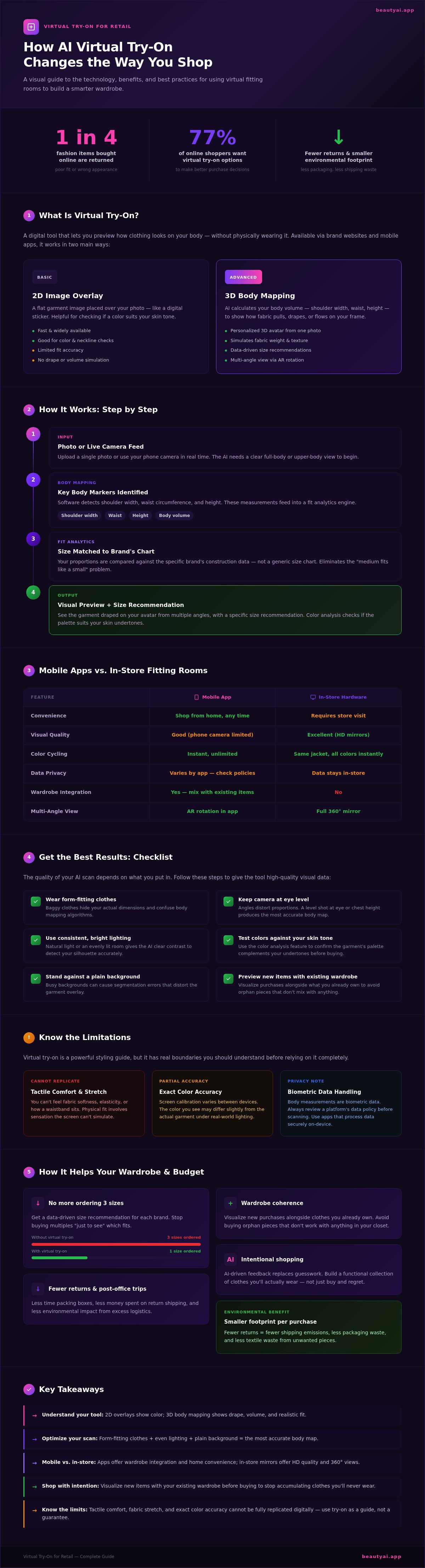
Virtual try on for retail is a digital tool that allows you to preview how clothing looks on your body without physically wearing it. You'll typically find this technology on brand websites or mobile apps. It functions in two primary ways: 2D overlays, which place a flat image over your photo, and 3D body mapping, which uses AI to wrap a digital garment around a virtual model of your frame. While it's an excellent styling guide for visualizing proportions and color, it doesn't offer a 100% guarantee of physical fit since fabric stretch and tactile comfort can't be felt digitally.
The difference between 2D and 3D technology is significant for your results. 2D overlays are essentially digital stickers that sit on top of your photo. They're helpful for seeing if a color suits your skin tone. 3D body mapping is more advanced; it calculates the volume of your body to show how a fabric might pull or drape. You can use a virtual try-on app to test these variations from your living room. Research indicates that 77% of online shoppers want these options to help them make better decisions, even if they don't always trust the results yet. By using a virtual dressing room, you can see if a specific neckline suits your face shape or if a hemline hits at a flattering spot. It turns the abstract process of online shopping into a concrete visual plan.
The Role of Augmented Reality in Fashion
Augmented Reality (AR) acts as the bridge between your physical space and digital products. It uses your smartphone camera to "drape" digital garments over your real-time image. Some physical stores now feature virtual mirrors that let you cycle through different colors of the same jacket without undressing. This helps you evaluate color balance and style harmony instantly. It's about seeing the total look before you commit to the purchase. AR allows you to rotate your image and see how a piece looks from different angles, providing a sense of depth that a standard product photo lacks.
Why This Technology Matters for Your Budget
Using virtual try on for retail helps you shop with intention. You can avoid the habit of ordering three different sizes of the same item just to see which one works. This precision reduces panic buying and saves you from the tedious cycle of packing up returns. Fewer returns also mean a smaller environmental footprint for your wardrobe. By seeing a realistic preview, you spend less time in post-office lines and more time wearing clothes that actually fit your lifestyle. It's a pragmatic way to ensure your money is spent on items that genuinely complement your existing collection.
How Retail Try On Technology Works for You
Using virtual try on for retail begins with a simple input: a photo or a live camera feed. When you stand in front of your camera, the software identifies key body markers to map your dimensions. It doesn't just place an image of a dress over you. It calculates your shoulder width, waist circumference, and height to estimate how the fabric will actually fall. This process, often called fit analytics, compares your unique proportions against the brand's sizing charts. Instead of guessing if you're a size 6 or 8, the system provides a data-driven recommendation based on how the garment is constructed.
Visualizing the fit is only half the battle. To ensure the piece looks right, many tools now integrate color analysis for skin tone to check if the garment's palette complements your natural undertones. As these tools collect more detailed information, questions about biometric data privacy law become relevant for many shoppers. Reliable platforms prioritize secure processing of your measurements, ensuring your digital twin remains private. To start building your own digital profile safely, you can try a dedicated styling app that manages your data securely.
From Static Photos to 3D Models
Modern technology has moved past generic mannequins. Some apps can now generate a personalized 3D avatar from a single static image. This avatar isn't just a visual representation; it's a functional model that simulates fabric movement and texture. When you "wear" a silk blouse virtually, the AI calculates the weight and sheen of the silk compared to a heavy wool coat. This level of realism helps you understand if a fabric is too stiff for your liking or if it flows exactly the way you want. Using virtual try on for retail in this way allows you to test the drape of a garment before it ever touches your skin.
The Logic Behind AI Style Recommendations
An AI stylist app uses logical algorithms to suggest complementary pieces for your wardrobe. These recommendations aren't based on fleeting trends or personal opinions. Instead, the logic focuses on established style rules like color balance, silhouette harmony, and occasion appropriateness. If you're trying on a wide-leg trouser, the algorithm might suggest a fitted top to balance the volume. It looks at the structural relationships between items to help you build a cohesive look. This systematic approach ensures that every new purchase fits into your existing closet with purpose.
Comparing Mobile Apps and In-Store Virtual Fitting Rooms
Choosing between a mobile app and an in-store kiosk depends on your specific goal for the day. While in-store kiosks often feature specialized sensors and professional lighting, mobile apps provide the unmatched convenience of private, long-term wardrobe planning. Using virtual try on for retail through your own smartphone ensures that your biometric data remains on a device you control. This privacy advantage is a significant factor for modern shoppers who prefer not to share body scans with a rotating list of different retailers. While a store kiosk might have slightly better depth perception for complex silhouettes, your phone is more than capable of handling daily styling decisions.
In-store hardware excels at providing immediate gratification during a shopping trip. If you're physically at a mall, a magic mirror helps you see five different colors of a sweater in seconds without stepping into a traditional stall. However, for deep wardrobe integration, the mobile experience is superior. You can compare a potential new purchase against items you already own, ensuring the new piece has a clear purpose. This systematic approach turns shopping from an impulsive act into a controlled exercise in personal organization. It allows you to move at your own pace without the pressure of a physical retail environment.
Mobile Apps: The Closet in Your Pocket
The primary benefit of a digital wardrobe app is its constant accessibility. You can experiment with new looks at 2 AM from your home without the noise of a sales floor. These apps allow you to save various combinations and test clothes alongside your existing digital inventory. This persistent access makes it easier to track what you've tested and which styles consistently work for your body shape. It's a tool for the organized shopper who values planning over luck and wants to build a cohesive look over time.
In-Store Kiosks: The High-Tech Mirror
Retail kiosks, often called magic mirrors, provide a tech-enhanced experience right where you shop. They're particularly useful when you don't want to carry multiple hangers to a physical fitting room. You can simply scan a barcode and see the digital version draped over your reflection in the mirror. Despite the high-tech appeal, these systems have limitations. You'll often face queues during peak hours, and the technology is restricted to that specific brand's inventory. While they're great for a quick check of a single item, they lack the cross-brand flexibility found in personal mobile tools.
Getting the Best Results from Virtual Fitting Rooms
To maximize the accuracy of virtual try on for retail, you must provide high-quality visual data. AI algorithms rely on clear edge detection to separate your silhouette from the background. If your input is blurry or poorly lit, the tool can't accurately estimate how fabric will drape over your unique frame. Think of your initial scan as a digital foundation. The more precise this foundation is, the more reliable your style previews will be when using a digital wardrobe app to plan your looks. Accuracy isn't just about the software; it's about the quality of the information you feed it.
Lighting and Camera Angles
Your environment plays a critical role in how the AI perceives your body proportions. Follow these steps to ensure the software captures an accurate baseline for your digital twin:
- Step 1: Find a room with bright, even natural light. Avoid harsh overhead lamps or backlighting that creates deep shadows. Shadows can confuse the edge detection software and lead to distorted fit recommendations.
- Step 2: Position your phone at chest height. Placing the camera too high or too low can distort your proportions, making digital clothes look shorter or longer than they actually are in real life.
- Step 3: Stand 5 to 7 feet away from the lens. This specific distance allows the camera to capture your full silhouette from head to toe without the lens distortion that happens when you're too close.
What to Wear for Your Digital Scan
The clothes you wear during your initial scan act as a canvas for the digital garments. To get the most realistic results, follow these preparation tips before you start the process:
- Choose form-fitting base layers like leggings or a tight t-shirt. This helps the AI identify your true shape rather than the shape of the bulky clothes you might be wearing at the moment.
- Wear solid colors that contrast sharply with your background. If you're standing against a light-colored wall, wear dark clothing to help the AI define your edges with high precision.
- Tie back long hair. Keeping your neck and shoulder line visible allows the software to accurately map how necklines and collars will sit on your frame.
Consistency is the final piece of the puzzle. If you're comparing multiple items, keep your phone in the exact same spot for every scan. This ensures the scale remains constant, allowing you to see the true difference in length and volume between different sizes or styles. When you maintain these standards, you maximize the effectiveness of virtual try on for retail. High-quality input leads to high-confidence shopping and fewer returns.
Using Virtual Try On to Build a Better Wardrobe
Virtual try on for retail serves as a strategic tool for long-term wardrobe refinement rather than just a quick shopping shortcut. Shift your focus from buying more to buying right by using these digital previews to validate every potential addition. When you can see a new retail item rendered on your digital twin, you can immediately assess if it fills a genuine gap or simply duplicates something you already own. This process allows you to shop your own closet first, ensuring that new purchases enhance your existing style rather than cluttering it.
Utilizing a virtual closet app helps you track your style evolution over time. It provides a visual history of what fits, what drapes well, and which colors consistently work for you. This data-driven approach removes the friction of daily decision-making by replacing impulse with organization. By maintaining a digital record of your wardrobe, you can integrate retail previews into your personal ecosystem with high precision. You'll stop viewing clothes as isolated purchases and start seeing them as functional components of a larger, more efficient system.
Plan Outfits Before You Buy
Use an outfit generator app to test a new retail piece with at least five items you already own. If you can't visualize the new item working in multiple combinations, it's likely to become an "orphan" item that sits unworn in the back of your drawer. This systematic testing allows you to apply a cost per wear logic before you even spend a dollar. A higher-priced item that pairs with ten existing outfits is often a better investment than a cheap trend piece that only works with one. Planning in this way ensures that every new acquisition has a clear, functional purpose from day one.
The Future of Personal Style Management
Personal style is moving toward a world where your digital wardrobe and retail apps communicate seamlessly. This integration enables the creation of highly functional capsule wardrobes, where every piece is selected for its versatility and fit. By using virtual try on for retail to preview these collections, you remove the guesswork that often leads to wasteful spending. You can curate a lean, high-quality closet that reflects your personal aesthetic with minimal effort. Start your journey toward a more organized, intentional wardrobe by downloading the Beauty AI app today.
Master Your Personal Style with Precision
Virtual try on for retail has transformed from a futuristic novelty into a functional tool for the modern shopper. By prioritizing high-quality scans and understanding the logic behind digital draping, you can stop guessing and start planning with confidence. These tools allow you to visualize how new retail pieces integrate with your existing wardrobe, ensuring every purchase has a clear purpose. You've learned how to optimize your environment for the best results and how to use these digital previews to avoid the cycle of endless returns. Mastering your style is no longer about luck or random impulses. It's about using a systematic approach to organize your aesthetic choices and build a wardrobe that actually works for your daily life.
Join thousands of users who are currently simplifying their routines with AI-driven style feedback. By using virtual try-on for your own clothes and shopping previews, you'll move from impulsive buying to intentional wardrobe building. It's time to take control of your closet and enjoy the calm efficiency of a perfectly planned look.
Frequently Asked Questions
Is virtual try on accurate for sizing and fit?
Virtual try on provides a high-confidence estimate of how a garment will look, but it isn't a 100% guarantee of physical fit. The technology uses 3D body mapping to show how fabric drapes and where hemlines fall on your specific frame. However, it cannot simulate the exact stretch of a fabric or how it feels against your skin. Treat it as a visual styling guide to narrow down your choices.
Do I need to download a separate app for every retail store?
Many individual brands offer their own tools, but you can use a single digital wardrobe app to manage everything in one place. Using a centralized tool like Beauty AI allows you to preview clothes from various sources without cluttering your phone. This approach also ensures that your biometric data stays in one secure location rather than being shared across dozens of different retail platforms.
How does virtual try on handle different body shapes and heights?
Modern virtual try on for retail uses AI to analyze your specific proportions rather than relying on generic models. When you provide a photo or live feed, the software identifies key markers like your shoulder width, waistline, and height. The digital garment is then adjusted to reflect your unique silhouette. This ensures that the preview shows a realistic representation of how the clothing volume interacts with your body.
Is my photo and body data safe when using these retail tools?
Data safety depends on the specific app's privacy policy, so always prioritize platforms with transparent security standards. Reputable styling tools use encryption to protect your biometric files and photos. Using a personal device for virtual try on for retail is generally more secure than using public in-store kiosks. You retain control over your digital twin and can delete your data whenever you choose to reset your profile.
Can I use virtual try on for accessories like glasses, hats, or watches?
Yes, many platforms feature specialized tracking for accessories like eyewear and jewelry. These tools use face-mapping or wrist-tracking to place items with high precision. It's a pragmatic way to see if a specific frame shape complements your face or if a watch diameter is proportional to your wrist. This technology is often even more accurate than full-body clothing simulations because the tracking points are more stable.
Does virtual try on work for clothes I already own in my closet?
You can upload photos of your current wardrobe to see how they look on your digital avatar. This is a core feature of a functional digital wardrobe, allowing you to receive AI style feedback on your existing pieces. It helps you experiment with new combinations without physically changing clothes. You can also use this feature to see how a potential new purchase will look next to your favorite jacket.
What is the difference between AR try on and a virtual dressing room?
AR try on typically uses a live camera feed to "drape" digital clothes over your moving reflection in real-time. A virtual dressing room often uses a static 3D avatar created from your specific measurements. Both tools help you visualize style and color balance, but AR offers a more dynamic view of movement. Virtual dressing rooms are often better for precise size comparisons and detailed wardrobe planning sessions.
Why do some virtual clothes look like a video game instead of real fabric?
The realism of digital clothing depends on the complexity of the fabric simulation and your device's processing power. Stiff materials like denim are easier for AI to render than lightweight silks or complex knits. If the lighting in your photo is poor or the 3D model lacks detail, the garment may appear flat. High-quality input and advanced AI engines are required to produce realistic textures and natural fabric movement.


