


Old money outfits usually combine familiar tailoring, understated colors and well-kept everyday pieces. You do not need designer labels, a new wardrobe or a particular background. Start with a shirt or fine knit, trousers or a skirt that fit comfortably, and shoes appropriate for your day. Then adjust the layer and the finish. Below are 20 complete looks—10 in women’s styling and 10 in men’s styling—with substitutions for clothes you may already own. Borrow across either section; the useful part is the combination, not the category.
I’m David Voskanyan, founder and CTO of Beauty AI. My approach is to build the outfit before buying the aesthetic. A saved picture can suggest a direction, but your climate, body, dress code and existing wardrobe decide whether it is worth wearing.
Jump to women’s outfits, men’s outfits, or small changes that improve a look.
What is old money style—and what can you leave out?
In current fashion usage, “old money” describes an understated, often preppy look: shirts, polos, simple knitwear, tailoring, loafers and a fairly restrained palette. Quiet luxury overlaps with it, but neither phrase requires a luxury purchase. Treat this as a visual reference, not a claim about status or a standard of good taste everyone must follow.
The version I find useful has three decisions: a clear silhouette, colors that work together and footwear that suits the setting. You can leave out the yacht, the club uniform, the designer monogram and the idea that an outfit must make you look wealthy. A plain tee with straight trousers can be enough.
There is no universal ban on black, denim, sneakers, synthetics or bright color. Those choices change the mood. Use a familiar piece in a quieter combination before deciding it has to go. A polyester-blend trouser that fits and feels good is more useful than an uncomfortable “correct” fabric.
Build a small outfit kit from your wardrobe
Choose what you own in each row. This is a starting kit, not a shopping list, and you do not need every option. Try making three looks with the same bottom before adding another piece.
| Role | Useful starting piece | Already-own substitute | Check before wearing |
|---|---|---|---|
| Light top | White or pale blue cotton shirt | Plain tee, simple blouse or fine polo | Collar, opacity and freedom to move |
| Soft layer | Fine cardigan or crewneck | A neat sweatshirt with quiet details | Whether the hem bunches under the outer layer |
| Anchor bottom | Navy or charcoal trousers | Dark straight jeans or a plain midi skirt | Comfort when sitting and the hem with your actual shoes |
| Structure | Blazer or simple coat | Firm cardigan, chore jacket or overshirt | Shoulder movement and enough room for the base layer |
| Everyday shoe | Loafer or plain flat | Clean low-top sneaker or simple boot | Walking comfort, weather and the venue’s dress code |
| Finish | Plain belt or everyday bag | The bag you already carry, kept simple | Whether it helps the outfit rather than adding a costume detail |
Four color combinations that are easy to repeat
- Navy + pale blue + brown: a shirt, dark trousers and your existing brown shoes. Use white sneakers if the setting is casual.
- Cream + charcoal: a light knit and darker tailored bottom. A black shoe fits naturally; a camel layer makes the contrast softer.
- White + denim + navy: an ordinary shirt-and-jeans outfit with one structured layer. Keep the denim wash consistent rather than chasing a specific shade.
- Stone + olive + off-white: a less predictable option for overshirts, chinos and warm-weather looks. Navy can replace olive without rebuilding the outfit.
Keep the colors of your biggest pieces compatible, then decide whether an accent is useful. A burgundy bag or green knit can belong here. For more choices, the clothing color combinations guide explains how to build around a neutral without making every outfit beige.
10 old money outfits for women
1. The shirt-and-trouser workday
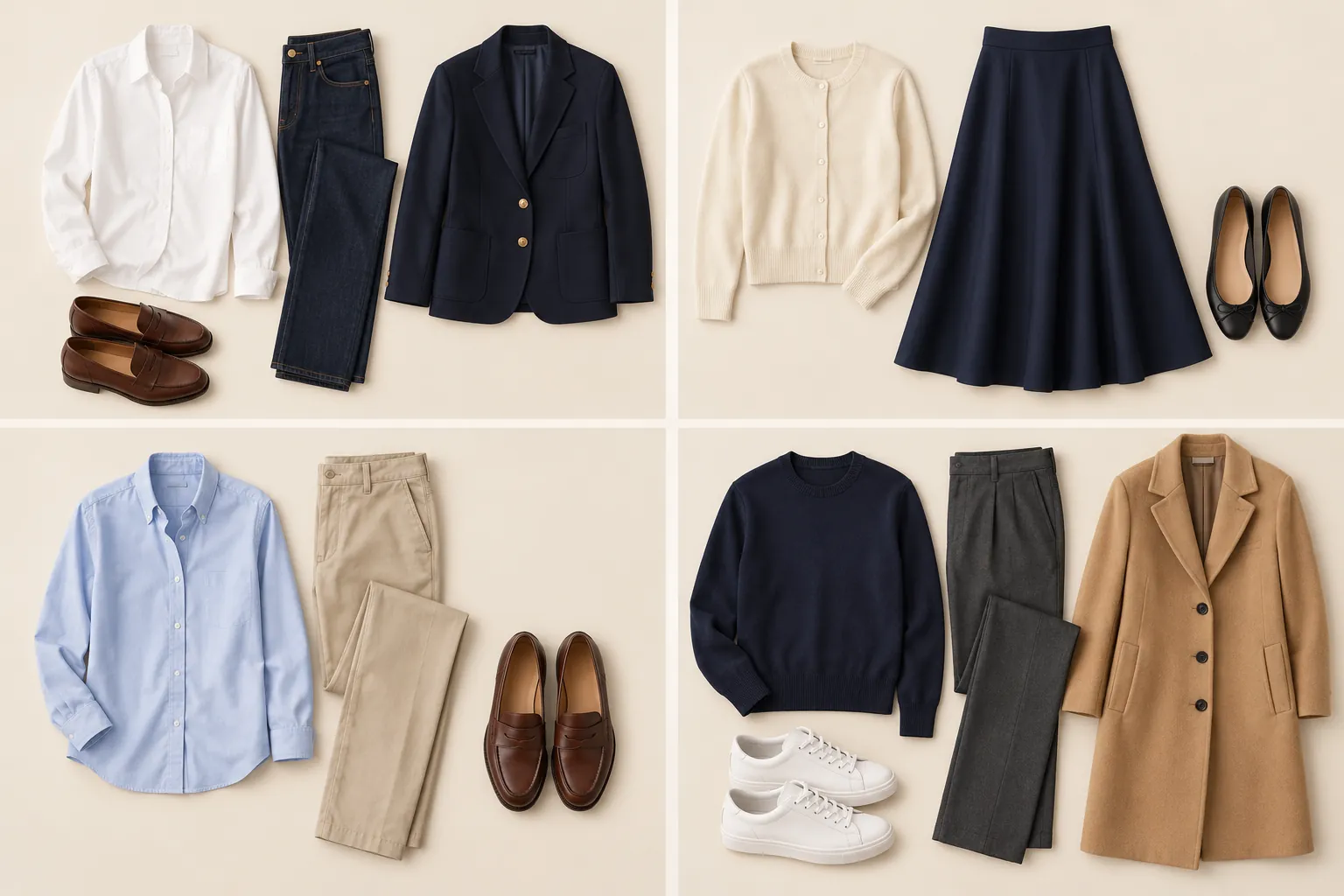
Pale blue shirt + navy straight trousers + brown loafers + everyday tote. Start here when you want polish without a suit. Tuck only if the waistband stays comfortable when you sit; an untucked shirt with a clean hem is a legitimate alternative. Swap loafers for plain flats, or use a firm cardigan when your workplace needs a layer.
2. The cardigan and A-line skirt
Cream cardigan + navy midi skirt + black flats. Wear the cardigan as a top if it closes comfortably, or over a thin tank if you prefer coverage. The skirt supplies movement, so the rest can stay simple. If the waist looks crowded, try the cardigan open rather than adding a belt and another necklace.
3. The ordinary-jeans upgrade
White shirt + dark straight jeans + navy blazer + loafers. This is useful for lunch, a casual office or a gallery visit. The blazer changes the formality without replacing the jeans. A chore jacket gives a less formal version. Dark denim is an option, not a requirement; a mid-blue pair works when the surrounding pieces stay quiet.
4. The warm-weather trouser look
Sleeveless ivory top + loose stone trousers + flat sandals + canvas bag. Choose a trouser with room to walk and an opacity you are comfortable with in daylight. Cotton can replace linen. Add an open shirt for sun coverage or air conditioning; a heavy blazer is not necessary to make the outfit feel finished.
5. The cool-weather column
Charcoal knit + charcoal trousers + camel coat + flat boots. Similar-color top and bottom give the coat a clear role. If you do not own matching shades, navy and dark denim make another calm base. Try the trousers with the boots before leaving: dragging hems and awkward bunching are practical problems, not aesthetic failures.
6. The dress that already fits
Plain shirt dress + simple sandals or loafers + small bag. Keep an existing belt if you like a defined waist; remove it if you prefer the dress’s straight shape. A neat cuff and the right shoe can be enough styling. You do not need to buy a new midi dress to follow a reference picture.
7. The skirt-and-knit dinner outfit
Navy fine knit + ivory or patterned midi skirt + low heel or pointed flat. Let the skirt be the interesting piece. If it already has a print, pull one color from it for the top. Check lining and movement in the light you will actually be in; “quiet” evening dressing should still feel secure and comfortable.
8. The striped-top weekend
Striped cotton top + stone trousers + clean sneakers + plain crossbody. The stripe is enough pattern for a straightforward version. A solid tee is the easiest substitute. Roll sleeves only if they stay put; there is no need to keep adjusting an outfit all afternoon for the sake of a styling detail.
9. The relaxed tailoring option
Simple tank or tee + matching waistcoat and trousers + flat sandals. Use a waistcoat only if you own one that closes without pulling. Otherwise an open short-sleeve shirt over the same base gives a similar light layer. For work, add coverage or change the shoe to match the actual dress code.
10. The rain-ready city look
Fine crewneck + dark jeans + trench or raincoat + weather-appropriate boots. Prioritize grip and a coat that suits the forecast. A classic-looking shoe that cannot handle wet pavement is not an upgrade. The same outfit can use a plain waterproof jacket; a beige trench is a reference, not compulsory equipment.
10 old money outfits for men
11. The knit-polo weekday
Cream knit polo + stone chinos + brown loafers. This gives a collared look without a full shirt-and-jacket combination. A plain cotton polo is a practical substitute, especially in heat. Check the length before tucking: a thick polo hem can create bulk at the waistband. Wear it untucked if that sits more naturally.
12. The Oxford-shirt office look
Pale blue Oxford shirt + charcoal trousers + brown lace-ups or loafers. Keep enough room across the back to reach forward comfortably. A fine knit can replace the jacket on a business-casual day. If your office expects a suit, follow that requirement rather than treating a style label as permission to underdress.
13. The unstructured-blazer weekend
Plain white tee + dark denim + navy blazer + low-top sneakers. The tee keeps tailoring relaxed. Avoid forcing a stiff suit jacket into the role if it feels disconnected from the jeans; a simple overshirt can do the job. The shoe should look intentional but still handle the amount of walking planned.
14. The hot-weather shirt and shorts
Open-collar light shirt + tailored-looking stone shorts + simple sandals or sneakers. Choose a short length you can sit and walk in comfortably. An untucked shirt works if it does not obscure the whole short. This is a casual outfit, not an alternative to formal event clothing.
15. The dark-knit evening
Navy fine crewneck + charcoal trousers + black loafers. This is a quiet dinner option when a collar is unnecessary. A plain long-sleeve tee can replace the knit in warmth. If the neckline feels too bare, show a little shirt collar rather than adding several accessories that compete with the simple base.
16. The olive-overshirt alternative
Off-white tee + stone chinos + olive overshirt + brown shoes. Use this if a blazer feels too formal for everyday life. The overshirt supplies the outer shape, so check that the tee hem does not hang awkwardly beneath it. Navy or charcoal works if olive is not in your wardrobe.
17. The cold commute
Light shirt + fine crewneck + dark trousers + practical boots + coat. Keep the inner layers thin enough that you can move your arms without pulling. A scarf can add warmth; it does not need a heritage print. If the trousers catch on the boot shaft, try a wider hem or a different pair already in your closet.
18. The no-blazer smart casual look
White shirt + dark chinos + fine cardigan + loafers. A cardigan makes the outfit softer than a jacket but still layered. Wear it open or fasten only where it sits flat. Check the shirt tail and sleeve length together so the layers look chosen, not accidentally stacked.
19. The light-denim day
Pale blue or white shirt + cream jeans + suede-style or canvas shoes. This works when the weather and activity suit light clothing. Navy chinos are a sensible substitution for a dirty commute or outdoor day. Keep the shirt texture distinct from the jeans so the light palette has depth rather than looking like an accidental uniform.
20. The travel-day repeat
Plain tee + comfortable navy trousers + zip knit or overshirt + clean sneakers. Choose pockets, movement and removable warmth before decorative details. Reuse the trousers later with the shirt from look 12 for dinner. That second use is more valuable than packing an extra outfit that only works in a photograph.
If you want to save and rotate those combinations, compare the wardrobe apps for men. A catalog is useful when it helps you reopen a good outfit, not just collect images.
Make one change before buying another piece
| The outfit feels… | Try this first | Keep unchanged |
|---|---|---|
| Too formal | Exchange the blazer for an overshirt or cardigan | The shirt, bottom and everyday bag |
| Too loose everywhere | Try a partial tuck or a shorter outer layer | The comfortable trouser fit |
| Like a costume | Remove one strong preppy detail | The simple base outfit |
| Too plain | Add texture or one color already in the outfit | The useful silhouette |
| Uncomfortable | Change the restrictive garment or unsuitable shoe | Nothing that depends on tolerating discomfort |
Care should follow the garment label. Press only when suitable, remove lint and repair a loose button before replacing a useful piece. Price and fiber name alone do not tell you whether a garment will feel good, last well or work with the rest of your clothes.
Turn one reference into outfits from your own clothes
Choose one of the looks above and lay out your closest equivalents, including shoes. Put it on before judging the proportions. Photograph it in ordinary light, then change one thing: the layer, the tuck or the shoe. Keep the version that works for your actual day.
In Beauty AI, start with your outfit photo and a precise brief: “I want an understated smart-casual outfit for a walking lunch. Keep these navy trousers and white sneakers. I own a blue shirt and cream cardigan. Which layer makes more sense, and why? No shopping suggestions.” Review the advice against what you can move, sit and walk in.
The aesthetic outfit generator guide covers turning a style reference into a constrained brief. For repeatable structures beyond this aesthetic, use the outfit formulas guide. Neither requires rebuilding your wardrobe around a trend.
Try the outfit you already have in Beauty AI. My recommendation is to save three combinations you would genuinely wear next week—not 30 idealized looks you would need to buy first.


