

An inverted triangle body shape usually means the shoulder or upper-torso line appears wider than the hips. If you want a more visually balanced silhouette, keep the upper half relatively clean and create presence below the waist with shape, movement, color, or texture. V-necks, wrap and scoop tops, wide-leg or bootcut pants, A-line skirts, and fit-and-flare dresses are useful starting points.
This is a styling shorthand, not a judgment, diagnosis, or requirement to change your body. Shoulder width can come from bone structure, muscle, posture, garment construction, or all four. Some people want balance; others enjoy an athletic, shoulder-led silhouette. Use only the techniques that support the effect you want today.
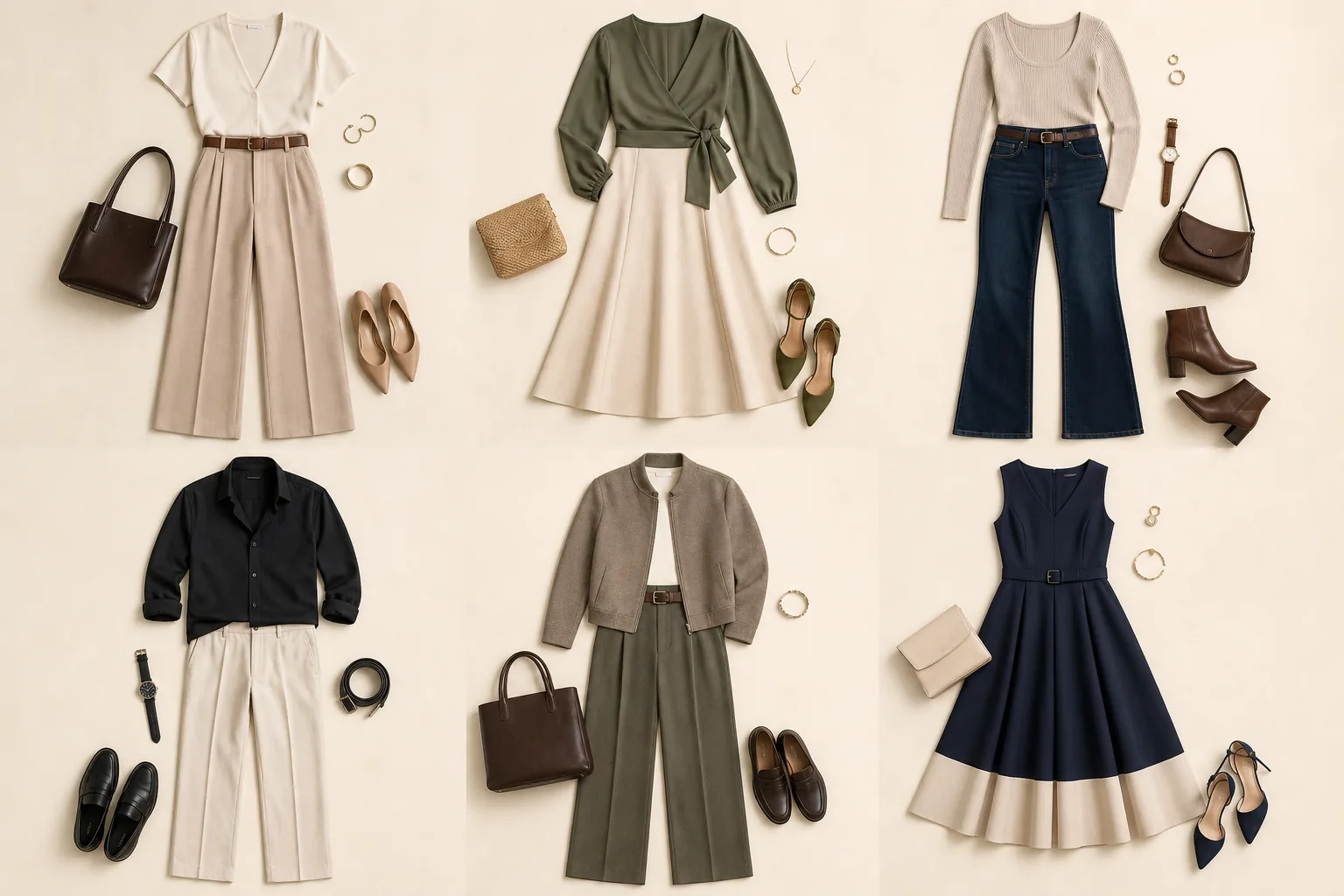
The five styling levers that matter most
Balance is created by the complete outline, not by banning one garment. These levers let you make a targeted change without rebuilding the whole wardrobe.
| Area | Try this for balance | Why it works | If you want to emphasize shoulders |
|---|---|---|---|
| Neckline | V, soft scoop, open collar, asymmetric line | Creates a vertical or diagonal path through the upper body | Boat neck, high crew, strong horizontal neckline |
| Shoulder detail | Clean seams, soft drape, minimal sleeve volume | Reduces extra visual width at the outer shoulder | Epaulettes, cap sleeves, puff sleeves, sharp padding |
| Waist | Defined natural waist or gentle half-tuck | Separates the torso from the lower silhouette | Straight untucked line for a stronger column |
| Bottom shape | Wide leg, bootcut, pleats, A-line, cargo volume | Adds movement and presence below the waist | Slim straight or tapered bottom for an athletic line |
| Color and texture | Quiet top; lighter, brighter, printed or textured bottom | Moves attention downward without changing fit | Bright or textured top with dark simple bottom |
Best tops and necklines
A useful top creates vertical or diagonal direction and fits the shoulder correctly. Too-tight armholes pull across the torso; oversized dropped shoulders can add width even when the fabric is soft. Start with the seam position and mobility, then judge the neckline.
You do not need to avoid every horizontal detail. A boat neck, puff sleeve, or structured blazer can look excellent when it is the intended focal point. For a balancing day, use the quieter options below and let the lower half carry more interest.
- V-neck and open collar: lengthen the center line and leave breathing space around the neck
- Wrap top: adds a diagonal line and optional waist definition
- Soft scoop neck: opens the center without the sharpness of a deep V
- Raglan or soft shoulder: avoids a hard horizontal endpoint at the shoulder seam
- Simple dark or matte top: lets a brighter or fuller bottom become the focus
- Hip-length top or half-tuck: connects the torso to the lower silhouette without hiding the waist completely
Pants, jeans, skirts, and shorts that add balance
The most efficient change often happens below the waist. You can add visual weight through cut, pocket placement, print, fabric, or color; you do not need all of them at once.
| Bottom | Helpful details | Fit check | Easy pairing |
|---|---|---|---|
| Wide-leg trousers | Pleat, drape, full length or cropped flare | Waist lies flat; fabric falls from hip | V-neck knit or clean button shirt |
| Bootcut or flare jeans | Subtle flare, mid/high rise, lighter wash | Knee placement matches your leg; hem clears shoe | Scoop tee, wrap top, streamlined jacket |
| Straight or relaxed pants | Room at hip, visible pocket, textured cloth | No pulling at pocket or seat | Open-collar shirt and substantial shoe |
| A-line or pleated skirt | Movement, print, lighter color, pockets | Waist stays comfortable when sitting | Fitted or softly draped simple top |
| Shorts | Tailored pleat, cuff, wider opening, color | Leg opening does not cut tightly | Minimal tank, V-neck tee or open shirt |
Dresses, jackets, and coats
For dresses, look at the whole silhouette rather than the label. Wrap, A-line, fit-and-flare, bias-cut, and dresses with a simpler bodice plus movement in the skirt are reliable. A shift dress can also work if you prefer a straighter, shoulder-led line.
Jackets are easiest when the shoulder seam fits cleanly and the hem reaches the hip or slightly below it. Open fronts create vertical lines. Cropped jackets can define the waist, but a boxy cropped shape with strong shoulders may concentrate width at the top—use that intentionally, or pair it with a fuller bottom.
- Wrap dress: diagonal neckline plus adjustable waist and skirt movement
- Fit-and-flare dress: defined center and controlled volume below
- A-line dress: simple route from shoulder to a wider hem
- Single-breasted jacket: clean front and less upper-body bulk than a heavily structured double-breasted style
- Long open cardigan or coat: two vertical lines that lengthen the complete outline
- Hip-length streamlined jacket: finishes near the area where you may want more visual presence
Eight inverted triangle outfit formulas
These are templates, not uniforms. Replace heels with flats, skirts with trousers, or fitted tops with softer versions while preserving the same visual logic.
- Work: soft V-neck blouse + pleated wide-leg trousers + single-breasted jacket + loafers
- Smart casual: open-collar shirt + relaxed straight jeans + belt + substantial sneakers
- Weekend: simple scoop-neck tee + cargo or utility pants + overshirt worn open
- Summer: minimal tank or sleeveless V + A-line midi skirt + sandals + lower-body print
- Winter: fine V-neck knit + bootcut trousers + long open coat + textured boots
- Date night: wrap top + satin wide-leg pants or bias midi + one focal accessory near the hip
- Wedding guest: fit-and-flare or A-line dress + clean shoulder + statement shoe or bag
- Masculine tailoring: dark open-collar shirt + relaxed pleated trousers + unpadded jacket + loafers
Petite, plus-size, muscular, and men’s variations
Petite dressing is about scale, not avoiding volume. Try a controlled wide leg, a higher rise, a shorter jacket, or a monochromatic base so the balancing shape does not overwhelm height. For plus-size bodies, prioritize armhole comfort, fabric that falls rather than clings, and waist placement that stays stable while sitting; the same V-neck, A-line, and wide-leg principles still apply.
A muscular upper body may need more room in the back and biceps even when the waist is smaller. Tailoring the waist after fitting the shoulders is usually more successful than sizing down. Men can use the same logic through open collars, unpadded single-breasted jackets, mid- or high-rise pleated trousers, relaxed straight jeans, substantial footwear, and color or texture below the waist.
If your measurements sit between categories, style the garment in front of you rather than defending a label. Body shape can also look different with weight change, training, posture, hormones, or simply a new jacket. Proportion is an input, not an identity.
Seasonal outfit adjustments
| Season | Top strategy | Bottom strategy | Useful finishing detail |
|---|---|---|---|
| Spring | Soft V, wrap or open shirt in a muted color | Light trouser, A-line skirt or relaxed denim | Colorful shoe or lower-body print |
| Summer | Breathable open neckline, minimal shoulder detail | Linen wide leg, tailored short, moving midi | Long pendant, sandal, woven bag |
| Autumn | Fine knit, soft shirt, streamlined overshirt | Corduroy, pleat, bootcut denim, deeper color | Textured boot and belt |
| Winter | V-neck knit under an open coat | Full-length wide leg or bootcut with weight | Long scarf worn vertically; substantial shoe |
Build a look from clothes you already own
Use a quick photo-based check instead of buying a new “body-shape wardrobe.” Small changes in tuck, sleeve, shoe, and layer can alter the outline more than another purchase.
- Choose one top that fits the shoulder and creates an open, vertical, or diagonal line.
- Test two bottoms: one simple and one with more width, movement, color, pocket, or texture.
- Take full-length photos from the same position; compare the complete outline, not isolated body parts.
- Change only one variable—tuck, belt, cuff, shoe, or jacket length—and photograph again.
- Save the stronger formula and note why it worked so it can be repeated with other clothes.
For a second opinion, upload the complete outfit to the Beauty AI stylist. Add the color analysis app when upper- and lower-body colors feel disconnected, or use the AI outfit maker to generate alternatives from your own closet. For broader context, compare this guide with our body shape apps research.
What to avoid when the goal is visual balance
- Treating every inverted triangle body as identical instead of checking height, torso length, fit, and personal style.
- Buying bottoms several sizes too large; useful volume comes from the cut, not an unstable waistband.
- Avoiding all shoulder detail forever, even when a strong shoulder is the effect you actually enjoy.
- Using a deep neckline that exposes or shifts when you move; balance is not worth constant adjustment.
- Adding width, bright color, print, and heavy accessories below all at once instead of choosing one or two levers.
- Judging a rule by the hanger rather than taking a full-length photo of the garment on your body.
Research and editorial method
We compared the proportion framework used by The Concept Wardrobe with the practical garment examples in C&A’s guide, then expanded the recurring advice for varied heights, sizes, gender expression, seasons, and real-closet testing. The recommendations describe optical effects, not health, worth, or a required ideal.
FAQ
What should an inverted triangle body shape wear?
Try open or vertical necklines, clean shoulder construction, and bottoms with width, movement, color, or texture. Wide-leg pants, bootcut jeans, A-line skirts, wrap tops, and fit-and-flare dresses are reliable starting points.
What should an inverted triangle body shape avoid?
Nothing is permanently forbidden. If the goal is balance, use shoulder pads, cap sleeves, boat necks, and very slim dark bottoms carefully because they can emphasize the upper line.
Which jeans suit an inverted triangle body shape?
Bootcut, flare, relaxed straight, wide-leg, and jeans with visible lower-body detail are useful. Choose a rise and pocket placement that stay comfortable and lie flat.
Which dresses flatter an inverted triangle shape?
Wrap, A-line, fit-and-flare, and dresses with a simpler bodice and movement below are easy options. The correct shoulder and armhole fit matters more than the category name.
Can an inverted triangle wear skinny jeans?
Yes. If you want more balance, pair them with an open neckline, a top or jacket ending near the hip, a lighter wash, or a substantial shoe. If you like a shoulder-led silhouette, wear them simply.
Is inverted triangle body shape styling different for men?
The visual principle is the same. Men can use open collars, minimal shoulder padding, pleated or relaxed trousers, straighter jeans, textured footwear, and lighter or more detailed bottoms.


