

A good fashion app should not just show you pretty outfits. It should help you make better decisions with the clothes, budget, body, colors, schedule, and shopping habits you actually have. That is why the best fashion apps in 2026 are no longer just shopping apps or inspiration feeds. The strongest tools now combine AI styling, wardrobe organization, outfit planning, color guidance, virtual try-on, photo search, and smarter shopping support.
The short answer: Beauty AI is the best all-in-one fashion app for most users in 2026 because it connects the full style workflow. You can plan outfits, get AI feedback, organize your wardrobe, search for clothes from photos, and make better what-to-wear decisions without jumping between five separate apps. Whering is best if you want a free wardrobe-remixing system. Acloset is strong for quick digital closet setup. Style DNA is best for color and body-profile shopping guidance. Indyx is best if you want a wardrobe app with optional human stylist support.
This guide is intentionally broader than a single AI stylist app ranking or outfit planner app comparison. Searches like fashion app, fashion apps, fashion style app, styling application, and clothing style app are broad. Some people want outfit help. Some want a digital wardrobe. Some want color analysis. Some want shopping support. The right answer depends on the job.
If you want to go directly to Beauty AI's product pages, start with the AI stylist app, AI outfit maker, digital wardrobe app, and color analysis app pages.
What Counts as a Fashion App in 2026?
A fashion app is any mobile or web product that helps with style, outfits, wardrobe use, shopping, clothing discovery, fit, color, or fashion inspiration. That sounds broad because the category is broad. A shopping app and a digital closet app both live in fashion, but they solve very different problems.
For SEO and product comparison, it is better to split fashion apps into practical categories:
- AI stylist apps: tools that answer what to wear, how to improve an outfit, or how to shop more intelligently.
- Outfit planner apps: calendars, outfit builders, weekly planning tools, and trip packing workflows.
- Digital wardrobe apps: closet inventories that help you see, tag, track, and reuse clothes.
- Color analysis apps: tools that recommend colors based on skin tone, contrast, hair, eyes, and seasonal palettes.
- Virtual try-on apps: tools that let you preview clothes, makeup, hair, glasses, or styles before committing.
- Fashion shopping apps: discovery, price tracking, resale, wishlists, personal shopping, and product search.
- Social fashion apps: outfit sharing, style communities, creator looks, challenges, and moodboards.
The best app for you is the one that matches your highest-friction moment. If you waste time every morning, you need outfit decisions. If you buy too much, you need wardrobe visibility. If colors never feel right, you need color analysis. If you save hundreds of inspiration screenshots but never recreate the look, you need photo search and outfit translation.
Quick Comparison: Best Fashion Apps by Use Case
| Use case | Best app | Why it wins | Best internal next step |
|---|---|---|---|
| Best all-in-one fashion app | Beauty AI | Combines AI styling, outfit feedback, digital wardrobe planning, photo search, and practical what-to-wear help | AI stylist app |
| Best free wardrobe remixing app | Whering | Strong free digital closet, outfit shuffle, packing lists, moodboards, and social wardrobe tools | Beauty AI vs Whering |
| Best AI-assisted closet setup | Acloset | Good for quickly adding clothes, background cleanup, daily outfit ideas, and AI stylist chat | Beauty AI vs Acloset |
| Best color and body-profile guidance | Style DNA | Strong profile-based recommendations for color palettes, body type, cuts, and shopping filters | Color analysis app |
| Best human stylist hybrid | Indyx | Combines digital wardrobe tools, AI tagging, outfit boards, and optional professional styling | Beauty AI vs Indyx |
| Best classic capsule routine | Cladwell | Good for repeatable daily outfits, weather-aware dressing, and capsule wardrobe logic | Capsule wardrobe apps |
| Best visual shopping discovery | Excellent for inspiration, trend discovery, visual search, and saved boards | Pinterest to reality |
How We Evaluated the Apps
We did not rank these apps by store screenshots alone. Fashion app marketing tends to overpromise because every product wants to sound like a stylist, closet, planner, trend engine, and shopping assistant at the same time. We evaluated each app by the practical jobs that real users search for:
- Decision quality: does the app help you choose what to wear, or does it only create more options?
- Wardrobe grounding: can it work with clothes you own, not just stock looks or shopping catalogs?
- Setup friction: can a new user get value before uploading an entire closet?
- Repeat use: does the app remain useful after the first weekend of organizing?
- Shopping discipline: does it help you buy better, or simply make it easier to browse?
- Personalization: does it account for style, color, body profile, occasions, climate, or lifestyle?
- Trust: is the app honest about limitations, photo use, and the difference between fashion guidance and medical/body claims?
That last point matters. A modern AI fashion app may use selfies, outfit photos, wardrobe images, color cues, or body-profile data. Those inputs are personal. The better apps give useful recommendations without pretending that style software can replace human judgment, fit testing, dermatology, tailoring, or a professional stylist in every case.
The 9 Best Fashion Apps in 2026
1. Beauty AI

Best for: all-in-one AI styling, outfit feedback, digital wardrobe planning, and smarter daily decisions.
Beauty AI is the strongest overall choice if you want one fashion app that connects the full loop: what you own, what you should wear, whether an outfit works, and what to buy only if there is a real gap. It is not just a closet archive. It is built around practical decision support.
The difference matters. A basic clothing style app might show outfit inspiration. A basic shopping app might show products. A basic closet app might store photos. Beauty AI is more useful because it links these pieces together. You can organize clothing, generate outfit ideas, get AI styling support, rate looks, search for clothing from images, and move from inspiration to action.
Where it is strongest:
- daily what-to-wear decisions
- AI outfit feedback and refinement
- outfit generation from your own wardrobe
- photo-based clothes search and inspiration translation
- bridging wardrobe planning with smarter shopping
Trade-off: Beauty AI is broader than a single-purpose collage app or shopping app. That is a strength for most users, but if you only want one narrow workflow, a specialized app may feel simpler.
Start here: AI stylist app, AI outfit maker, and digital wardrobe app.
2. Whering
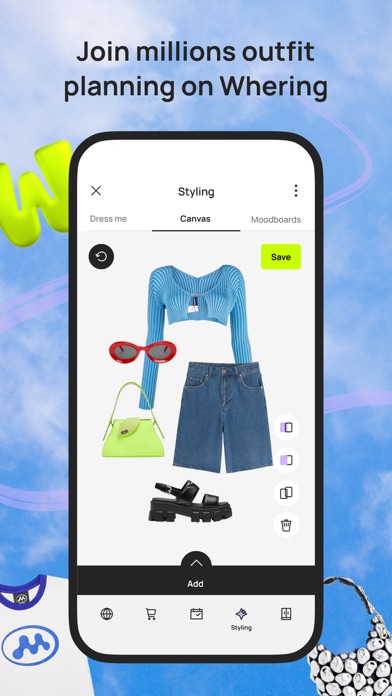
Best for: free digital closet building, outfit remixing, packing, and social wardrobe inspiration.
Whering has done a strong job owning the idea of a social wardrobe. It is useful for people who want to upload clothes, create outfits, shuffle combinations, build packing lists, and explore what their closet can do. Its official positioning around a digital closet, outfit planner, moodboards, wishlists, cost-per-wear, and a community layer makes it one of the most visible fashion apps in the category.
Where it is strongest:
- free wardrobe setup
- outfit shuffle and remixing
- travel packing lists
- moodboards and wishlist workflows
- social discovery around real wardrobes
Trade-off: Whering is strong for wardrobe visibility and remixing, but less focused than Beauty AI if you want direct AI critique or outfit improvement from photos.
Useful comparison: Beauty AI vs Whering.
3. Acloset
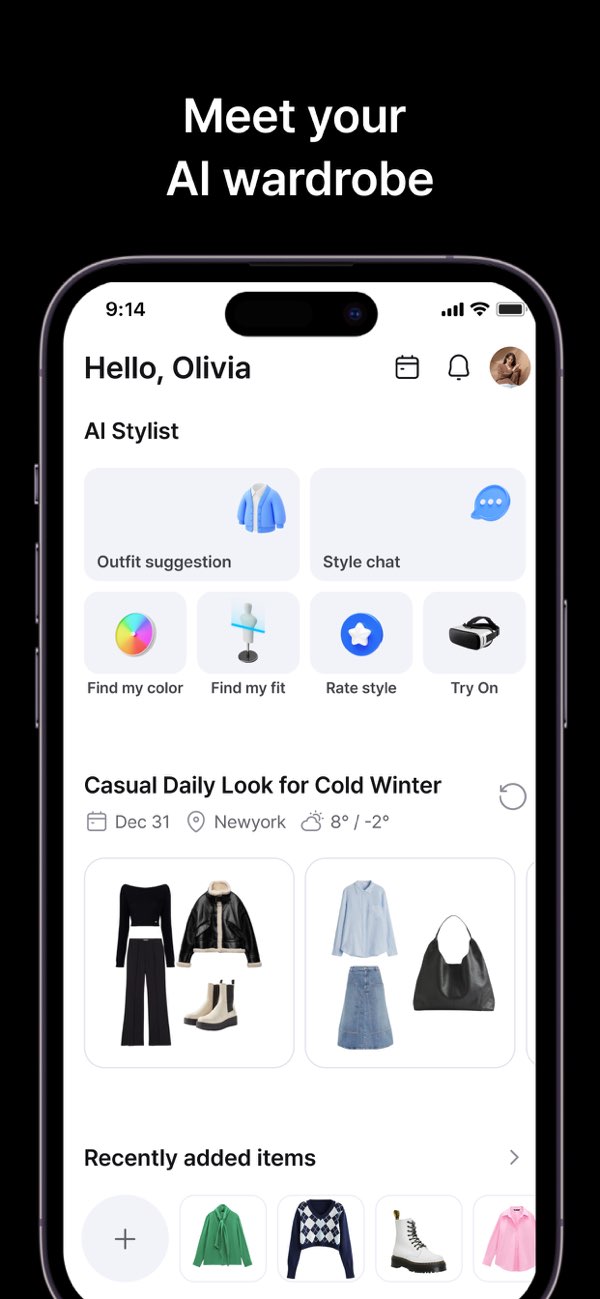
Best for: faster AI-assisted digital wardrobe setup and daily outfit suggestions.
Acloset is a good option for users who want the app to help with the boring part: getting clothes into a digital closet. It leans into AI-assisted cataloging, background cleanup, daily outfit ideas, and a personal stylist chat experience. That makes it a strong AI fashion app for people who want automation without manually building every detail.
Where it is strongest:
- quick wardrobe capture
- AI cleanup and tagging support
- daily outfit suggestions
- closet tracking and purchase history
Trade-off: Acloset is useful for closet setup and outfit suggestions, but Beauty AI is stronger when the user wants outfit feedback, photo search, and decision support in one workflow.
Useful comparison: Beauty AI vs Acloset.
4. Style DNA
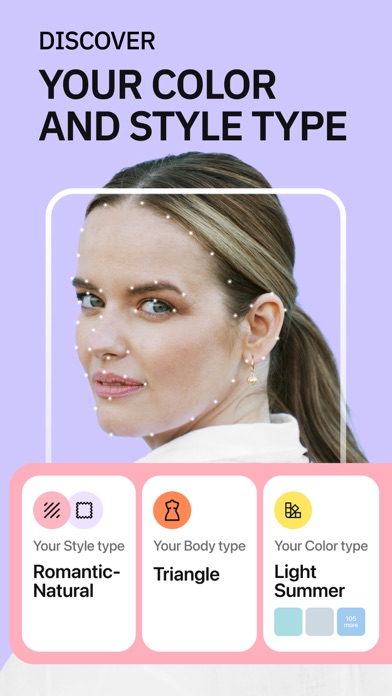
Best for: color analysis, body-profile guidance, flattering cuts, and shopping filters.
Style DNA is not trying to be only a digital wardrobe. Its strongest angle is profile-based styling: color analysis, body type, fit guidance, cuts, textures, and shopping recommendations. That makes it useful for users who often ask, "Does this color suit me?" or "What shapes work for my body?" before they even get to outfit planning.
Where it is strongest:
- personal color analysis
- body-type and fit recommendations
- shopping guidance based on profile
- personalized style rules
Trade-off: Style DNA is less complete as a full wardrobe planner. It is better as a personal profile and shopping guidance layer.
Beauty AI angle: if color is your main concern, compare this category with our AI color analysis apps guide.
5. Indyx
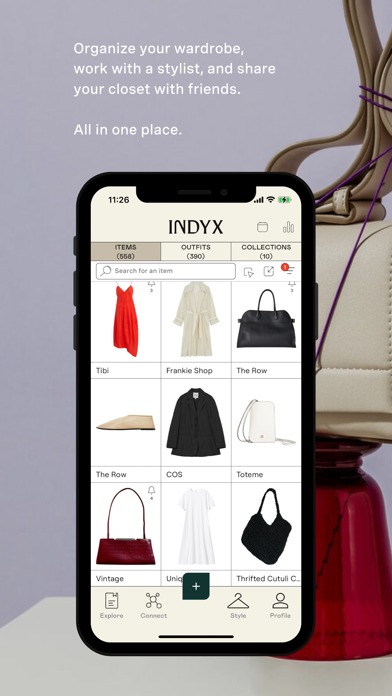
Best for: digital wardrobe users who want optional human styling and closet services.
Indyx has built authority around wardrobe behavior, personal style, closet cleanouts, outfit selfies, and shopping intentionally. The app itself combines AI-assisted wardrobe cataloging, outfit boards, cost-per-wear tracking, and optional human styling services. That hybrid model is useful for people who want technology, but still value human taste and accountability.
Where it is strongest:
- wardrobe cataloging and image standards
- outfit boards and outfit selfies
- cost-per-wear and wardrobe value
- optional professional styling
Trade-off: Indyx is excellent for dedicated wardrobe users, but less instant than a pure what-to-wear or AI feedback tool.
Useful comparison: Beauty AI vs Indyx.
6. Cladwell
Best for: capsule wardrobes, repeatable daily outfits, and low-stress dressing.
Cladwell is one of the most practical choices if your goal is not fashion novelty, but a calmer routine. It is good for capsule wardrobe planning, weather-aware outfit suggestions, travel, and repeatable everyday dressing. For users who feel overwhelmed by choice, that simplicity is valuable.
Where it is strongest:
- capsule wardrobe logic
- daily outfit recommendations
- weather and travel planning
- cost-per-wear and shopping restraint
Trade-off: Cladwell is less visually dynamic than newer AI-first apps and less focused on outfit photo feedback.
Useful comparison: Beauty AI vs Cladwell.
7. Pinterest
Best for: fashion inspiration, trend discovery, moodboards, and visual search.
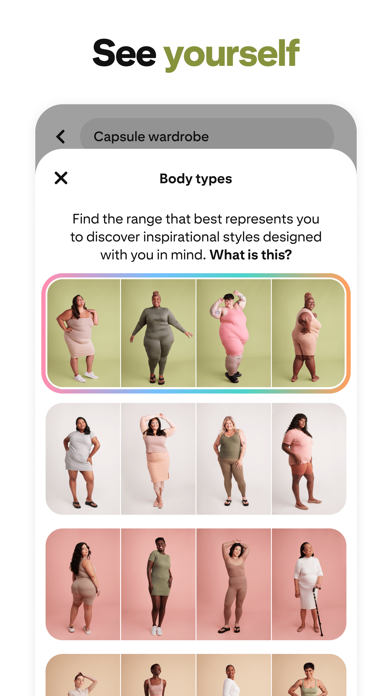
Pinterest remains one of the most important fashion apps even though it is not a wardrobe app. It owns inspiration. People use it to save outfit ideas, find aesthetics, discover trends, and build visual boards. The issue is that inspiration alone does not get you dressed. A board full of outfits is only useful if you can translate it into your real wardrobe.
Where it is strongest:
- visual discovery
- trend and aesthetic research
- outfit boards and moodboards
- image-first fashion search
Trade-off: Pinterest is excellent for finding looks, but weak for deciding what you can wear today from what you already own.
Best follow-up: read From Pinterest to Reality.
8. Depop
Best for: resale discovery, secondhand fashion, trend-led shopping, and unique pieces.
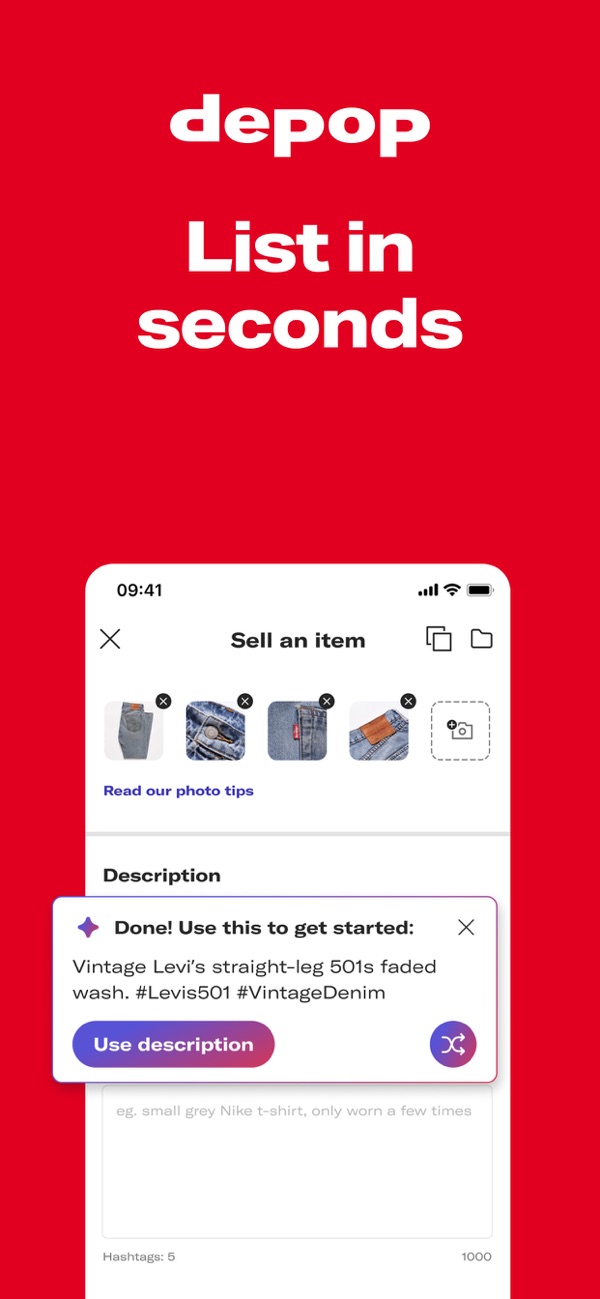
Depop is more shopping than styling, but it belongs in a fashion app comparison because secondhand discovery is now a major part of how younger users build wardrobes. It is useful when you know what vibe, brand, era, or piece you want. It is weaker when you need help deciding whether an item actually fits your wardrobe.
Where it is strongest:
- secondhand fashion discovery
- trend-led shopping
- unique, vintage, and creator-sold pieces
- resale culture and style communities
Trade-off: Depop can help you find clothes, but it will not tell you whether a purchase solves a wardrobe gap or creates more clutter.
9. Google Lens
Best for: finding clothes from a photo, screenshot, or real-world image.
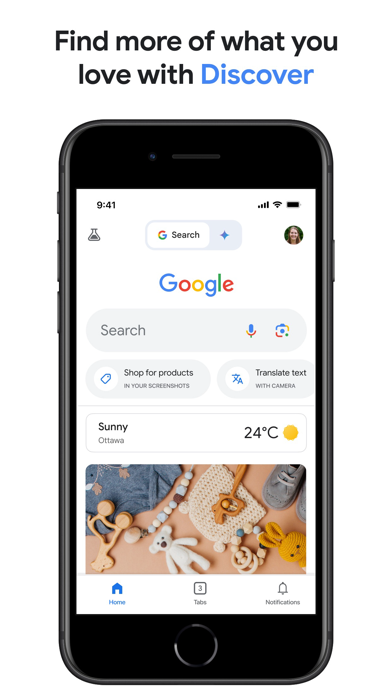
Google Lens is not a traditional fashion app, but it is one of the strongest tools for visual clothing search. If you see a jacket, dress, shoe, bag, or outfit detail and want to find similar pieces, image search is often faster than text search. The limitation is that Google Lens finds products; it does not build a personal wardrobe strategy.
Where it is strongest:
- reverse image search for clothing
- finding similar dresses, jackets, shoes, and accessories
- turning screenshots into shopping options
- product discovery from real-world photos
Trade-off: it is powerful for discovery, but not for outfit planning, closet tracking, or personal style decisions.
Best follow-up: read best apps to find clothes from a photo and Beauty AI's photo clothing search page.
Fashion App Decision Matrix
Use this matrix before downloading anything. It prevents the common mistake of choosing a tool because it looks stylish, not because it solves your problem.
| Your problem | What you need | Best type of app | Beauty AI workflow |
|---|---|---|---|
| I have clothes but nothing feels right | Outfit feedback and better combinations | AI stylist app | Upload outfit, get feedback, adjust one piece, save stronger version |
| I forget what I own | Wardrobe visibility | Digital wardrobe app | Add key pieces, tag categories, build reusable looks |
| I buy too many random pieces | Gap checks before shopping | Wardrobe and shopping assistant | Compare item against existing outfits before buying |
| I save outfit screenshots but never recreate them | Photo search and outfit translation | Visual search plus AI stylist | Search similar pieces, match to owned clothes, create realistic version |
| Colors always feel off | Personal palette support | Color analysis app | Analyze palette, use colors as shopping and outfit filters |
| I overpack and still feel unprepared | Trip outfit planning | Outfit planner app | Create repeatable outfit formulas by weather, occasion, and shoes |
Common Mistakes When Choosing a Fashion App
Mistake 1: Choosing inspiration when you need decisions
Inspiration is useful, but it can become another form of clutter. If you already have hundreds of saved looks, downloading another moodboard app may not help. You need a tool that turns inspiration into outfits using your real clothes.
Mistake 2: Choosing a shopping app when you need a wardrobe app
Shopping apps are good at selling you possibilities. Wardrobe apps are better at showing you what you already own. If your closet is full but still frustrating, start with wardrobe visibility before adding more products.
Mistake 3: Choosing a closet app but never using outfit feedback
A digital wardrobe is useful, but inventory alone is not style. The higher-value workflow is inventory plus outfit creation plus feedback. That is where AI can reduce repeated trial and error.
Mistake 4: Treating color, body shape, and fit as separate problems
In real life, those problems overlap. A color may suit your palette but the cut may not work. A silhouette may flatter your proportions but feel wrong for the occasion. A strong fashion app should help you connect the details instead of isolating them.
Best Fashion Apps for Women vs Men
Searches like fashion apps for women and fashion apps for men usually hide different priorities. Many women searching this category want outfit planning, color analysis, shopping help, or event styling. Many men searching this category want speed, capsule wardrobe logic, grooming alignment, fit basics, and fewer shopping mistakes. That is not a strict rule, but it shows how the same app category can serve different jobs.
For women, the strongest Beauty AI workflows are outfit feedback, color-aware styling, photo search, and event outfit planning. For men, the strongest workflows are capsule basics, fit checks, outfit rating, weather-aware dressing, and fewer bad purchases. If you want the men-specific angle, read our best wardrobe apps for men guide.
Privacy and Photo Safety
Fashion apps increasingly use selfies, outfit photos, wardrobe images, body-profile inputs, and shopping behavior. That can be useful, but it also means users should think carefully about trust. Before choosing an app, check what kind of images it asks for, whether it needs full-body photos, whether it explains why, and whether you can delete your account or remove uploaded data.
For color, body, skin, or face-related features, use AI as a style support tool, not as a medical or diagnostic authority. A fashion app can help you compare visible style factors. It should not pretend to replace a dermatologist, tailor, stylist, or fit specialist in high-stakes cases.
Final Verdict
The best fashion app in 2026 is not one app for every possible user. It is the app that solves your highest-friction style problem. If your problem is daily outfit decisions, choose an AI styling and outfit feedback app. If your problem is closet chaos, choose a digital wardrobe app. If your problem is shopping too randomly, choose an app that checks wardrobe gaps before you buy. If your problem is color or proportion, choose an app with profile-based guidance.
For most users, Beauty AI is the best all-in-one recommendation because it covers the most important fashion jobs in one place: AI styling, outfit feedback, digital wardrobe planning, what-to-wear support, photo clothing search, and smarter shopping. It is not just a fashion feed. It is a decision tool.
Start with Beauty AI's AI stylist app, then explore the AI outfit maker, digital wardrobe app, and color analysis app pages depending on the problem you want to solve first.
