

Pleated skirt outfits can start with three simple combinations: a mini with an untucked polo and sneakers, a midi with a tucked shirt and loafers, or a maxi with a sleeveless knit and flat sandals. I would choose the shoes for the day first, then check where the top ends against the pleats. You do not need a tight top, heels, or a particular body shape. You need enough room for the skirt to move and a combination you actually want to wear.
My approach here is to work with the skirt already in your wardrobe. Try one formula, make one adjustment, and keep the version that survives sitting and walking. If you want a second opinion afterward, Beauty AI can help you review the outfit photo.
Read the skirt before choosing the top
Look at three things: where the hem lands on you, how the folds sit when you stand still, and how much the fabric moves when you take a step. A stiff box-pleated mini and a fluid, finely pleated maxi ask different questions, even when both are sold as pleated skirts.
Length: a mini leaves more of the shoe and leg visible; a midi makes the relationship between calf-length hem and footwear more noticeable; a maxi puts the emphasis on the upper body and whatever shoe shows beneath it. These are visual choices, not rules about who can wear each length.
Pleat structure: compare broad, clearly separated folds with narrow repeated folds. If the pleats are stitched down near the waist, notice where they release. I would avoid placing a bulky tucked sweater directly over that transition if it makes the waistband uncomfortable.
Weight and movement: gently lift the fabric and let it fall. If it springs outward, begin with a top that has a clear hem of its own. If it drops softly, a relaxed knit can create an intentional draped outfit. Check the actual garment rather than assuming every polyester, cotton, or wool skirt behaves alike.
| Skirt | Top to try | Footwear | Check in the mirror |
|---|---|---|---|
| Structured mini | Waist-length polo or straight cardigan | Sneakers or loafers | The top leaves enough pleats visible |
| Fluid midi | Light shirt, tucked or cropped | Flats or low-profile sneakers | The waistband stays smooth when seated |
| Firm midi | Fine knit under an open jacket | Loafers or close-shaft boots | Jacket and skirt do not push against each other |
| Soft maxi | Shell top or relaxed short sweater | Sandals, flats or boots | The hem clears the floor in those shoes |
12 complete looks to build from your closet
Choose the occasion first. You can repeat one skirt across several outfits; the different colors below are suggestions, not twelve things to buy. For a broader system, my guide to repeatable everyday outfit formulas explains how to keep the structure while changing individual pieces.
1. A polo and mini for a casual morning
Pair a navy box-pleated mini with a cream waist-length polo, white sneakers, and a small crossbody bag for coffee or errands. The collar gives the top an edge without making the outfit formal. Leave it untucked so the waistband is not crowded. If the polo is long, try a short cardigan worn buttoned instead. Swap sneakers for flat loafers when you want a sharper finish.
2. A soft tee and midi for a walking day
Use a light gray tee, a sage pleated midi, an open denim jacket, and low-profile sneakers for a museum visit. A small front tuck can separate the tee from the folds, but it is optional. My no-tuck alternative is a tee ending just below the waistband. If your walking shoes are chunkier, remove the jacket before deciding whether the overall volume feels too heavy.
3. A striped knit for an unhurried weekend
Wear a cream-and-navy striped knit over a tan pleated midi with brown flat ankle boots and a simple tote. Choose a straight sweater hem around the upper hip and let it sit outside the skirt. The horizontal stripes contrast with the repeated vertical folds. A plain navy knit offers a quieter alternative; loafers can replace the boots when you do not need ankle coverage.
4. A loose shirt with a maxi for lunch outdoors
Combine an ivory pleated maxi, a pale blue shirt worn open over a tank, and tan flat sandals for a relaxed lunch. Keep the shirt light enough that it does not pin the folds against the hips. You can leave the tank untucked beneath it. If open layers feel fussy, replace both tops with one short-sleeved, waist-length blouse. Check the hem against the actual sandal sole.
5. The shirt-and-loafer work option
A sage midi, ivory button-down, brown loafers, and structured tote make a useful starting point for a workplace that accepts skirts and separates. Smooth the shirt below the waistband instead of letting a large fold collect there. A collarless upper-hip jacket worn closed is the no-tuck alternative. If loafers rub, a familiar pair of closed flats can keep the same understated mood.
6. A fine knit under an open blazer
Try a charcoal pleated midi, fine burgundy knit, navy blazer, and dark loafers for a meeting in a business-casual setting. The open blazer frames the knit while leaving the skirt visible. I would start with the knit untucked if its hem is short and straight. Replace the blazer with a neat cardigan when the room or dress code calls for something less structured.
7. A short jacket with a longer skirt
Wear a cream pleated maxi with a navy shell, a waist-length navy jacket, and pointed flats for a presentation or daytime appointment. The jacket supplies a definite stopping point above the long skirt. Keep the shell near the same length, or tuck only that thin layer. A mid-calf skirt is an easy substitute if the maxi catches under a desk chair or on stairs.
8. A sweater vest without a crowded waist
For a cooler office day, combine a broad-pleated camel midi, a white shirt, a short gray sweater vest, and brown ankle boots. Let a narrow strip of shirt show below the vest rather than tucking several thick layers together. If those edges compete with the pleats, remove the vest and use one medium-weight sweater. The boot shaft should sit beneath the hem without catching it.
9. Bronze pleats with a quiet evening top
A bronze pleated maxi, black sleeveless high-neck top, black flat sandals, and compact bag give dinner clothes texture without needing extra embellishment. The plain top leaves the moving pleats as the main detail. Choose a full-length fine knit for more arm coverage. Closed pointed flats replace the sandals for cooler weather; check that the longer skirt still clears the ground.
10. A draped blouse and midi for dinner
Combine a plum midi with an ivory softly draped blouse and low slingbacks for a restaurant evening. I would tuck the blouse only if it lies comfortably inside the waistband; otherwise choose a straight upper-hip hem and let the outfit read as two soft layers. A matte tee beneath a short jacket offers an alternative if a shiny blouse and shiny pleats feel excessive together.
11. A mini with a longer evening layer
Style a charcoal pleated mini with a black crewneck, opaque tights, knee-high flat boots, and an open long coat for a casual evening event. The coat gives coverage while the visible mini keeps the inner outfit distinct. Substitute a knee-length skirt if that better suits your plans. If the boots press at the knee when seated, switch to ankle boots with the same tights.
12. Tonal separates with one bright detail
Wear a soft blue midi with a navy waist-length sweater, navy flats, and a small red bag for an informal celebration. Similar blues keep the pleats visible without several competing color breaks. A burgundy bag gives a subtler alternative. If the sweater sits stiffly above soft pleats, try a lighter cardigan. For more palette options, see these ways to combine neutrals and accent colors.
Tucked, cropped or deliberately untucked?
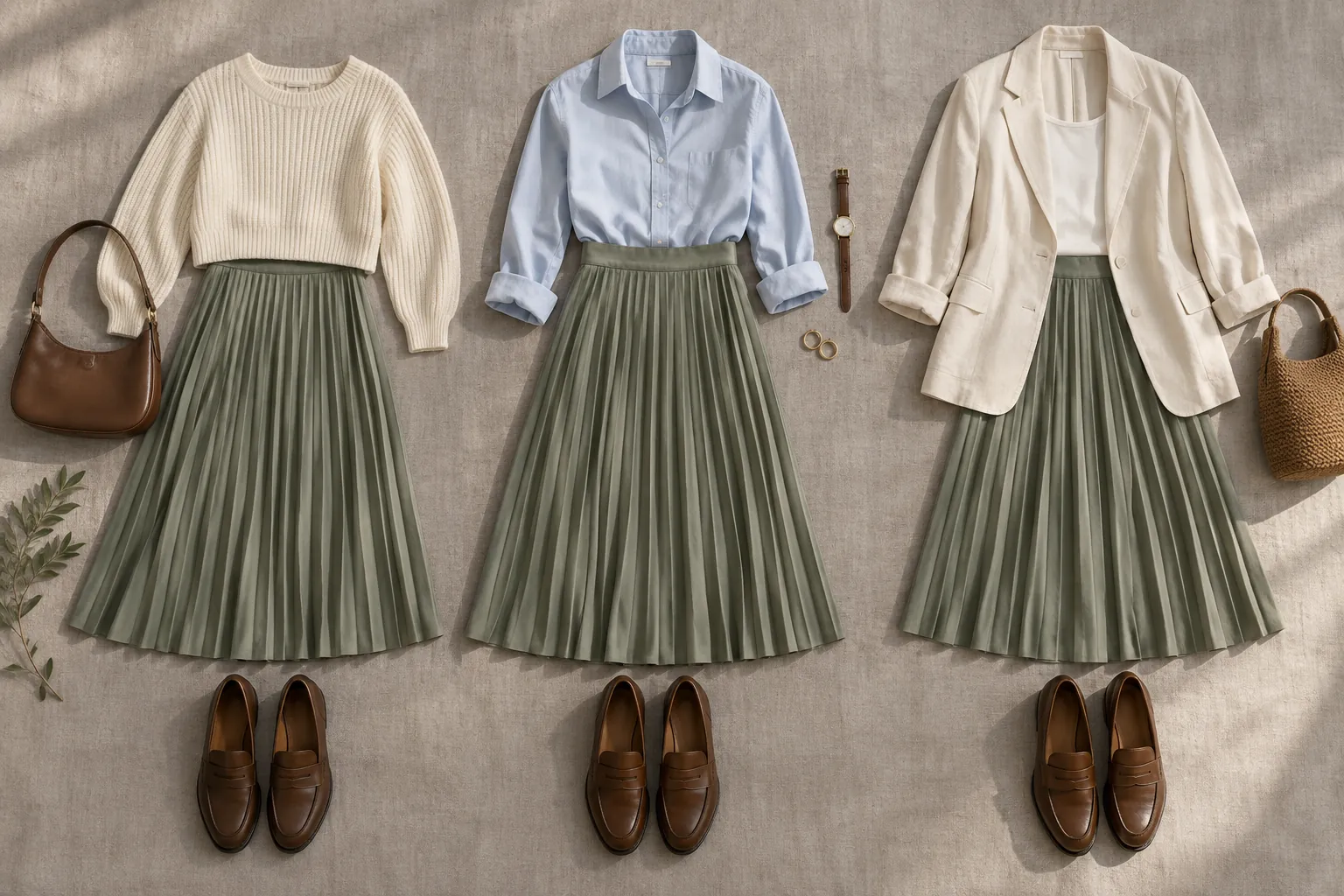
Tuck a light top when you want the waistband visible and the fabric fits without pressure. Raise your arms and sit down afterward. If the shirt immediately balloons out, a smaller tuck or a different hem length may be easier than repeatedly rearranging it.
Use a cropped top when you want a clear edge without fabric inside the skirt. Cropped does not have to mean exposed skin: match the top’s endpoint to the skirt’s rise and check your preferred coverage when reaching upward.
Leave a top untucked when you want a relaxed line or dislike pressure at the waist. A straight upper-hip hem works differently from a long, gathered one. In the illustration, the untucked jacket remains separate because its edge is clear and the pleats can open beneath it.
For layers, test the outer piece both open and closed. A jacket that looks right open may pull the pleats inward when fastened. I would change that interaction before deciding the whole outfit is wrong.
Choose shoes by the hem, then by your plans
Sneakers: start with the pair you can walk in. With a mini they are fully visible; with a midi, compare a low collar against a higher one. A substantial sneaker is not forbidden, but it changes the visual weight at the bottom.
Flats and loafers: a low-cut flat leaves more of the foot visible; a loafer creates a firmer block. Either can work with a midi. If the outfit looks busy, simplify socks or the upper layer before buying another shoe.
Boots: check the moving overlap, not just a still photograph. A midi can cover a close-fitting boot shaft; a shorter hem can deliberately leave a gap. Walk, sit, and check whether the skirt catches on the boot. Under a maxi, prioritize floor clearance and comfortable movement.
Three small fixes before changing the outfit
- Bulk at the waistband: remove a tucked layer, empty bulky pockets, or try the top outside. If the waist still feels tight, styling cannot fix the fit.
- Two volumes competing: keep the roomy top, but try a clearer hem or simpler shoe. You can also keep both volumes if that is the silhouette you enjoy.
- Awkward jacket length: compare a shorter layer with one that extends decisively past the hip. Avoid an edge that presses exactly where your particular pleats open.
Four questions I would settle before getting dressed
Can I wear a pleated skirt without tucking in my top?
Yes. Try a waist-length knit, straight upper-hip blouse, or open shirt over a simple base. Check that the top does not grip the skirt and stop its movement. Waist definition is an option, not an obligation.
What top works with a heavier pleated skirt?
I would begin with a fine knit or light shirt, then add a structured layer only if needed. This keeps several thick fabrics from collecting at the waist. A roomy top can also work if it falls freely over the skirt.
Do pleated midis need heels?
No. Sneakers, loafers, sandals, and flats all offer useful combinations. Try them with the exact hem length you own. Choose a heel because you like wearing it, not because the skirt supposedly requires extra height.
How do I stop the folds looking crowded?
First remove pressure from a tight top hem, belt, or stuffed waistband. Then check the garment’s fit and care label. Do not improvise heat or ironing advice: different fabrics and pleat finishes need different care.
Get a second opinion on one specific choice
Once you have a wearable outfit, Beauty AI can help you plan and save combinations from your clothes. Use its outfit feedback feature for a focused question about the top length, color, or shoe choice. My guide to reviewing an outfit photo explains how to turn suggestions into one useful change. A photo cannot tell you whether the waistband pinches or the hem catches: keep those real-life checks yours.


