


The best overnight flight outfits aren’t one fixed look; they’re a set of layers you can adjust as the cabin temperature changes. Start with a soft T-shirt and relaxed trousers or joggers, then add a cardigan and shoes that are easy to manage. A light wrap can add another option without the bulk of a heavy coat. Choose pieces that still look intentional when you remove a layer, so you’re ready to step off the plane without changing.
Cabin comfort can be hard to predict, and restrictive clothes or bulky layers can make a long journey feel even longer. Build your outfit from clothes you already own, then make the top layer easy to take off or put back on. This guide offers practical outfit formulas for different arrival plans, plus ways to choose layers, shoes and accessories. You’ll have a clear starting point for the airport, the flight and landing, without packing a second outfit.
Key Takeaways
- Build overnight flight outfits around a comfortable base, then add layers you can remove or put back on as cabin temperatures shift.
- Match your outfit formula to your travel plans, using familiar wardrobe pieces rather than buying a new set.
- Check expected conditions and airline guidance before choosing outerwear, and make sure your shoes work for both transit and arrival.
- Try your chosen combination at home and adjust it to your personal comfort and what you’ll need when you land.
Table of Contents
Overnight flight outfits: start with comfort and adaptable layers
Build overnight flight outfits around a comfortable base and removable layers, rather than expecting one combination to suit every cabin temperature. A soft top and relaxed trousers or leggings give you a starting point; a cardigan or overshirt is an easy adjustment without a full change. Comfort is personal, and no clothing combination can guarantee sleep, warmth or a smooth-looking arrival. The principle is simple: dress in pieces you can adapt, rather than relying on one fixed layer.
What makes an outfit practical for an overnight flight?
Choose a waistband that doesn’t dig in when you sit, and check that you can bend, stretch and move without tugging at your clothes. Think through each part of your route: will the outfit feel appropriate while waiting at the airport, be easy to manage when boarding, and suit your plans after landing? Fabric and silhouette are personal choices, not universal rules. For background on how altitude can affect the body, see this overview of the effects of altitude on the body; it doesn’t prescribe what to wear.
Choose a comfortable base before adding layers
Start with familiar pieces that feel good against your skin. For example, pair a cotton T-shirt with relaxed trousers, or wear a soft long-sleeved top with leggings if that’s more comfortable for you. Add a light cardigan, zip-up sweatshirt or overshirt that’s easy to take off and put back on. This gives you another option if you feel warmer or cooler, without needing to change your whole outfit.
Before you leave, sit and move around in the combination. If a seam, waistband or hem feels irritating at home, it may bother you during a long stretch in your seat. Choose according to your own preferences rather than picking a fabric or cut simply because it’s often recommended for travel.
Three overnight flight outfit formulas for different travel plans
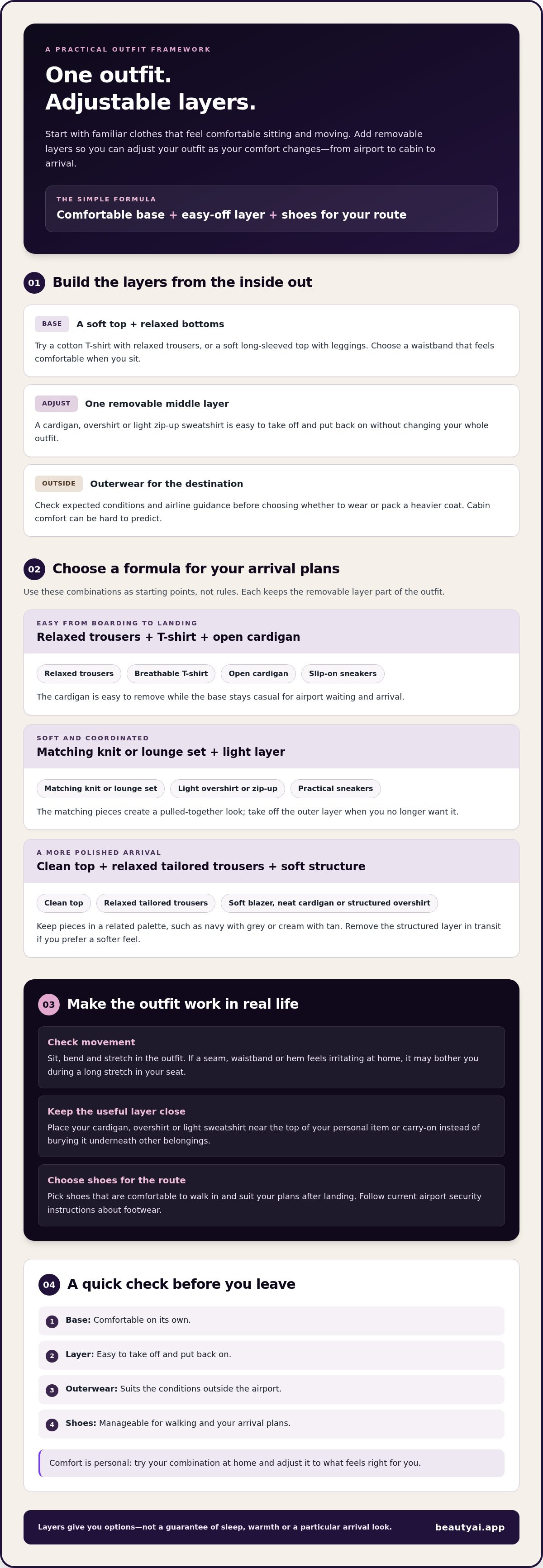
Use these overnight flight outfit formulas as starting points, not rules. Each combines familiar wardrobe pieces for a different priority: an easy setup from boarding to landing, a coordinated lounge look, or a more polished arrival. A removable layer does more than add warmth: one easy-off piece gives the same outfit more flexibility as your comfort needs change.
- Simple from boarding to landing: Pair relaxed trousers with a breathable T-shirt, an open cardigan and slip-on sneakers. The cardigan is easy to take off, while the base stays casual for airport waiting and arrival. Choose shoes that are comfortable to walk in, and follow current airport security instructions about footwear.
- Soft and coordinated: Wear a matching knit or lounge set with a light overshirt or zip-up layer and practical sneakers. The set creates a pulled-together look, while the outer layer can come off when you no longer want it. The U.S. Department of State’s OSAC shares travel health and safety tips, including wearing layers for flights.
- More polished on arrival: Start with a clean top and relaxed tailored trousers, then add a soft blazer, neat cardigan or structured overshirt. Keep the pieces in a related palette, such as navy with grey or cream with tan, so separate garments look intentional without needing a full change.
A simple outfit for comfort from boarding to landing
Choose this formula if you want fewer decisions during the journey. Check that the trousers let you sit comfortably and the mid-layer is simple to remove. Then select shoes that suit both your route through the airport and your walking plans after landing.
A more polished arrival look without a full change
Let the top and trousers do most of the work. A tidy neckline and coordinated colors can make relaxed pieces feel considered, while a comfortable structured layer adds definition. You can take it off in transit if you prefer a softer feel.
How to adjust overnight flight layers, shoes, and accessories
Keep useful layers within reach, and choose outerwear for your route rather than assuming the cabin will feel like the weather outside. Cabin temperatures and personal comfort vary, so layers give you options but can’t guarantee you’ll feel warm. Check expected conditions at your destination and your airline’s guidance before deciding whether to wear or pack a heavier coat.
Pack layers so you can adjust without unpacking everything
Place a removable layer near the top of your personal item or carry-on instead of burying it under other belongings. Use this checklist to make sure each item has a purpose:
- Base layer: A top you’re comfortable wearing on its own.
- Removable layer: A cardigan, overshirt or light sweatshirt.
- Outer layer: A coat that suits the conditions outside the airport.
- Shoes: A pair that works for walking and is manageable during the journey.
- Small essentials: Socks or a compact scarf, if you prefer having them available.
A scarf is optional; pack one only if you like using it. For more ideas on adding warmth without bulk, see our winter layering tips.
Choose shoes and accessories for your own comfort
Easy-on shoes can be convenient at the airport and simple to remove while seated. Bulkier footwear may suit your destination, but takes up more space if you pack it instead. Make the choice based on the full trip, including how much walking you expect to do, rather than only the flight.
Socks and other accessories are personal preferences, not guaranteed solutions for sleep or warmth. Compression garments aren’t necessary for everyone. If you’re unsure whether they’re appropriate for you, ask a healthcare professional.
Plan an overnight flight outfit from clothes you already own
Keep the plan simple: choose a base you’re comfortable sitting in, add one adjustable layer, then check your shoes and what you’ll need after landing. An outfit doesn’t need to be new or complicated to work across the journey. Lay the pieces out together and check that they coordinate with your outerwear and suit your arrival plans. For help organizing pieces you already own, see how to build a digital wardrobe that helps you get dressed.
Make a simple outfit checklist before packing
Write down each piece and its role. This makes it easier to spot missing items and avoid packing layers that don’t work with the rest of the outfit.
- Base: A soft top with relaxed trousers or leggings.
- Adjustable layer: A cardigan or overshirt you can take off easily.
- Outerwear: A coat that suits the conditions outside and works with the outfit.
- Shoes: A pair suited to your walking plans and arrival needs.
Try the full combination at home. Sit, stand and move in it, then adjust anything that feels distracting or doesn’t work with your planned outerwear. Let your own preferences guide the final choice.
Use virtual previews as a styling aid, not a fit check
A virtual try-on image is an approximate visualization of how an outfit might look together. It can’t confirm physical fit, show how a garment feels or guarantee comfort during a flight. Use a preview to compare visible styling, then check the actual clothes on your body before deciding whether the combination works for you.
Set up a flight outfit that works for your trip
Plan overnight flight outfits as a flexible combination, not a single fixed look. Start with a base you’re comfortable sitting in, add a removable layer, and choose shoes and outerwear for both the airport and your arrival plans. Keep the extra layer easy to reach, and test the full outfit at home so you can adjust anything that feels distracting.
You don’t need a separate travel wardrobe. A familiar T-shirt, relaxed trousers and cardigan can make a practical starting point, while coordinated pieces can help you feel ready to step off the plane. Your comfort is personal, and no outfit can promise sleep or a particular cabin temperature.
Want to build a combination from clothes you already own? Plan an outfit with Beauty AI, available for iPhone and Android. Use the app to organize your wardrobe and explore outfit combinations, then choose the pieces that feel right for you. A little planning can make the journey feel more manageable.
Frequently Asked Questions
What should I wear on an overnight flight?
Choose a comfortable base, such as relaxed trousers and a soft top, then add a removable layer like a cardigan or overshirt. Pick shoes that suit your travel plans and think about what you’ll want to wear when you arrive. These overnight flight outfits are starting points, not rules. Comfort varies, so try your combination at home and adjust any piece that feels restrictive or awkward.
Are leggings a good choice for an overnight flight?
Leggings can work if you’re comfortable sitting and moving in them for an extended period. Pair them with a soft top and a removable layer, or choose relaxed trousers if you prefer a looser feel. Consider your plans after landing as well. The best choice is one that feels comfortable to you and works with the rest of your outfit, not a particular garment that everyone should wear.
Can you wear jeans on an overnight flight?
Yes, if your jeans feel comfortable while you’re seated and moving. Some travelers prefer relaxed or softer trousers for a long journey, while others are happy in familiar jeans. Check that the waistband and cut don’t feel restrictive when sitting. Try the full outfit at home, and consider adding a removable layer so you can adjust what you’re wearing if your comfort needs change during the trip.
How do you stay comfortable on an overnight flight without looking too casual?
Combine comfortable pieces in coordinated colors, such as relaxed tailored trousers, a clean top and a neat cardigan or overshirt. This can create a considered look without requiring restrictive clothing or a separate outfit change. Choose practical shoes and accessories that suit your plans. Keep the removable layer easy to adjust, and make sure you feel comfortable wearing the base outfit on its own too.


