


Useful outfit ideas for men start with a few repeatable combinations: a tee with straight jeans, an Oxford shirt with chinos, or a knit polo with tailored trousers. Change the shoes or add one layer to suit the day. Below are 15 complete looks built from the same 12 wardrobe roles, so you can see how pieces repeat rather than collect 15 unrelated shopping lists.
I’m David Voskanyan, founder of Beauty AI. My starting point is the clothing you already own: choose your closest equivalent, check the fit in motion, then adjust one thing. These are my styling suggestions, not a test of particular clothing brands. They cover everyday casual and relaxed smart-casual settings, not every office, wedding or climate.
Jump to the 12-piece wardrobe or browse all 15 outfit ideas. If you want to compare software rather than clothes, use our wardrobe-app comparison for men.
The 12 pieces behind these 15 men’s outfits
This is an example, not a minimum wardrobe or a list you need to buy. A navy polo can replace the ecru one; your comfortable dark trousers can replace jeans. The useful principle is repetition across color, shape and occasion. Each pair of shoes counts as one wardrobe role.
| Category | Pieces | What to check |
|---|---|---|
| 4 tops | White crewneck tee; navy crewneck tee; light-blue Oxford shirt; ecru knit polo | The collar sits comfortably and the fabric is opaque in daylight. |
| 3 bottoms | Dark indigo straight jeans; stone chinos; charcoal tailored trousers | You can sit, bend and walk without the waist or thighs pulling. |
| 2 layers | Olive cotton overshirt; navy unstructured blazer | There is enough room for a tee or shirt without tight armholes. |
| 3 pairs of shoes | White leather sneakers; brown loafers; dark-brown Chelsea boots | Use pairs you already find comfortable and suitable for the conditions. |
Underwear, socks, laundry duplicates, specialist sportswear and weatherproof outerwear are not counted. Twelve roles do not mean you can wear one clean tee indefinitely or that a blazer replaces a raincoat. If you need help choosing a shirt color, the black-trouser color guide explains contrast and shoe choices in more detail.
15 outfit ideas for men, from casual mornings to dinner
The AI-generated editorial illustrations show three numbered looks from left to right. They illustrate color and silhouette, not tested products, guaranteed fit or fabric performance. Descriptions below name exactly the pictured pieces; suggested swaps are alternatives, not extra items in the 12-piece example.
Everyday casual: looks 1–3
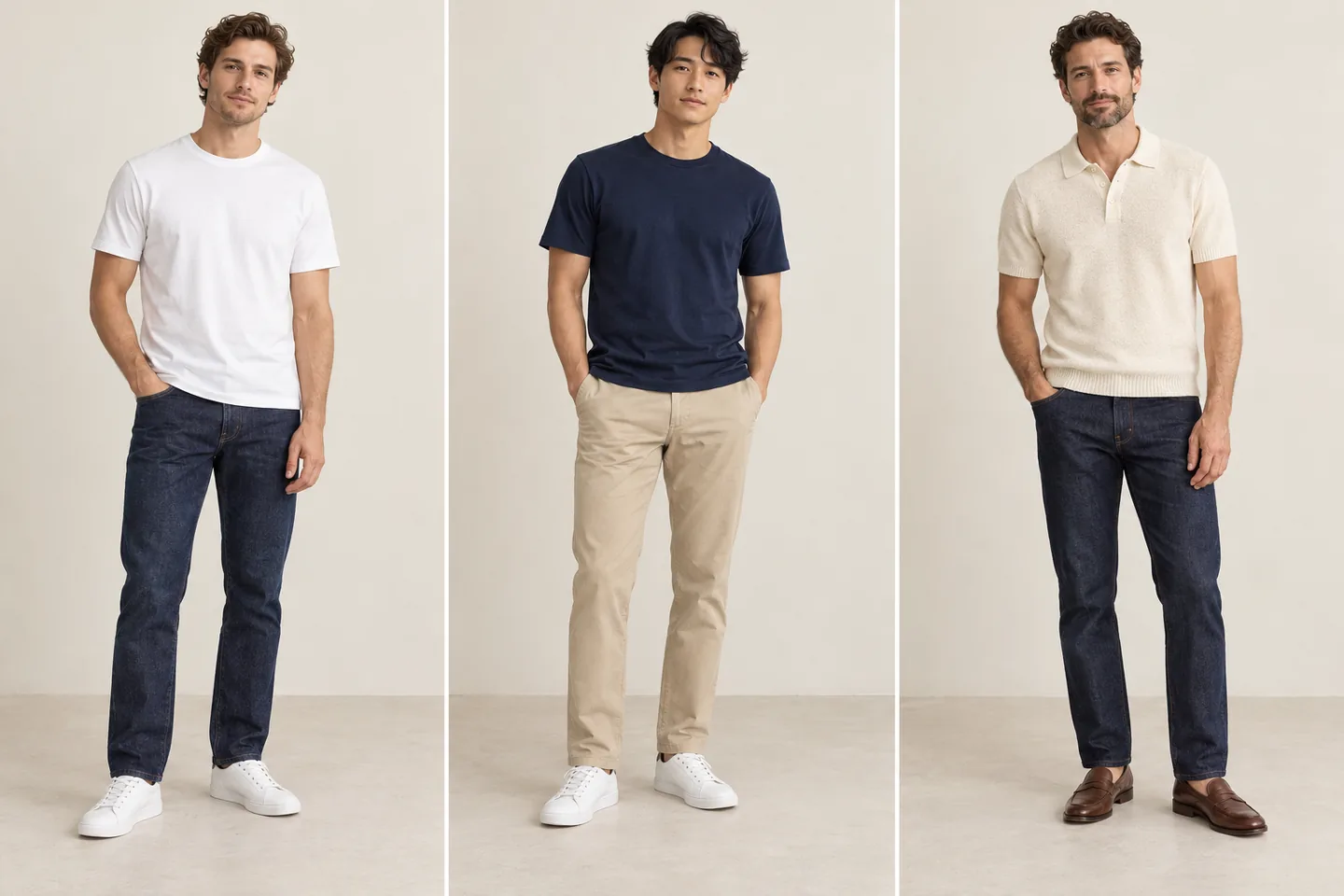
1. White tee + dark jeans + white sneakers
A white crewneck tee, straight indigo jeans and clean white sneakers make a straightforward weekend base. Keep the tee comfortably close at the shoulders, with enough room through the body. The dark denim provides contrast without needing an extra accessory.
Try it for errands or a casual lunch. Before changing the entire outfit, check the tee length: a small tuck can change its balance. Swap for your usual darker tee if white is impractical; the formula still works.
2. Navy tee + stone chinos + white sneakers
Use the navy tee with stone chinos and the same white sneakers. The lighter bottom changes the balance while the footwear keeps the outfit relaxed. A straight or gently tapered leg usually lets the hem meet the shoe without a large stack of fabric.
This is an easy casual-office option only when your workplace accepts tees and sneakers. Otherwise use the Oxford shirt from look 4. Sit down before leaving: a smart-looking waistband that digs in is still the wrong fit.
3. Ecru knit polo + dark jeans + brown loafers
Combine the ecru knit polo, indigo jeans and brown loafers. The collar and textured knit add a little structure without a jacket. Dark, unembellished denim keeps the contrast clear; it need not be skinny to look considered.
Use it for a relaxed lunch or an informal date. Check whether the polo clings or rides up when you move. Loafers should be secure without rubbing; choose appropriate socks for your own comfort rather than copying a bare-ankle photograph.
Relaxed workwear: looks 4–6
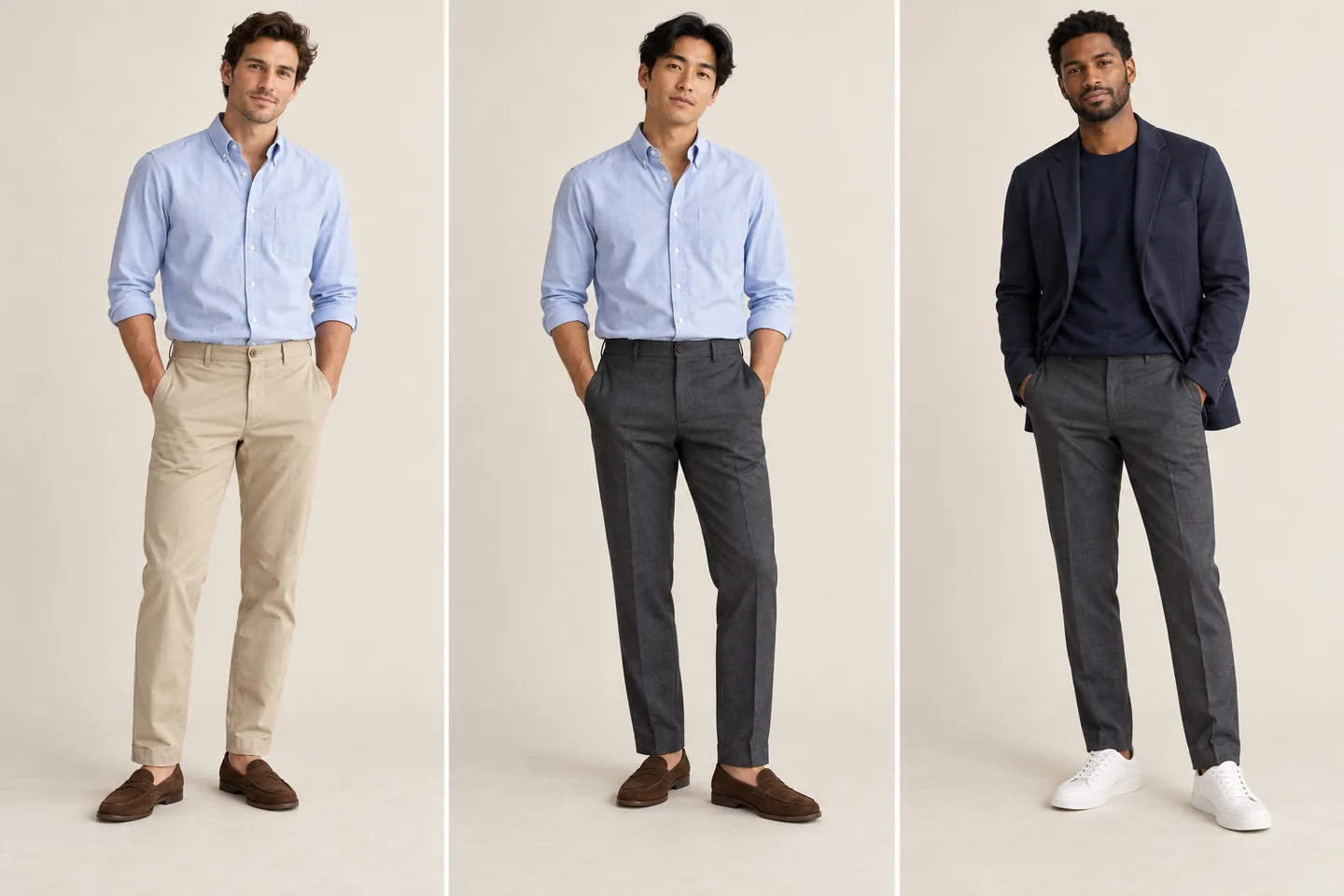
4. Light-blue Oxford + stone chinos + loafers
Tuck the light-blue Oxford into stone chinos and add brown loafers. The pale shirt and trousers make a lighter outfit than the denim combinations. A slightly textured Oxford generally feels less formal than a crisp dress shirt.
Good for a relaxed workplace or a daytime meeting where this dress code fits. The buttons should not pull when seated. If the shirt balloons above the waistband, try a neater tuck or a better-fitting shirt, not simply a tighter trouser.
5. Light-blue Oxford + charcoal trousers + loafers
Keep the same shirt and loafers, replacing the chinos with charcoal tailored trousers. The darker bottom makes the look more restrained. A clean trouser line and a comfortable shirt do more here than adding a conspicuous belt or watch.
Choose this when look 4 feels too casual. Charcoal trousers do not make the outfit formal by themselves: check the actual workplace or venue requirements. Leave enough trouser length for the proportions you prefer; the pictured crop is optional.
6. Navy blazer + navy tee + charcoal trousers
Wear the navy blazer over the navy tee, with charcoal trousers and white sneakers. The similar top colors create a quiet base while the white footwear keeps the look casual. An unstructured blazer should still sit well at the shoulders.
This suits a creative office or smart-casual event that accepts sneakers. Check that the tee neckline and jacket lapels sit comfortably together. For a more polished version, use the Oxford and loafers in look 12 rather than assuming a blazer overrides a dress code.
Easy layers: looks 7–9
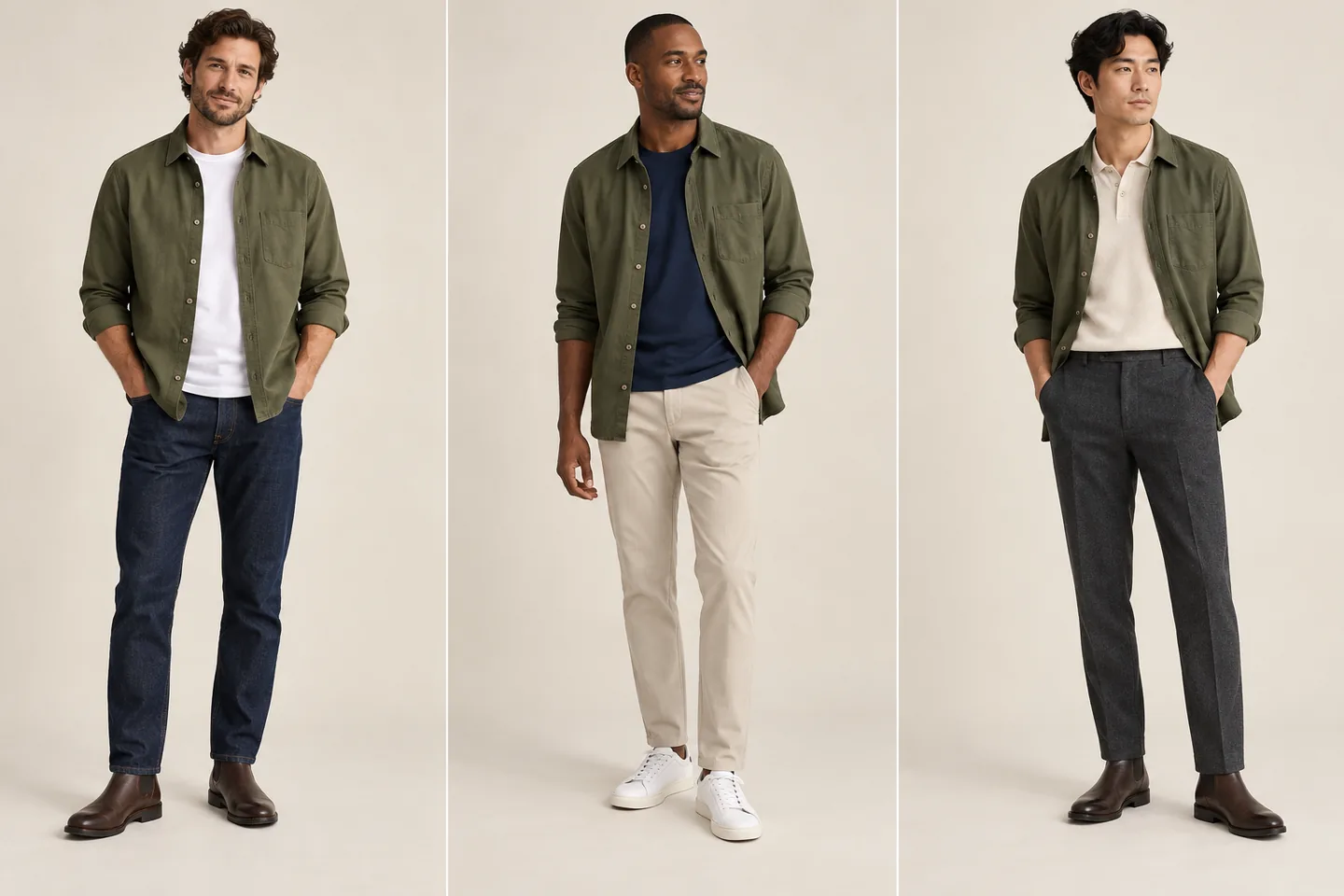
7. Olive overshirt + white tee + jeans + boots
Add the open olive overshirt to the white tee and indigo jeans, then use dark-brown Chelsea boots. The overshirt provides a visible middle layer between a tee and a jacket. Keeping it open also shows the light-to-dark contrast underneath.
Useful for a cool, dry casual day. Check sleeve room and whether the boot shaft catches the jean hem. Cotton is not automatically windproof or waterproof; bring the outerwear the forecast requires rather than treating this illustration as weather protection.
8. Olive overshirt + navy tee + stone chinos
Keep the olive overshirt but switch to a navy tee, stone chinos and white sneakers. The lighter trousers make this feel different from look 7 without introducing another jacket. The navy tee is a calmer contrast than bright white.
Try it for a weekend walk or a relaxed journey. Keep the overshirt loose enough to reach overhead. If it becomes warm, remove it: the navy tee and chinos already form a complete base, as in look 2.
9. Olive overshirt + ecru polo + charcoal trousers
Layer the olive overshirt over the ecru polo and add charcoal trousers with dark-brown Chelsea boots. Knit texture, a workwear-style layer and a tailored bottom can coexist when the fit is comfortable and the colors remain restrained.
Use this for a casual dinner or cooler daytime plans. Two collars can feel bulky: leave the overshirt open and check the neckline. If the layers crowd your neck, use the white tee instead; a styling formula should adapt to your comfort.
Dinner and smart casual: looks 10–12
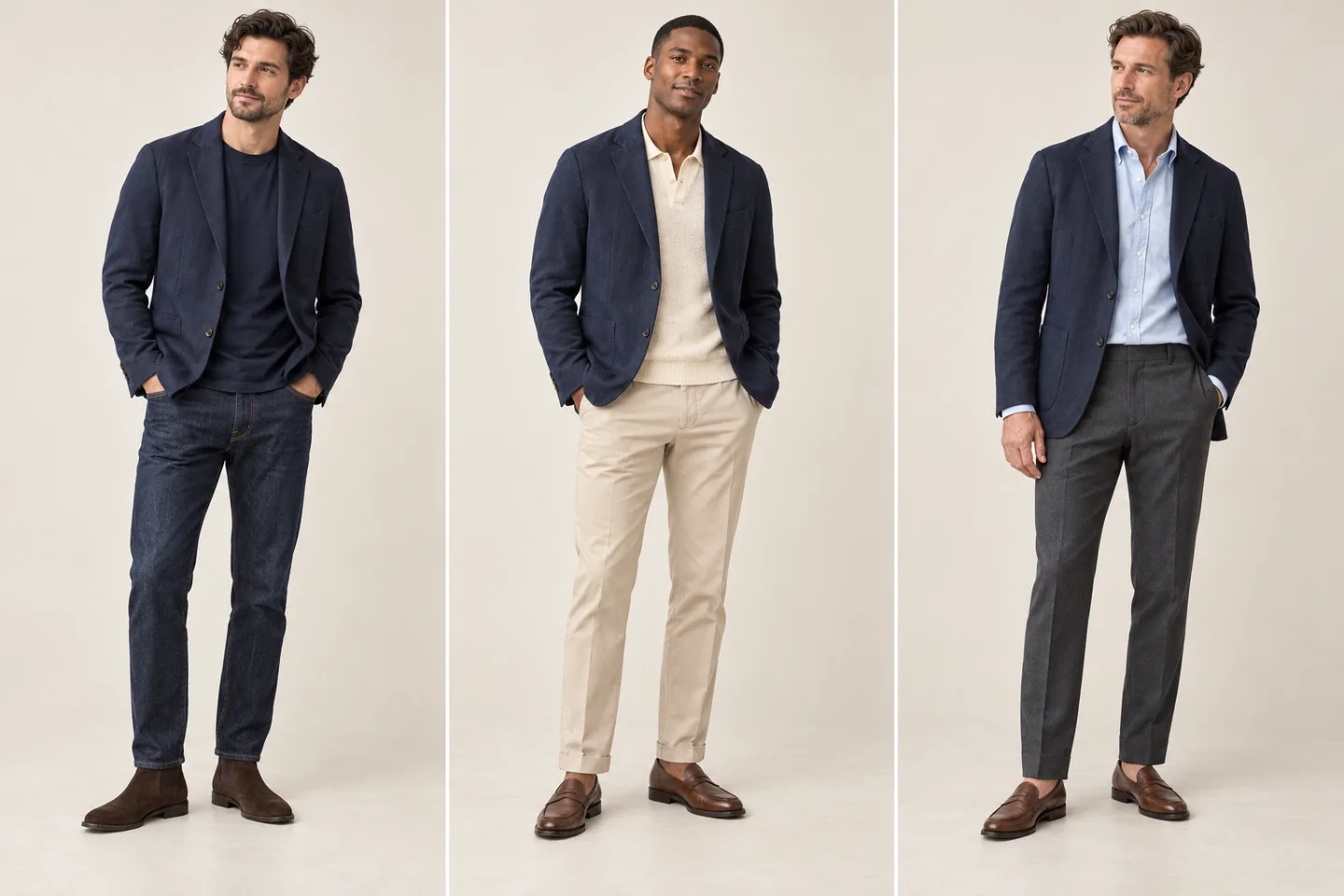
10. Navy blazer + navy tee + dark jeans + boots
Combine the navy blazer and tee with indigo jeans and dark-brown Chelsea boots. The dark top and denim keep the outfit quiet; the blazer changes the outline more than a bold print would. Choose jeans without distressing if you want the more polished version.
A practical starting point for a relaxed evening date. Make sure the jacket is not too short or tight over the tee. For a venue that excludes denim, swap to charcoal trousers; do not rely on the word smart-casual to mean the same thing everywhere.
11. Navy blazer + ecru polo + stone chinos
Wear the ecru polo under the navy blazer with stone chinos and brown loafers. The light center separates the two navy edges of the jacket. Reusing the chinos and loafers from look 4 shows how changing a top and layer can change the mood.
Try this for dinner or an informal celebration. Leave room for the polo knit under the jacket, particularly at the upper arm. This is not a substitute for a suit when an invitation specifies one, and the clothes do not need to be expensive to fit well.
12. Navy blazer + blue Oxford + charcoal trousers
Add the navy blazer to the Oxford, charcoal trousers and brown loafers from look 5. There is no tie in the illustration. This is a set of separates rather than a matching suit, with the shirt collar providing the more structured center.
Use it for a smarter lunch, office occasion or dinner if the code allows. Check the shirt cuff and jacket sleeve together. If you need formal business wear or a particular ceremonial outfit, follow that requirement rather than extending this casual wardrobe beyond its purpose.
Repeat the pieces, change the emphasis: looks 13–15
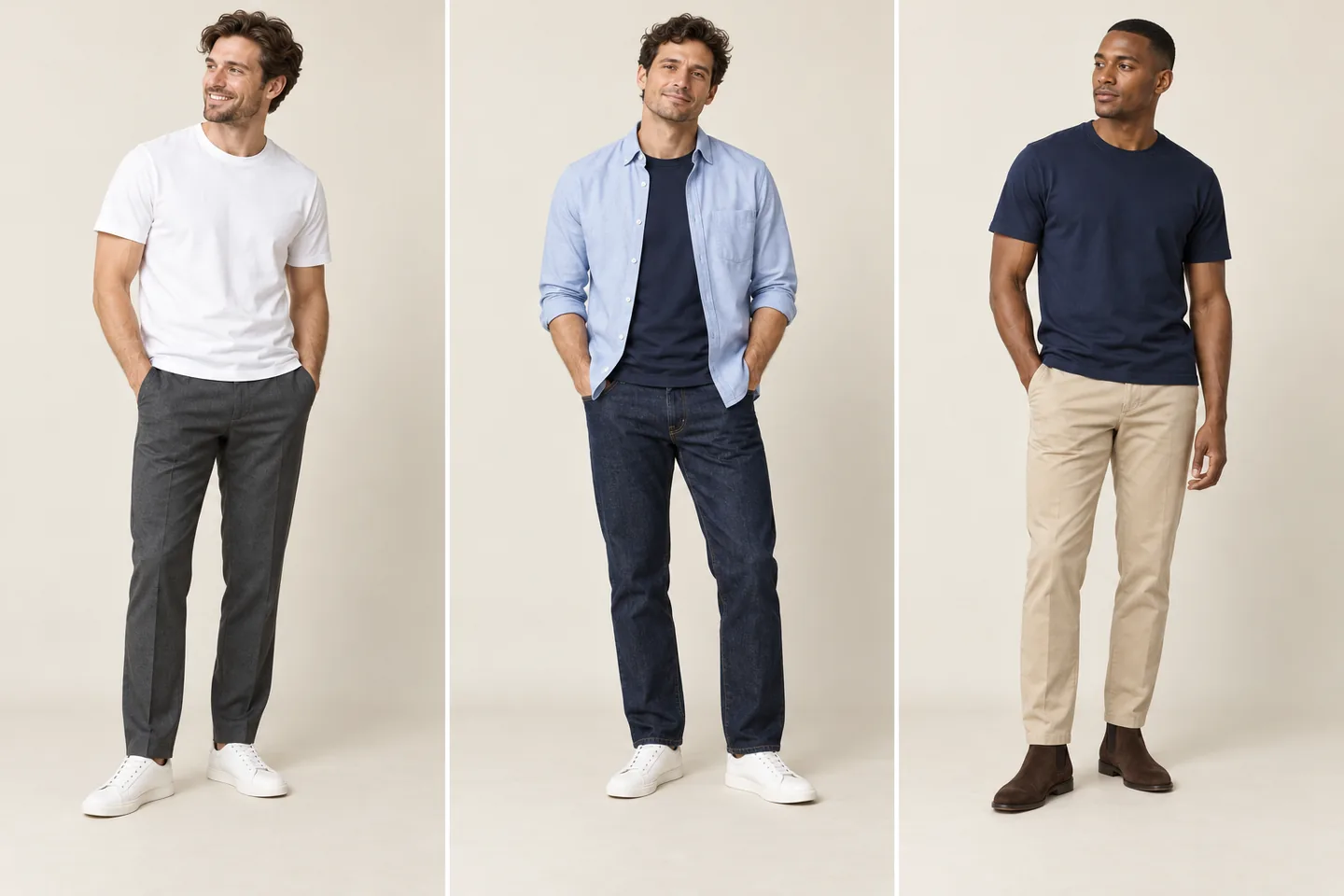
13. White tee + charcoal trousers + white sneakers
Put the white tee with charcoal tailored trousers and white sneakers. This is the simplest way to make the trousers less office-like without buying another bottom. A plain tee keeps the focus on the contrast and the trouser shape.
Suitable for an easy city day or casual lunch. Check that the trousers are not too delicate or restrictive for the activity. Clean footwear and a comfortable hem are useful; visible socks, a longer hem or an untucked tee are personal choices, not mistakes.
14. Open Oxford + navy tee + dark jeans
Wear the light-blue Oxford unbuttoned over the navy tee, with indigo jeans and white sneakers. The shirt now works as a light layer instead of the tucked top in look 4. A slightly relaxed shirt is more comfortable for this than a very fitted dress shirt.
Use it for an informal day when you want adjustable coverage. Make sure the tee does not bunch under the shirt and that the sleeves move freely. In warmer conditions remove the Oxford; in cold weather this thin combination still needs a proper outer layer.
15. Navy tee + stone chinos + Chelsea boots
Return to the navy tee and stone chinos from look 2, this time with dark-brown Chelsea boots. The footwear changes the line at the ankle and the overall feel without adding more pieces. Let the trouser hem fall cleanly around the boot shaft.
Try it for an evening when sneakers feel too casual but a blazer feels unnecessary. Boots are not automatically waterproof or suitable for hours of walking. If yours are uncomfortable, return to the sneakers: the purpose of repeating a formula is to make dressing easier.
How to choose the right look for your day
Start with the strictest requirement: the dress code, the amount of walking, or the weather. Then choose the base you already like wearing. For a day that changes from work to dinner, look 5 becomes look 12 by adding the blazer. For a mild day that warms up, look 8 becomes look 2 by removing the overshirt.
Do a quick movement check: sit, raise your arms and walk in the shoes. Adjust shoulders, waistband and hem before worrying about accessories. A photograph cannot tell you whether a fabric itches or a shoe rubs.
Change the fit or colors without losing the formula
The silhouettes shown are options, not rules about body types. Prefer a wider trouser, longer tee or different amount of contrast? Keep the role of each piece and change the shape. Try one alteration at a time so you can see what you actually prefer.
For a quieter look, bring the top and bottom closer in value; for a clearer division, use a lighter top and darker bottom. A patterned Oxford can replace a plain one, but repeat one of its colors elsewhere instead of adding several unrelated patterns. You do not need to buy an exact shade from an illustration.
Turn one idea into an outfit from your own clothes
Pick one pictured combination and find its closest equivalents in your wardrobe. In Beauty AI’s outfit maker, start with those pieces and describe your occasion and practical constraints. For feedback on a look you are wearing, use a clear full-length photo and ask a specific question, such as whether the shoes or jacket make it too casual. AI suggestions are options to judge, not proof of fit or a requirement to buy something.
I build Beauty AI, so this is my own product recommendation. The free wardrobe supports up to 50 items; AI styling requires Premium. If you want to compare approaches before downloading, read the men’s wardrobe-app guide. For wider fit and wardrobe basics, see the men’s styling guide.
Do I need all twelve pieces?
No. Begin with two bottoms, three comfortable tops and one pair of shoes you already wear. Copy the relationships between the pieces, not the shopping list. Add a layer only when your routine requires it. This example demonstrates combinations; it is not a full wardrobe, a seasonal packing list or an argument for owning a particular number of clothes.
Can I wear these outfits to work or a wedding?
Some suit relaxed workplaces and informal events, but the actual dress code comes first. T-shirts, denim, sneakers and casual separates may be inappropriate for formal offices or weddings. Ask the host or workplace when unclear. Choose clothes that meet that requirement before adapting the colors or layering shown here.


