


A head-to-toe look can feel more interesting when its shades don’t match exactly. The key monochromatic dressing tips are simple: choose one color family, then vary the shades, textures, or shapes. A single-color outfit can look flat if every piece has the same tone and finish. Try a chocolate knit with lighter brown trousers, then add contrast with suede shoes or a smooth leather belt.
This guide shares 12 outfit ideas you can adapt using clothes already in your wardrobe. You’ll find ways to combine close and contrasting shades, balance proportions, and use texture instead of exact color matching. The examples range from casual layers to workwear and occasion looks, with practical swaps for different weather and levels of formality. Start with a color you already wear, then use the ideas as flexible formulas rather than strict rules.
Key Takeaways
- Build a cohesive look from one color family without matching every shade exactly.
- Choose a base piece, then add contrast through fabric texture, shade, or garment shape.
- Use the 12 outfit formulas as starting points for casual days, work settings, and special occasions.
- Adjust each look for the weather, dress code, and what feels comfortable in your wardrobe.
Table of Contents
Monochromatic Dressing Tips: What Makes a One-Color Outfit Work?
A monochromatic outfit uses shades, tints, or tones from one color family. The pieces don’t have to be identical, which makes it easier to work with clothes you already own. Cream, camel, and brown can form a coordinated neutral palette, even though the pieces vary in lightness. To keep the outfit from looking flat, create contrast within that palette and choose pieces that suit the occasion. These monochromatic dressing tips are about making flexible combinations, not buying a matching set.
Does monochromatic dressing mean wearing the exact same color?
No. Treat a color family as a range, not a single swatch. Cream, camel, and brown can work together, as can pale blue, denim, and navy. Keep the main garments connected by color while letting their shades differ. For background on how tints and shades relate to a single hue, see this overview of monochromatic color schemes. The right mix depends on what you own and which combinations you enjoy wearing.
Why shade and texture give a one-color outfit depth
Use lighter and darker pieces to create separation without introducing another color. Then look at fabric and shape: a fine knit beside sturdy denim, or a relaxed shirt tucked into straighter trousers, helps each garment stand out. Start with one kind of contrast. If the outfit still feels uniform, change a shade or fabric before adding more detail.
Shade creates contrast, texture adds interest, and proportion gives the outfit shape. Together, these tools make a one-color look feel considered without demanding exact matches.
Build Monochromatic Outfits with Shade, Texture, and Proportion
Follow a simple sequence: choose a color family, select pieces in different shades, then add contrast through fabric or shape. These monochromatic dressing tips are adaptable formulas, not rules about body shape or attractiveness. Start with garments already in your wardrobe and consider where you’ll wear the outfit. For more ideas on combining color and texture, read this guide to monochromatic dressing.
Three shade-led outfit formulas
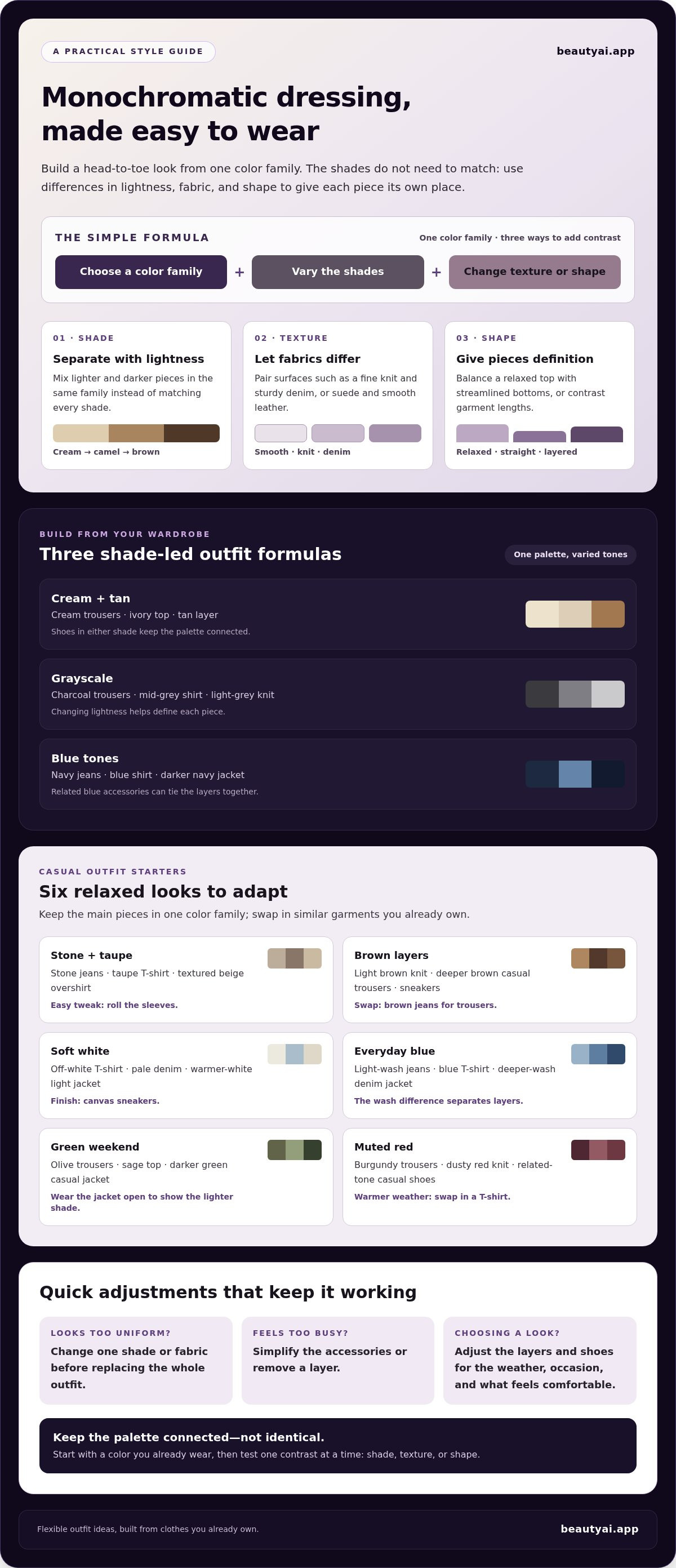
- Cream and tan: Pair cream trousers with an ivory top and a tan layer. Shoes in either shade keep the palette connected.
- Grayscale: Combine charcoal trousers with a mid-grey shirt and a lighter grey knit. The difference in lightness helps define each piece.
- Blue tones: Wear navy jeans with a blue shirt and a darker navy jacket. A belt or shoes in a related blue can tie the layers together.
Small shade shifts separate garments while keeping the outfit within one color family.
Three texture-and-proportion outfit formulas
- Pair a smooth top with textured trousers and a coordinating structured jacket. Keep the colors close and let the fabric surfaces provide contrast.
- Layer a fine knit with denim, then add a longer coat in a related neutral shade. Different textures and lengths give the combination more dimension.
- Balance a relaxed top with streamlined bottoms in the same palette. Choose shoes and a bag that continue the tones or add a deliberate neutral contrast.
Test one formula at a time. If the outfit feels too uniform, change one shade or fabric instead of replacing the whole combination. If it feels busy, simplify the accessories or remove a layer. These small adjustments help you adapt the same pieces to your taste, the weather, and the occasion.
12 Monochromatic Outfit Ideas for Casual, Work, and Occasion Dressing
Use these outfit formulas as starting points, not fixed dress codes. Keep the main pieces within one color family, then adjust the shoes, layers, or fabric to suit your wardrobe and plans. If you don’t own a suggested item, substitute a similar garment in a close shade.
Six relaxed monochromatic looks
- Stone and taupe: Pair stone jeans with a taupe T-shirt and a textured beige overshirt. Roll the sleeves for an easy finish.
- Brown layers: Wear a light brown knit with deeper brown casual trousers and sneakers. Brown jeans can work in place of trousers.
- Soft white: Combine an off-white T-shirt, pale denim, and a light jacket in a warmer white. Canvas sneakers keep the look relaxed.
- Everyday blue: Try light-wash jeans, a blue T-shirt, and a denim jacket in a deeper wash. The different denim shades help distinguish each layer.
- Green weekend: Pair olive trousers with a sage top and a darker green casual jacket. Leave the jacket open to show the lighter shade.
- Muted red: Combine burgundy trousers with a dusty red knit and casual shoes in a related tone. Swap the knit for a T-shirt in warmer weather.
Six polished looks for work or occasions
- Blue workwear: Wear a pale blue shirt with tailored mid-blue trousers and a navy jacket. Choose dress shoes or neat flats in a related shade.
- Warm neutrals: Pair a tan skirt with a lighter beige blouse and a structured brown jacket. Keep accessories simple.
- Grey separates: Style a soft grey dress with a charcoal jacket and dark grey shoes. Add a belt if you like, or leave the waist unadorned.
- Green occasion: Combine a deep green dress with a lighter green wrap or jacket. Polished flats are an option if heels don’t feel comfortable.
- Burgundy suit: Wear burgundy trousers and a coordinating jacket over a softer red shirt. A simple bag keeps the outfit focused.
- Brown evening look: Pair a chocolate skirt with a lighter brown top and a structured coat. Choose dress shoes, boots, or a comfortable flat.
Use the formulas as a starting point. Make your final choice based on the occasion, weather, and what feels comfortable to wear.
Make Monochromatic Dressing Work for Your Wardrobe and the Occasion
Adapt the outfit to your day rather than following a fixed formula. In warm weather, choose a lighter shirt and breathable trousers. In cooler conditions, add a coat or knit in the same color family. A structured jacket can make familiar separates feel more polished for work or an event. Let the dress code, weather, and your comfort guide the final choices.
A quick checklist for choosing the right monochromatic look
- Start with a garment you like. Identify its broad color family, such as blue, brown, or green.
- Choose a shade shift. Add a lighter or darker piece, then use a different texture or shape for contrast.
- Check the finishing pieces. Choose shoes and outerwear that suit the occasion, weather, and your comfort. If a particular shoe or layer doesn’t work for you, pick another practical option in a related shade.
This quick process keeps the look personal and makes it easier to reuse pieces you already wear.
Plan combinations with clothes you already own
Reviewing your wardrobe can help you spot related shades and test combinations before getting dressed. Use this guide to building a digital wardrobe if you’d like a way to organize the pieces you own. A digital wardrobe is optional. You can also lay a few garments together and see how their colors and textures work in person. Choose the approach that suits your plans and feels comfortable throughout the day.
Build Your Next One-Color Outfit from What You Own
A polished monochromatic look doesn’t depend on perfect color matches. Choose a color family, vary the shades, then use texture and proportion to keep the outfit visually interesting. The 12 outfit ideas offer starting points for casual plans, work, and occasions. Let the weather, dress code, and your comfort guide the final choices.
Keep these monochromatic dressing tips flexible: begin with a piece you already like, add a related shade, and finish with a layer or accessory that suits your day. A digital wardrobe can help you review your existing clothes and consider new combinations without turning inspiration into a reason to shop.
Beauty AI supports digital wardrobe organization, outfit planning with clothes you own, and AI feedback on visible styling. Its virtual try-on images are approximate visualizations, not proof of garment fit or comfort. Try Beauty AI to plan outfits from your own wardrobe, then trust your own preferences as you put a look together. A few thoughtful changes can make familiar pieces feel newly useful.
Frequently Asked Questions
Does monochromatic dressing mean wearing the same color from head to toe?
No. Monochromatic outfits use pieces from one color family, not necessarily identical shades. A navy shirt, blue trousers, and a lighter blue layer can still look coordinated. The shade changes help distinguish each garment while keeping the palette connected. Start with colors already in your wardrobe, then adjust the combination to your preference. Exact matching isn’t required.
How do you keep a monochromatic outfit from looking boring?
Change the shade, texture, or shape of a few pieces instead of adding lots of colors. For example, pair smooth charcoal trousers with a soft grey knit and a lighter grey jacket. These monochromatic dressing tips add visual variation while keeping the palette focused. Try one contrast at a time, then add another only if the outfit still feels too uniform.
Can I mix different shades of the same color in one outfit?
Yes. Mixing shades is a practical way to add depth, and the pieces don’t need to match exactly. Try neighboring shades for a subtle shift, or combine clearly lighter and darker tones for more separation. Check the outfit together in the lighting where you’ll wear it, since light and fabric can affect how colors appear. Your own taste matters, too.
What shoes work with a monochromatic outfit?
Choose shoes that continue the color family, echo a shade in your clothes, or add a neutral contrast. For example, dark shoes can pick up the deeper shade in an outfit of light and dark blues. Let the occasion, weather, and your comfort guide the choice. There’s no single shoe color or style required for a cohesive look.
How can I make monochromatic outfits from clothes I already own?
Start with a frequently worn item, such as a blue shirt, and identify its color family. Look for a lighter or darker companion piece, then add interest with a different texture or silhouette. Choose shoes and an outer layer that suit the occasion and weather. A digital wardrobe can help organize options, but you can also lay the pieces out together.


