

A personal shopper app should remove a specific purchasing obstacle. That may be finding the right category, comparing retailers, respecting modest-fashion constraints, previewing a look, buying pre-owned, or checking whether a new item has a place in the wardrobe. An app that only creates more scrolling is not solving the job.
How I evaluated personal shopper apps
Written and tested by David Voskanyan. I evaluated seven shopping scenarios: judging a product against an existing wardrobe, refining a vague request, comparing a known designer item, searching by aesthetic, applying modest-fashion constraints, previewing an outfit on a photo, and buying pre-owned. I compared the visible input, the decision each product is designed to support, the clarity of the next action, and the risk that the workflow simply increases browsing.
The repository preserves first-party screenshots for all seven products and official app-store sources for Beauty AI, Daydream, ModeSens, and Uverest. Public evidence was rechecked on July 18, 2026. The captures do not document completed purchases, identical search results, delivery outcomes, returns, or one shared test device. I therefore do not invent conversion rates, savings, recommendation accuracy, or regional availability.
Scoring approach: I use task fit, evidence quality, purchase clarity, and repeat-use value. First-party marketing claims are labeled as claims; they are not treated as independently measured results.
Editorial disclosure: Beauty AI publishes this article and appears in it. I co-founded Beauty AI. No competitor paid for inclusion or position, and I recommend competing products whenever their documented workflow better matches the shopping job.
What the saved screenshots establish
| App | Concrete evidence | What remains unproven |
|---|---|---|
| Beauty AI | A wardrobe screen with tops and bottoms, product images, and retailer labels | Price comparison, stock, and purchase outcomes |
| Daydream | First-party positioning as “AI for fashion people” and a discovery feed | Search quality, inventory coverage, and checkout experience |
| ModeSens | A promotional claim of 40K+ stores and brands with a named brand/retailer set | The claim is not independently audited here |
| Uverest | A natural-language “cherry red fit” query with coordinated fashion results | Whether results are live products, generated concepts, or consistently purchasable |
| Kauna | Explicit modest-fashion positioning | No preserved search or checkout workflow |
| Slidez | A photo-based “Virtual Trial Room” labeled beta with a typed office-outfit request | Fit accuracy and real-product linkage |
| Loopin | A pre-owned jacket listing with active bidding, seller, shipping, countdown, and bid action | Authentication, fulfillment, and auction outcomes |
Best personal shopper apps by buying problem
1. Beauty AI
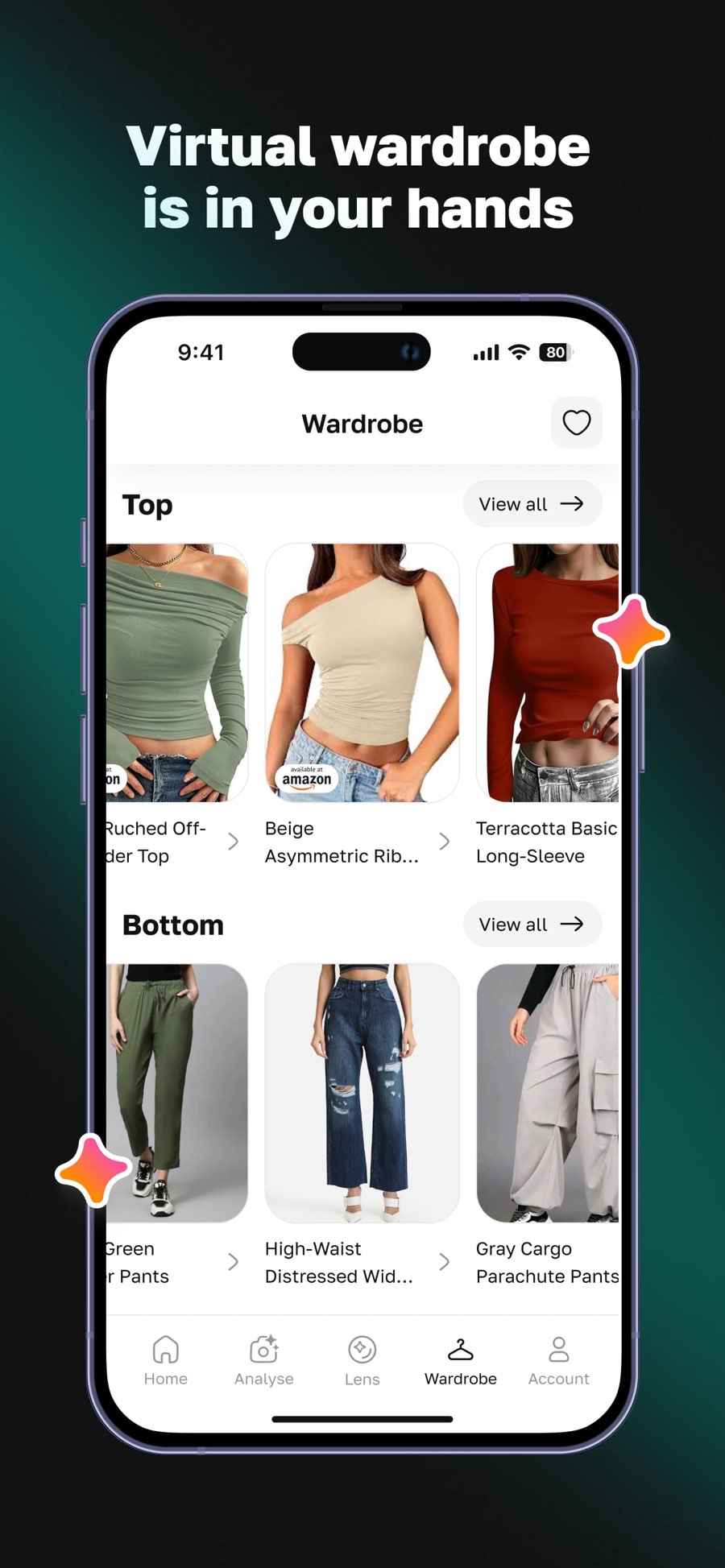
Beauty AI is most relevant when the product decision depends on an existing outfit or wardrobe. The preserved screen shows product-like wardrobe items grouped as tops and bottoms, with retailer labels on some cards. Combined with the app's documented outfit-analysis and visual-search workflow, that supports a wardrobe-aware decision path rather than a pure marketplace claim.
David's verdict: What worked: it keeps product discovery close to outfit and wardrobe context. What failed: the evidence does not show cross-retailer price comparison, live inventory, or a completed purchase. Best for: deciding whether a product direction improves an outfit or fills a wardrobe gap. Choose another app when: ModeSens is more relevant to a known luxury item and price comparison; Loopin is better when the goal is a pre-owned auction.
Start with finding clothes from a photo or the digital wardrobe workflow.
2. Daydream
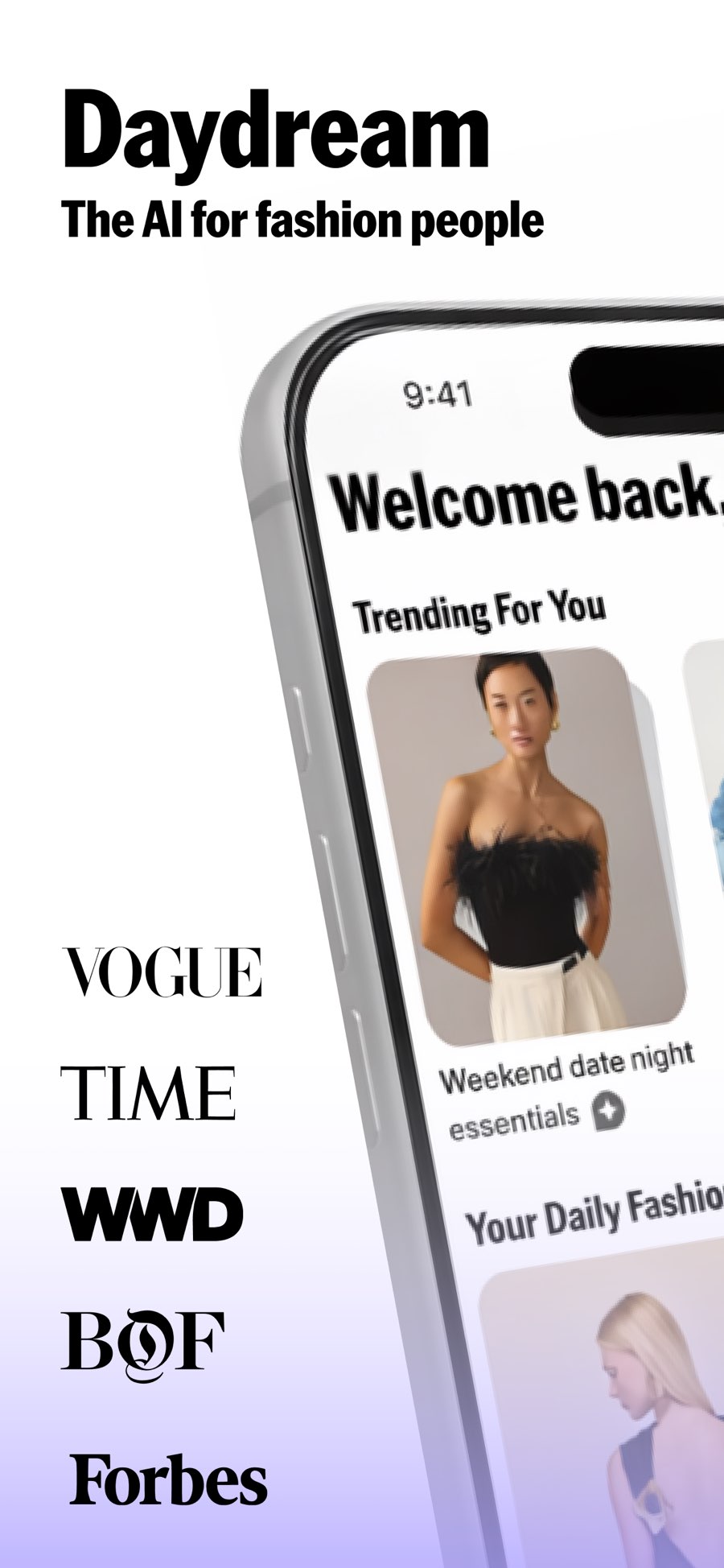
Daydream's saved asset positions the product as an AI-led fashion discovery experience and shows a personalized feed. The official App Store listing is the stronger evidence source for current platform and feature details; the promotional image itself does not demonstrate a full search session.
David's verdict: What worked: the product has a clear discovery-first identity that suits an open-ended request. What failed: the repository does not preserve a query-to-purchase path or comparable result set. Best for: exploring a vague fashion brief conversationally. Choose another app when: use Beauty AI when owned-clothes context matters, ModeSens when the exact product is already known, or Loopin for pre-owned shopping.
See Daydream on the App Store.
3. ModeSens
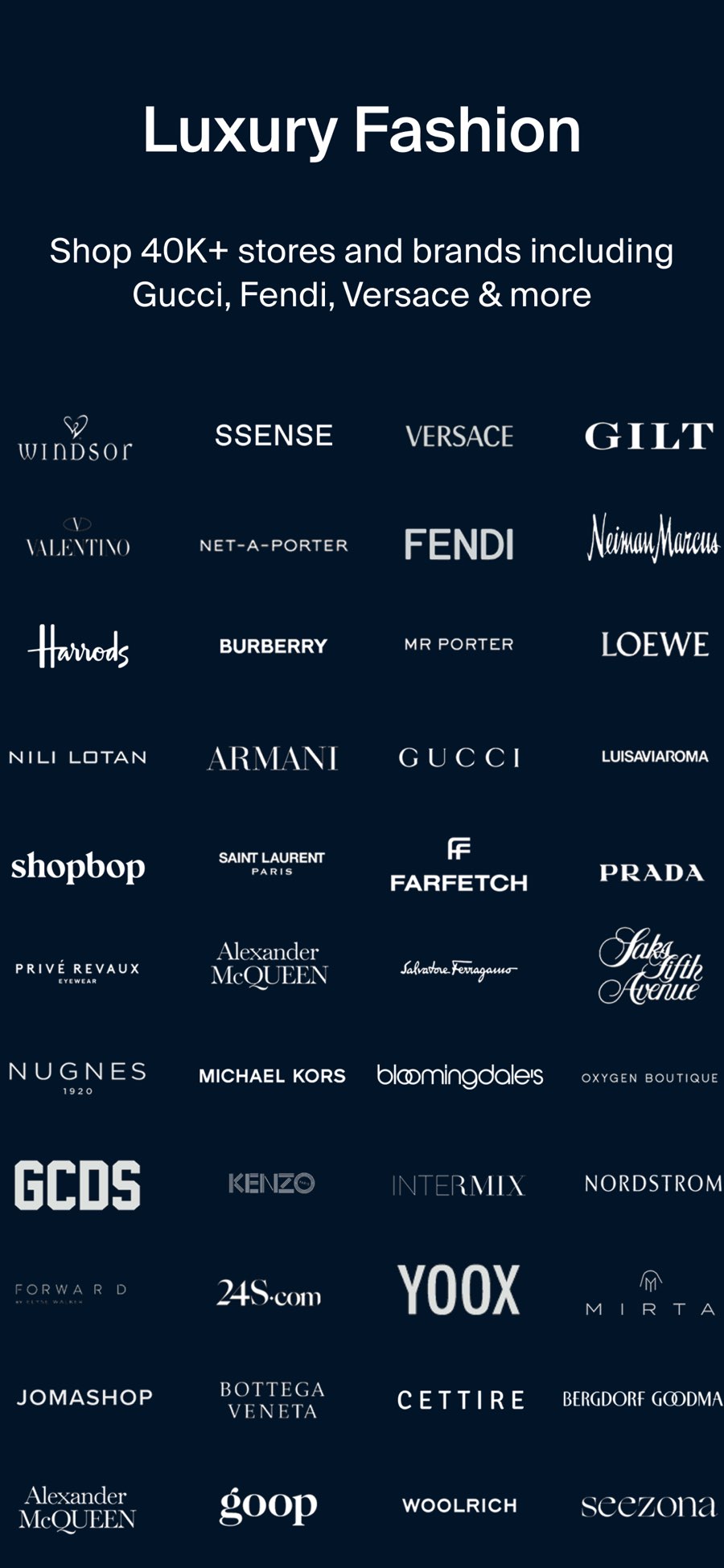
The ModeSens screenshot makes a measurable first-party claim: access to more than 40,000 stores and brands. It also names luxury brands and retailers. That supports its positioning as a broad luxury-shopping and comparison surface, but the number remains a marketing claim rather than an independently verified inventory count in this review.
David's verdict: What worked: the product communicates retailer breadth and is well matched to comparing a known premium item. What failed: the saved evidence does not show one product compared across price, size, shipping, or returns. Best for: shoppers who already know the designer item or category. Choose another app when: Daydream is better for an open-ended brief; Beauty AI is better when the decision is whether the item belongs in an outfit or wardrobe.
See ModeSens on the App Store.
4. Uverest
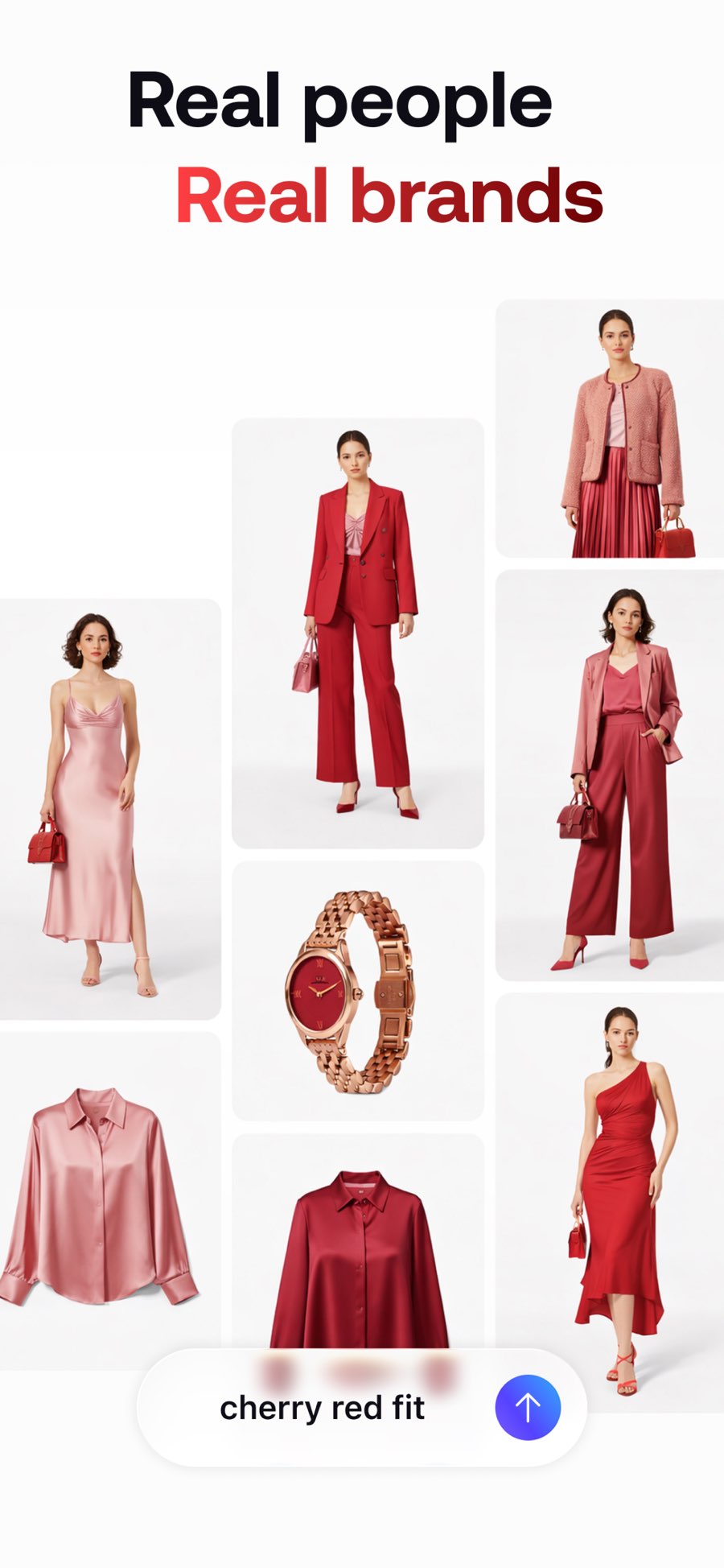
Uverest's preserved screen contains the most concrete natural-language example in this comparison: “cherry red fit” appears in a query field beneath coordinated red garments and accessories. It demonstrates the intended aesthetic-led input, although the screenshot does not establish which tiles are live products or whether the same request is repeatable.
David's verdict: What worked: the input is fast and aesthetic-specific. What failed: purchasability, retailer coverage, and recommendation consistency are not documented by the image. Best for: visual or vibe-led discovery. Choose another app when: use ModeSens for a known luxury item, Kauna when modest-fashion constraints are essential, or Beauty AI for wardrobe compatibility.
5. Kauna
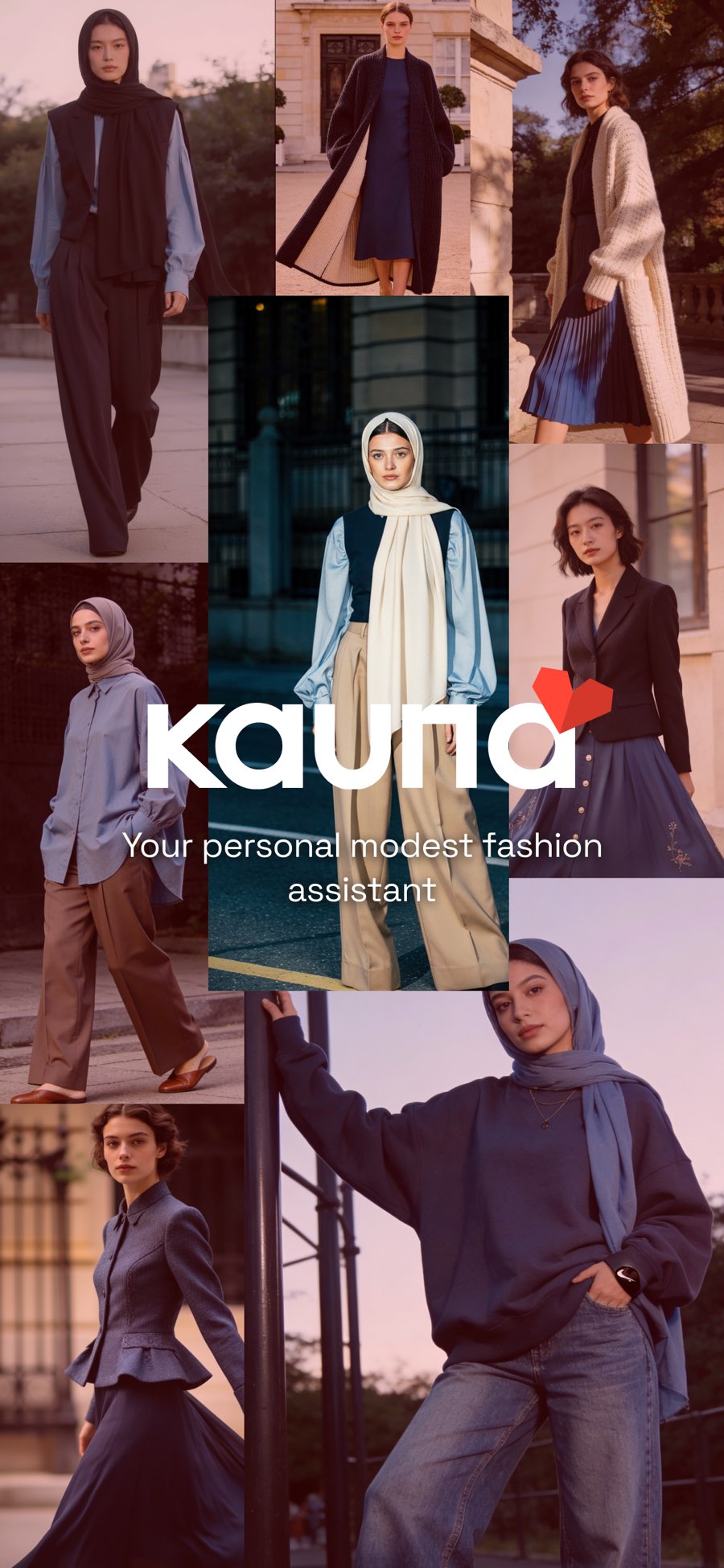
Kauna's saved asset is explicit about its niche: “Your personal modest fashion assistant.” That specificity is useful because coverage, silhouette, and layering requirements can be lost in a general fashion search. The image is a positioning collage, not a captured recommendation flow.
David's verdict: What worked: the product starts from a clear, underserved constraint set. What failed: the repository does not preserve search filters, retailer results, pricing, or checkout. Best for: shoppers whose modest-fashion requirements are non-negotiable. Choose another app when: use Daydream or Uverest for broader discovery, ModeSens for luxury comparison, or Beauty AI for matching a candidate to owned clothes.
6. Slidez
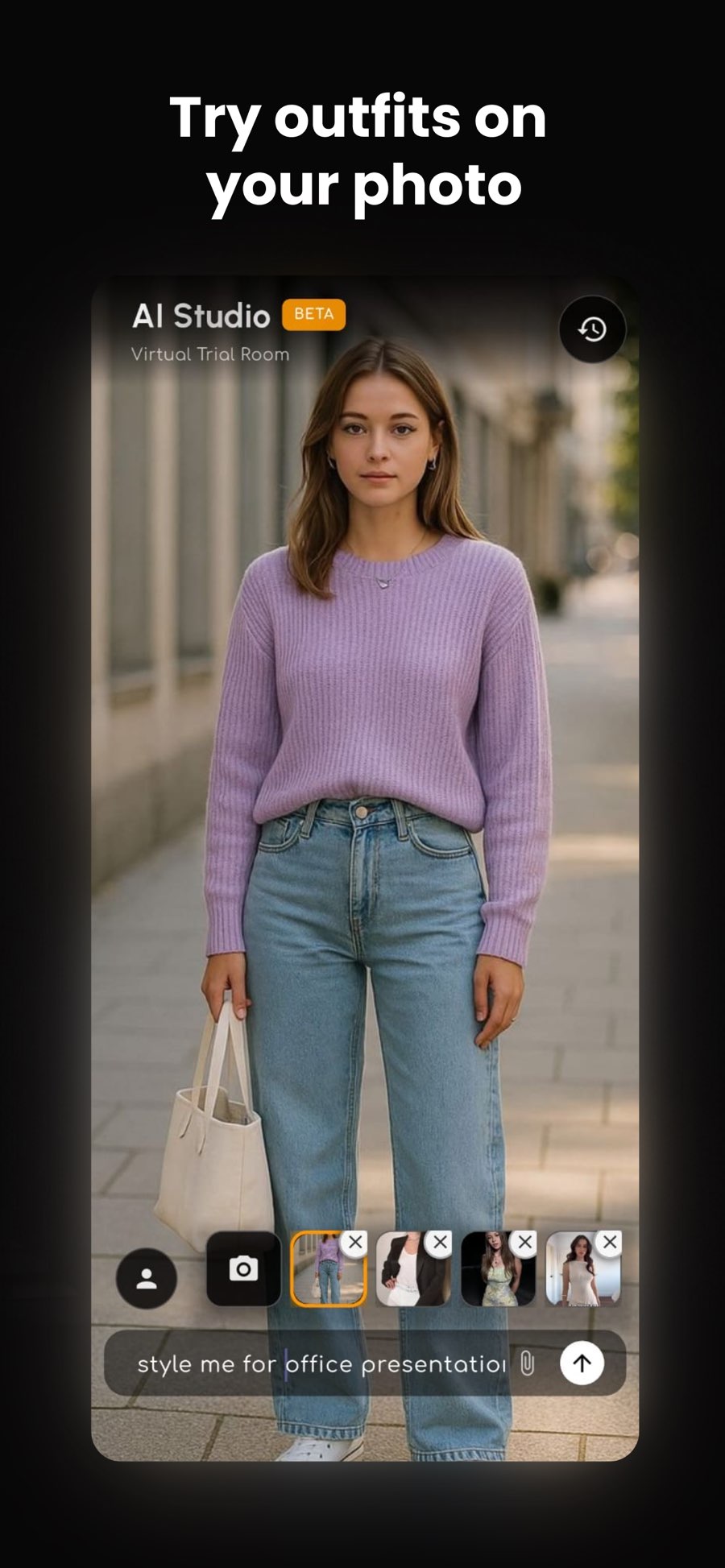
Slidez's screenshot shows a “Virtual Trial Room” marked beta, a full-body photo, multiple reference thumbnails, and the prompt “style me for office presentation.” This is meaningful interface evidence for a photo-led styling concept. It is not proof that a shown garment maps to an exact retailer item or fits accurately.
David's verdict: What worked: the input combines a person photo, references, and an occasion-specific instruction. What failed: beta status and absent product linkage limit purchasing confidence. Best for: visualizing an outfit direction before shopping. Choose another app when: use ModeSens for an exact product, Loopin for a real resale listing, or Beauty AI when you need to evaluate the resulting outfit and wardrobe fit.
7. Loopin
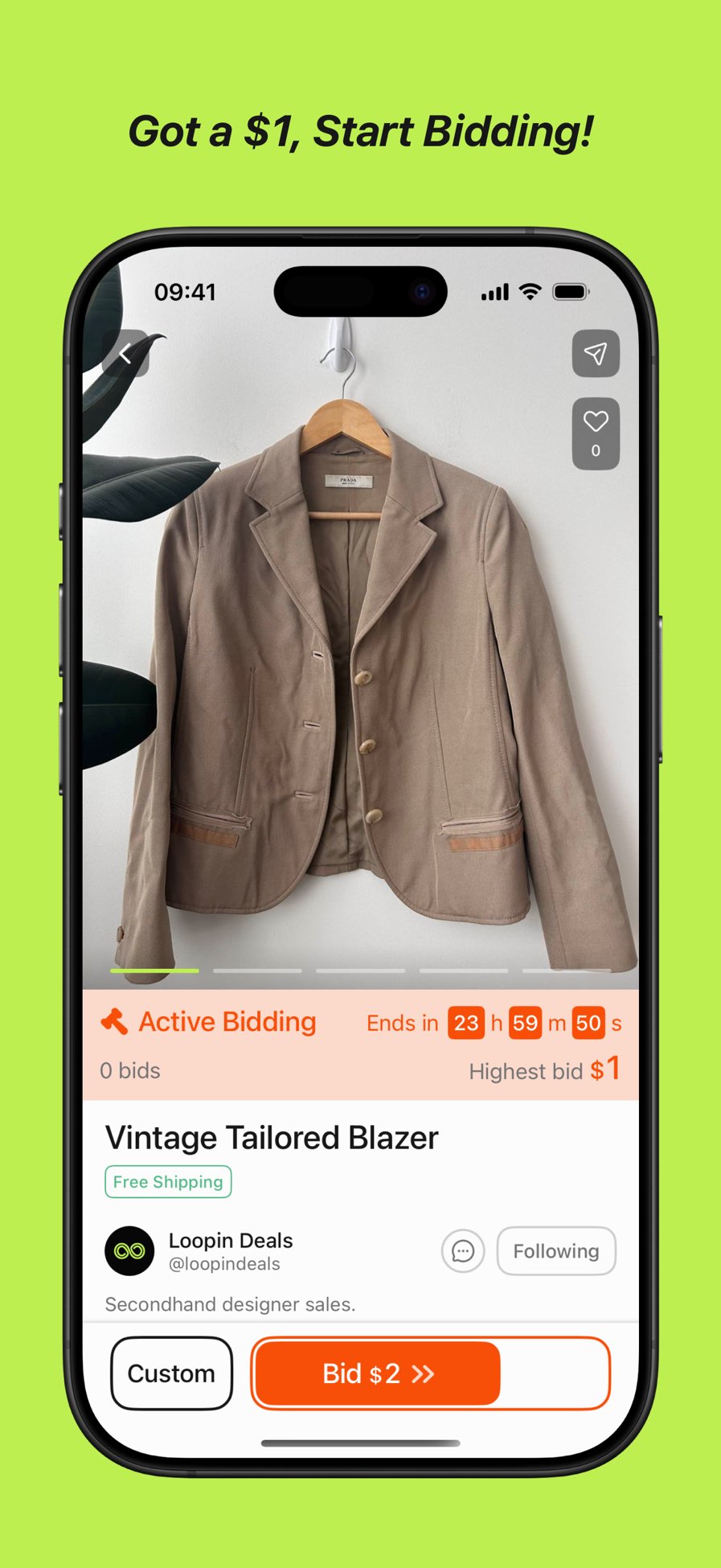
Loopin's preserved screen shows the most transaction-specific interface in this list: a vintage tailored blazer, seller identity, free-shipping label, active-bidding state, countdown, current bid information, and a bid action. This is concrete evidence of a pre-owned auction workflow.
David's verdict: What worked: the product makes the shopping action and auction state explicit. What failed: one listing does not prove authentication, delivery quality, dispute handling, or catalog depth. Best for: users who intentionally shop pre-owned pieces through bidding. Choose another app when: ModeSens is a better fit for broad new-luxury comparison, Daydream for open-ended discovery, and Beauty AI for deciding whether a candidate works with the wardrobe.
A practical way to choose
| Your bottleneck | Start with | Verify before buying |
|---|---|---|
| Does this item improve my current wardrobe? | Beauty AI | Actual product, size, price, and returns |
| I can describe the idea but not the item | Daydream | Retailer coverage and product availability |
| I know the designer item and want options | ModeSens | Final retailer price, size, shipping, and returns |
| I am shopping by color or aesthetic | Uverest | Whether results are purchasable and regionally available |
| I need modest-fashion constraints respected | Kauna | Coverage, opacity, measurements, and retailer details |
| I want to preview a direction on my photo | Slidez | Beta limitations and real-product linkage |
| I want a pre-owned auction | Loopin | Seller, authenticity, condition, shipping, and dispute policy |
My four-step choice-fatigue purchase check
More recommendations are not automatically better. A useful personal shopper app reduces the decision set instead of turning one search into an endless feed. Before checkout, use this sequence:
- Name the missing job. Discovery, comparison, constraint matching, preview, or resale are different tasks.
- Save two candidates, not twenty. Compare finalists instead of accumulating near-duplicates.
- Check wardrobe compatibility. Identify at least three realistic outfits or one clear wardrobe gap before buying.
- Verify commerce facts outside the recommendation. Confirm size chart, material, stock, total price, returns, seller, and regional terms. Discounts, low-stock warnings, and novelty are not evidence of long-term value.
If the app cannot support a confident buy, skip, or substitute decision, stop browsing and return later. The goal is not maximum discovery; it is less effort and fewer avoidable purchases.
Final verdict
I do not see evidence for one universal “best personal shopper app.” Beauty AI has the clearest role when wardrobe context is the missing part of the purchase. Daydream is the discovery-first option, ModeSens the luxury-comparison option, Uverest the aesthetic-query option, Kauna the modest-fashion specialist, Slidez the photo-preview option, and Loopin the pre-owned auction option.
Choose the product that removes your current bottleneck, then independently verify every fact that determines whether money should change hands. For photo-led shopping, continue with finding clothes from a screenshot. For broader comparisons, see clothes finder apps.


