


A Project 333 wardrobe list is a selection of up to 33 everyday items for three months. My example below totals exactly 33, including shoes, bags and accessories. It is a starting point for choosing from your own closet—not a shopping list or a requirement to dress in neutral colours.
I would begin with your actual week: work, travel, errands and social plans. A neat-looking capsule is not useful if it cannot handle your commute or your laundry schedule. Choose the jobs first, then the clothes; Beauty AI can help organise the selection and outfit ideas.
What counts in Project 333?
In Courtney Carver's original challenge, the count includes clothes, outerwear, shoes, jewellery and accessories. Underwear, sleepwear, home loungewear and workout-only clothing are excluded, as are a wedding ring or sentimental jewellery you always wear. Store the rest out of sight; adapt the challenge rather than endure unsuitable clothes.
For this example I count a pair of shoes or earrings as one selection. A jacket worn for everyday errands belongs in the list; calling it “sportswear” does not make it disappear from the count. Keep genuine exercise kit separate, and decide consistently how you handle any item that serves both purposes.
A complete 33-piece wardrobe list
This example suits mild, changeable weather and a mix of casual and smart-casual days. The colours repeat so that the pieces combine easily. Use equivalent items you already like; the exact garments, cuts and gender presentation are yours to choose.
| Numbers | Category | Items | Count |
|---|---|---|---|
| 1–8 | Tops | White T-shirt; navy T-shirt; striped long-sleeve top; white button-up shirt; blue Oxford shirt; burgundy blouse; black top; cream long-sleeve top. | 8 |
| 9–11 | Knitwear | Oatmeal crew-neck jumper; burgundy jumper; navy cardigan. | 3 |
| 12–16 | Bottoms | Indigo jeans; charcoal trousers; navy trousers; olive chinos; black midi skirt. | 5 |
| 17 | Dress | Navy midi dress. | 1 |
| 18–20 | Outer layers | Navy blazer; beige trench coat; weatherproof jacket. | 3 |
| 21–24 | Shoes | White sneakers; black loafers; brown ankle boots; dark walking shoes. | 4 |
| 25–26 | Bags | Brown tote; black crossbody bag. | 2 |
| 27–33 | Accessories | Belt; scarf; hat; sunglasses; watch; one pair of earrings; necklace. | 7 |
| Total | 33 | ||
Do not buy the missing pieces to complete my list. If you never wear dresses, replace the dress with another pair of trousers. If you do not wear jewellery, use those selections for extra tops. The point is a workable limit, not matching someone else's inventory.
Choose your 33 without emptying your entire wardrobe
- Write down a typical week. Count office days, days at home, walking, evenings out and any specific dress requirements.
- Choose the most demanding items first. Comfortable shoes and weather-appropriate outerwear determine what is practical. Keep any safety or uniform needs in view.
- Add bottoms, then compatible tops. Try the combinations on. A matching colour does not guarantee that lengths and proportions work together.
- Check laundry capacity. If you wash weekly, make sure there are enough clean next-to-skin pieces for the week. Trade an unused accessory for another top if needed.
- Photograph the final selection and box the rest. You are postponing decisions about the other clothes, not committing to discard them.
For a wider planning method beyond this challenge, see my capsule wardrobe planning guide. Keep the first version simple enough that you can actually try it.
12 outfits from the same list
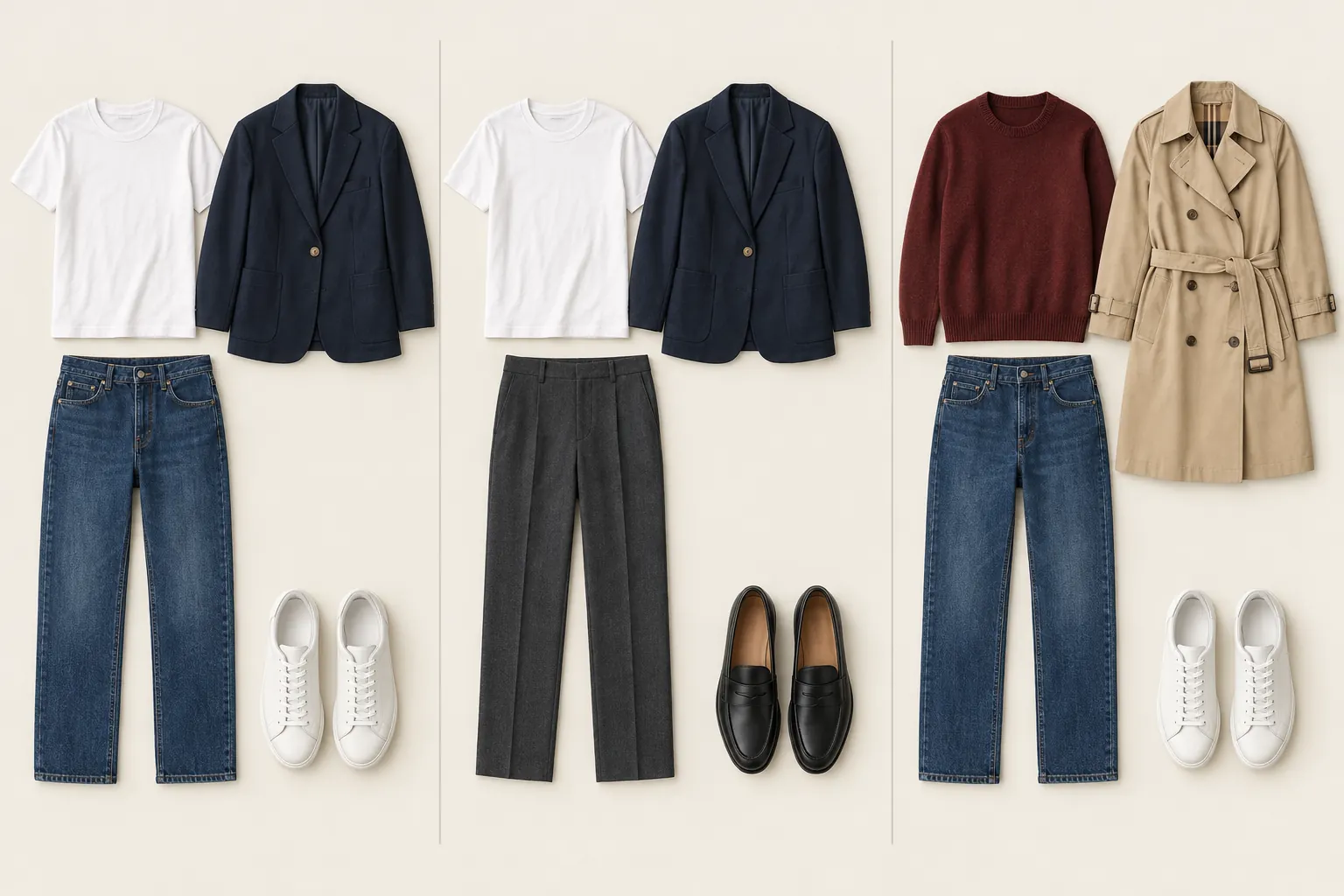
| Occasion | Combination from the list |
|---|---|
| Casual office | White T-shirt + navy blazer + indigo jeans + white sneakers. |
| Smarter office | White shirt + charcoal trousers + navy blazer + black loafers. |
| Cool commute | Burgundy jumper + indigo jeans + trench coat + brown ankle boots. |
| Weekend coffee | Striped top + olive chinos + white sneakers. |
| Dinner | Burgundy blouse + black midi skirt + black loafers. |
| Travel day | Navy T-shirt + olive chinos + cardigan + dark walking shoes. |
| Rainy errands | Cream top + indigo jeans + weatherproof jacket + suitable walking shoes. |
| Meeting | Blue Oxford shirt + navy trousers + black loafers. |
| Easy evening | Navy dress + navy cardigan + brown ankle boots. |
| Relaxed lunch | Oatmeal jumper + charcoal trousers + white sneakers. |
| Gallery visit | Black top + indigo jeans + navy blazer + black loafers. |
| Cool weekend | Cream top + black midi skirt + oatmeal jumper + brown ankle boots. |
Add the tote for carrying more or the crossbody for a lighter day. These are starting combinations, not promises of fit: check the dress code, forecast and footwear comfort. In heavy rain, a pair is suitable only if its construction and grip are suitable.
Adapt the list to your life, not the other way round
- Hot climate: replace heavy knitwear and the trench with breathable tops or lightweight layers. Keep sun protection that you actually use.
- Cold climate: prioritise a genuinely warm coat and safe footwear. Reduce decorative accessories before sacrificing warmth.
- Formal workplace: exchange casual bottoms and sneakers for the tailoring and shoes your work requires. Check whether you need more shirts between washes.
- Caregiving, physical work or limited laundry: allow more washable basics. A rigid count is not worth running out of suitable clean clothes.
- A special event: decide in advance whether to make a swap or treat the outfit as an exception. Record the choice instead of pretending it is part of everyday wear.
If a shoe replacement is genuinely needed, my guide to finding shoes by picture explains how to distinguish the exact pair from a lookalike. Start with the wardrobe gap, not the temptation to buy a whole new capsule.
Make the capsule easy to use on a busy morning
Photograph your selected pieces in Beauty AI's digital wardrobe and use them to work on outfit combinations. Save the looks you want to repeat so that choosing an outfit does not start from zero. Keep your 33-item count in a simple note if needed; I am not claiming the app has a dedicated Project 333 counter.
If you want to compare planning tools first, the capsule wardrobe app comparison separates inventory, outfit planning and other features. You can also do the challenge with a written list and phone photos. An app should make the routine easier, not become another project.
Review the wardrobe before adding anything
Rehearse an ordinary week before you pack the rest away
Write down seven days and assign an outfit to each, using only your selected pieces. Check four things: can you dress for your busiest day, manage the forecast, get through the laundry cycle, and replace an unexpectedly dirty top? You do not need seven entirely different looks. Repeating trousers or a jacket is part of making a small wardrobe work.
If the plan fails on Thursday because every clean top needs ironing, change the selection rather than buying another accessory. Keep a short note: day / planned outfit / laundry needed / missing function. A missing function might be rain protection or a comfortable walking shoe; “something new” is not a function.
Once a week, note what you wore, what stayed untouched and what made getting dressed difficult. An unworn item may need a better combination, different weather or a fit adjustment; it does not automatically need replacing. If something is damaged or uncomfortable, make a deliberate swap and update your count.
At the end of three months, keep the combinations that worked and change the pieces that did not suit the season or your life. My measure of success would be fewer frustrating mornings and fewer unnecessary purchases—not whether the wardrobe looks perfectly minimal in a photograph.


