

Face shape detector apps are useful when they do more than tell you "oval" or "round." The best tools make the result understandable, protect your photo, and help you turn face shape into better hair, glasses, makeup, and style decisions.
The weakest apps treat face shape like entertainment. The strongest ones treat it like a decision layer: upload a clear selfie, understand the likely shape, check confidence, then use the result to choose what to test next.
Best face shape detector apps at a glance
| Tool type | Best for | Strong signal | Watch out for |
|---|---|---|---|
| BeautyAI workflow | Turning face shape into style decisions | Hair, color, makeup, and outfit context | Best after you know the likely shape |
| Dedicated face shape detector | Fast shape estimate from a selfie | Confidence scores and clear shape signals | Some tools overclaim accuracy |
| Beauty app with face analysis | Makeup and hairstyle recommendations | Connects face shape to beauty choices | May push app ecosystem features |
| Manual quiz or guide | Learning the shape categories | No upload needed | Easy to misread your own proportions |
What makes a face shape app useful?
A useful app should help you answer four questions:
- What shape is most likely?
- How confident is the result?
- What photo quality issues could affect the answer?
- What should I do next with hair, glasses, makeup, or style?
If the app only gives one label with no explanation, it may still be fun, but it is weaker for real decisions.
How we ranked face shape detector apps
We did not rank these tools by speed alone. A fast label is easy; a useful face shape result is harder. The best face shape detector apps should explain why they classified the face that way, make photo requirements clear, avoid overclaiming accuracy, and help users decide what to do next with hair, glasses, makeup, or styling.
We looked at five practical signals:
- result clarity: does the tool explain the shape or just return one word?
- photo guidance: does it ask for a front-facing image, clear lighting, and visible hairline?
- decision value: does it connect the result to haircuts, glasses, or beauty choices?
- privacy clarity: does the upload flow explain image handling?
- repeatability: can you retest with a better photo and compare the result?
Best face shape detector apps in 2026
1. Beauty AI

Best for: turning face shape into practical styling decisions.
Beauty AI is strongest after the shape check because it connects the result to the next decision. A face shape label is only useful if it helps you choose what to test: a haircut, frame shape, makeup balance, color direction, or overall style. That makes Beauty AI a better fit for users who want the result to guide action rather than sit as a curiosity label.
Best use case: identify the likely shape, then compare hairstyles, glasses, and style direction against that result before making a visible change.
You can download Beauty AI here.
2. FaceShapeAI
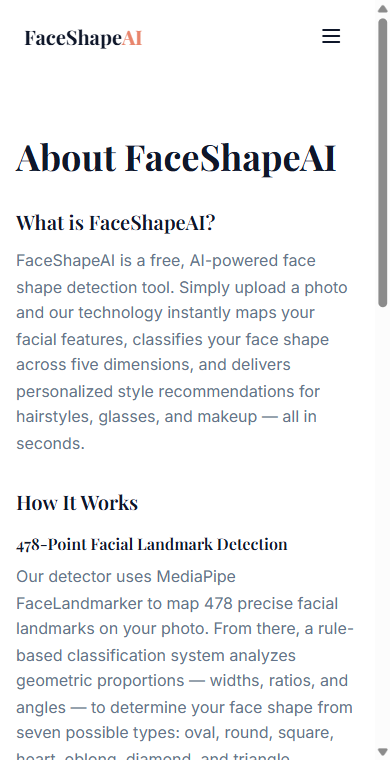
Best for: a quick online face shape estimate from an uploaded photo.
FaceShapeAI is a dedicated browser tool focused specifically on face shape detection. It is useful when you want a simple photo-based read without starting from a quiz. The output is most helpful when you use it as a first pass and then validate the result with a second photo or a manual proportion check.
What to watch: like any upload-based detector, the result depends heavily on camera angle, lens distortion, hairline visibility, and whether the face is centered.
You can view FaceShapeAI.
3. FindMyFaceShape.ai
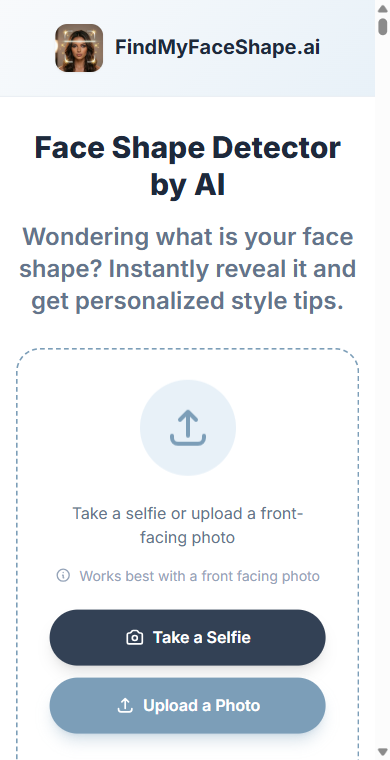
Best for: users who want a clear selfie-based detector flow with simple style tips.
FindMyFaceShape.ai is built around the exact search intent behind queries like "what is my face shape" and "find my face shape." It is useful because it keeps the task narrow: upload or take a front-facing photo, get a likely shape, and review guidance. It is a good tool to test alongside a manual guide if your first result feels uncertain.
Best use case: compare the result from one clean selfie against another taken farther from the camera to see whether the shape label stays stable.
You can view FindMyFaceShape.ai.
4. Hiface
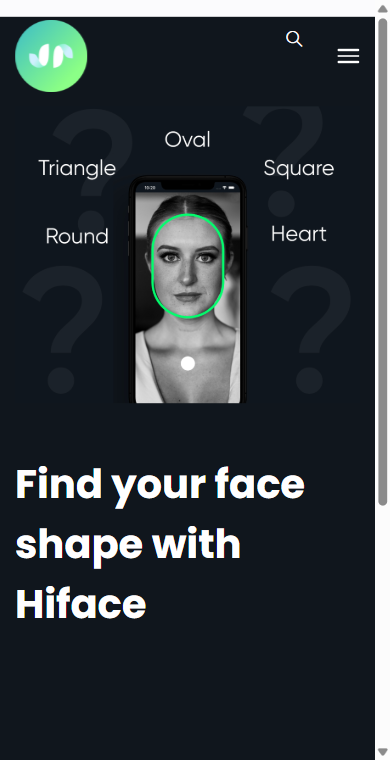
Best for: users who want face shape detection connected to beauty and style recommendations.
Hiface presents face shape detection as part of a broader appearance workflow. That can be useful because people usually do not search face shape for the label alone; they search because they want better hair, glasses, grooming, or beauty choices. The tradeoff is that broad beauty tools can sometimes make generic recommendations if the input photo is weak.
Best use case: use it as a second opinion after another detector, then compare its recommendations with your real hair texture, frame preferences, and maintenance level.
You can view Hiface Face Shape Detector.
5. Face Shape Tool
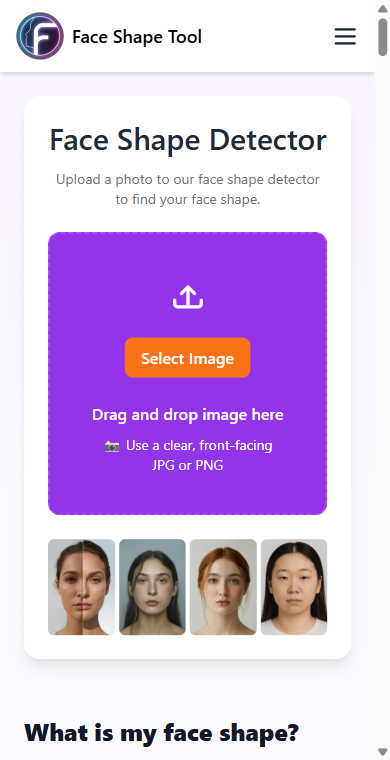
Best for: quick web-based uploads when you want a minimal detector screen.
Face Shape Tool is useful when you want a simple upload workflow without a heavy app ecosystem. It fits users who are testing the category and want a fast answer. Its main limitation is that a minimal detector still needs careful interpretation: a clean output does not automatically mean your haircut or glasses decision is solved.
Best use case: use it to get a first label, then move to hairstyle matching or glasses matching before changing anything expensive.
You can view Face Shape Tool.
6. YouCam Makeup
Best for: beauty-first users who want makeup, selfie editing, and face-adjacent try-on in one app.
YouCam Makeup is not only a face shape detector. It is a broader beauty app, which makes it useful when your next step is makeup or hairstyle visualization rather than a pure measurement workflow. The advantage is that the face result can feed into beauty experimentation. The limitation is that the app is broader than the face-shape query itself.
Best use case: test whether a face-shape idea changes your preferred hair volume, brows, contour placement, or makeup balance.
You can view YouCam Makeup.
Comparison: best face shape detector apps
| Tool | Best for | Strength | Watch out for |
|---|---|---|---|
| Beauty AI | Style decisions after detection | Connects shape to hair, glasses, color, and outfit context | Best after you have a clean face-shape read |
| FaceShapeAI | Quick online estimate | Narrow, face-shape-focused workflow | Result still depends on photo quality |
| FindMyFaceShape.ai | Selfie-based first pass | Matches the "what is my face shape" user journey | Needs retesting if the selfie is too close or angled |
| Hiface | Beauty recommendations | Connects detection with broader appearance guidance | Can be broader than the exact detector task |
| Face Shape Tool | Minimal browser upload | Simple and focused | Less useful if you need deeper styling interpretation |
| YouCam Makeup | Makeup and beauty try-on | Good when the next step is beauty experimentation | Not a pure face-shape-only tool |
Privacy and photo upload checklist
Face photos are sensitive. Before using any app, check:
- Does the app clearly say whether photos are uploaded or processed locally?
- Does it explain storage, deletion, and reuse?
- Can you use it without creating an account?
- Does it avoid face-rating or invasive scoring?
- Does it give practical recommendations without overclaiming accuracy?
How to score a face shape detector app
Use a simple scoring model before you trust the output. The best app is not always the one with the most polished screen. It is the one that gives you a useful result with the least privacy and interpretation risk.
| Criterion | Strong app | Weak app |
|---|---|---|
| Photo guidance | Explains light, angle, hairline, and camera distance before upload | Lets users upload any selfie and blames the user for bad output |
| Result clarity | Shows likely shape, secondary shape, and confidence or explanation | Returns one label with no reasoning |
| Style usefulness | Connects shape to hair, glasses, makeup, and practical next steps | Stops at a generic category description |
| Privacy | Explains upload, storage, deletion, and account requirements clearly | Uses vague language around face photos |
| Accuracy claims | Explains limits and photo-quality dependency | Promises perfect or guaranteed results |
Face shape detector app vs manual face shape test
| Method | Best use | Weakness |
|---|---|---|
| AI detector app | Fast, repeatable first read | Depends on photo quality and model rules |
| Manual mirror check | No upload and better context | Easy to judge subjectively |
| Stylist feedback | Haircut-specific advice | Can be slower and depends on the stylist |
| BeautyAI decision workflow | Testing the result across style choices | Works best after a clean shape estimate |
What competitors often miss
Many app pages focus on speed: upload a selfie, get a shape, move on. That is not enough for a style user. The better article and product experience should answer the second question: what should I do with this result?
That is where BeautyAI can own the cluster. A detector page captures the query, but the hub should route users into hairstyle simulation, glasses selection, color analysis, and full style feedback. That creates a stronger content path than a single app list because each page solves the next decision instead of repeating the same definition.
Which page fits your query?
- Start with Face Shape Detector if you want the broad explanation.
- Open What Is My Face Shape? if you want to understand your result.
- Open Find My Face Shape if your first selfie gave a weak reading.
- Open Hairstyles for Face Shape if the next decision is hair.
- Open Glasses for Face Shape if the next decision is frames.
- Open AI Hairstyle Simulation or AI Color Analysis Apps if you want to test hair and color choices after detection.
FAQ
What are the best face shape detector apps?
The best face shape detector apps explain confidence, protect photo privacy, and connect results to useful style choices such as hair, glasses, and makeup.
Are face shape apps accurate?
They can be helpful, but results depend on the photo, face angle, lighting, hair placement, and the app's model. Use the output as a guide rather than a guarantee.
Is it safe to upload a face photo?
Only use tools with clear privacy language. Avoid apps that do not explain storage, reuse, deletion, or whether the image leaves your device.
Should I use a face shape app before getting a haircut?
Yes, it can help you prepare better questions and references. Still consider hair texture, density, maintenance, and stylist advice before committing.
What should I do after using a detector app?
Use the result to test hairstyle, glasses, makeup, and color choices. A detector is the starting point, not the full style answer.
Bottom line
Face shape detector apps are strongest when they turn a selfie into a useful decision path. Choose tools that explain the result, respect privacy, and help you test what actually changes your look.


